
contact-button

What Are the 10 Best TRV Radiators to Buy?

Heating is not a minor household expense. Eurostat reported that space heating represented 62.8% of European household energy use in 2020. Globally, the International Energy Agency states that buildings consume around 30% of final energy. These figures make room-by-room control increasingly important, especially in homes with uneven temperatures. A suitable Trv Radiator can reduce overheating, improve comfort, and support more deliberate energy use.

This guide examines 10 leading options through practical and technical criteria. We consider heat output, valve compatibility, operating noise, corrosion resistance, installation depth, warranty terms, and independent product information. EN 215 provides the relevant performance framework for thermostatic radiator valves, while the Energy Saving Trust recommends TRVs for controlling individual rooms. A bedroom set near 17°C should feel different from a busy living room. That difference matters.

Small details matter.

A numbered dial is not a precise temperature scale. Settings vary between manufacturers, room conditions, and radiator placement. Window drafts can also mislead the sensor. We therefore avoid treating expensive models as automatically superior. That would be too simple. Some budget radiators may perform well, while premium designs can disappoint if sizing or balancing is wrong. Product availability also changes by country, so readers should verify certifications, spare parts, and installer guidance before buying. The final selection is intended as a practical comparison, not a universal ranking. Your boiler, pipework, insulation, and room layout still influence the result. We may be cautious here, but cautious heating advice is usually cheaper than correcting an unsuitable installation.
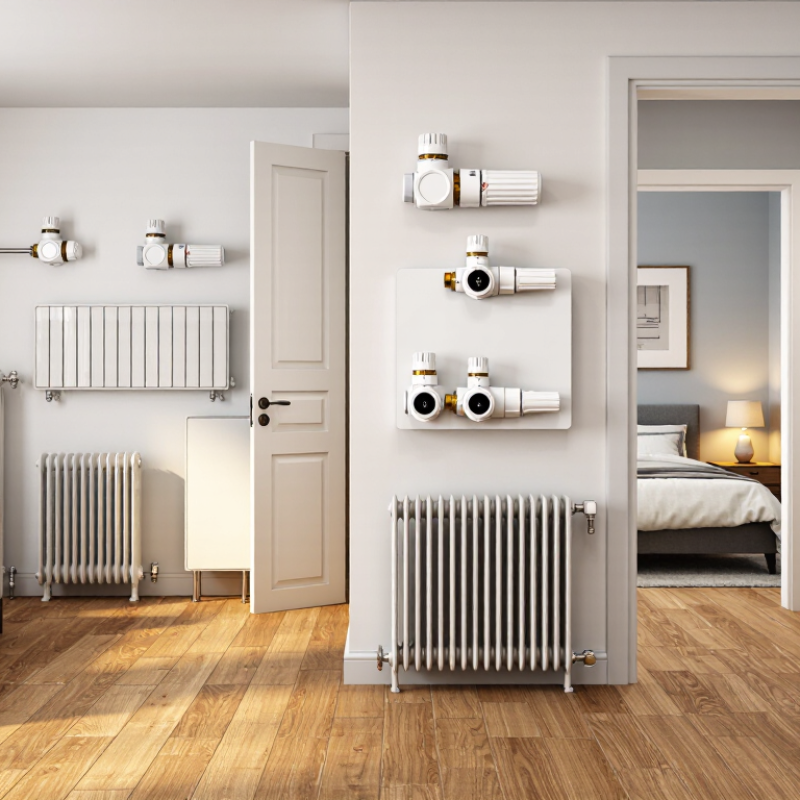
What Are the 10 Best TRV Radiators to Buy?

Understanding TRV Radiators and How They Regulate Room Temperature

A thermostatic radiator valve, or TRV, is not the radiator itself. It is the control head attached to the radiator inlet. Inside, a temperature-sensitive element expands as room air warms. The valve then reduces hot-water flow. When the room cools, it opens again. This simple cycle helps maintain a steadier temperature than a manual valve.

When comparing the ten best TRV radiators to buy, examine the valve’s control accuracy, noise level, compatibility, and adjustment range. Numbered settings are not universal temperatures. A setting of three may feel comfortable in one room but too warm in another. Check the manufacturer’s temperature guide and connection size before purchasing. Small details matter.

Keep the valve exposed to room air. Curtains, furniture, or a nearby heater can fool its sensor. In a bedroom, a covered TRV may reduce heat while the bed area remains cold. That feels frustrating. A heating professional should also check system balance and water flow, because a good TRV cannot correct every installation problem. Some models include frost protection or tamper-resistant controls, which can help in unused rooms and shared homes. Still, no TRV is perfect; slow response, incorrect placement, and poor maintenance can weaken its performance.

Personally, I would value predictable control over an attractive finish.

Key Features to Compare Before Choosing a TRV Radiator

Choosing among the 10 best TRV radiators requires more than comparing heat output. The valve should respond smoothly as room temperature changes. Look for a clear control range, frost protection, and a reliable sensing element. Liquid-filled sensors often react faster than wax-filled designs, although performance depends on installation. A TRV hidden behind curtains may read trapped warm air and reduce heating too early.

Radiator size must match the room’s heat-loss calculation, not a showroom guess. The Chartered Institution of Building Services Engineers provides heat-output guidance through its domestic heating standards. Check the stated output at the correct temperature difference, such as ΔT50 or ΔT30. These figures are not interchangeable. Valve compatibility also matters: confirm pipe size, flow direction, pressure rating, and whether the head can be replaced without draining the system. Small details matter.

The European Commission reports that buildings consume about 40% of the European Union’s energy and create roughly 36% of energy-related emissions. The International Energy Agency also identifies buildings as a major global energy-use sector. This makes controllability important, but a TRV cannot repair poor insulation or incorrect balancing. In my experience, low-cost valves can feel adequate at first, then become stiff after repeated seasonal use. That is easy to overlook. Compare adjustment feel, noise, warranty length, cleaning access, and independent test evidence. A smart control may add scheduling, but it also introduces batteries, connectivity, and another failure point. Not always better.

The 10 Best TRV Radiators for Different Heating Requirements

What Are the 10 Best TRV Radiators to Buy?

Choosing the best TRV radiator depends on room size, insulation, control needs, and available wall space. A thermostatic radiator valve adjusts water flow as room temperature changes. That can improve comfort and reduce unnecessary heating.

For a small bedroom, a compact single-panel radiator responds quickly and saves wall space. A double-panel model suits a larger living room with higher heat loss. Choose a vertical radiator for narrow walls, especially beside a door or window. A towel radiator works well in bathrooms, but it should resist moisture and provide enough output. Low-surface-temperature radiators are safer for nurseries, care spaces, and homes with young children. Measure carefully.

For older properties, a cast-iron radiator offers strong heat retention and a traditional appearance. It warms slowly, though. An aluminium radiator heats quickly and works well with responsive heating systems. A slim horizontal model suits standard window walls and simple replacements. A designer radiator can support interior styling, but unusual shapes may reduce usable output. For rooms with uneven temperatures, select a radiator with a precise, easy-to-read TRV. I once underestimated a hallway’s draughts, so its radiator felt undersized despite correct calculations. Check pipe positions, heat-loss estimates, valve direction, and system pressure before buying. Professional installation remains sensible when pipework, balancing, or compatibility is uncertain.

What Are the 10 Best TRV Radiators to Buy?

Typical heat output of radiator configurations suitable for different room-heating requirements, measured in watts per metre at a ΔT50 reference condition.

Higher-output designs are generally better suited to large rooms or areas with greater heat loss, while compact and low-output radiators can be appropriate for bedrooms, hallways, bathrooms, and well-insulated spaces. Actual performance depends on radiator size, flow temperature, insulation, room dimensions, and the selected thermostatic radiator valve.

Installation, Compatibility, and Maintenance Considerations

Choosing among the 10 best TRV radiators requires more than comparing heat output. A thermostatic radiator valve controls water flow as room temperature changes. Installation quality strongly affects comfort and efficiency. Check the radiator’s valve connection, pipe position, thread size, and flow direction before ordering. Some systems use different fittings, so a visual match can be misleading. Measure twice.

The heating circuit should be isolated and drained by a qualified professional when necessary. A TRV must sit where room air can reach it freely. Curtains, furniture, or a nearby heat source can distort its reading. In older systems, flushing may be sensible because sludge can restrict flow. The lockshield valve also needs balancing, or some rooms may remain cold while others overheat.

Compatibility includes the boiler system, radiator material, pipework, and control layout. Smart controls may require additional wiring or a compatible hub. Maintenance is usually simple: keep the valve clean, turn it occasionally during warm months, and watch for leaks or stiffness. Do not force a seized head. Replace damaged seals promptly. A small drip can stain flooring and hide a larger fault. The most expensive option is not automatically the best choice. In practice, access and correct sizing matter more than appearance.

How to Select the Right TRV Radiator for Your Home

What Are the 10 Best TRV Radiators to Buy?

Selecting the right TRV radiator starts with heat demand, not appearance. The International Energy Agency reports that buildings use about 30% of global final energy. Space heating is a major part of that demand. Measure each room before shopping. A small bedroom needs less output than a draughty lounge with two external walls. Use the radiator’s output rating at Delta T50, then check your boiler’s operating temperature. Oversizing can improve comfort, but it may waste wall space and money.

Choose a thermostatic radiator valve with clear temperature settings and smooth adjustment. A lockshield valve should balance the system, while the TRV controls room temperature. Check pipe position, valve angle, thread size, and radiator width. Compatibility problems are common and frustrating. CIBSE heating guidance stresses correct system balancing and heat-loss calculations. Eurostat household energy data also shows that space heating remains the largest household energy use in Europe. A perfect choice is unrealistic. Existing insulation, window quality, and occupant habits still affect performance.

Tips: Set living rooms near 20°C and bedrooms slightly cooler. Keep curtains away from the valve. Do not cover the radiator with furniture. Ask a qualified installer to test flow and return temperatures. Review the room after one week, not one hour. A cheaper radiator may perform well, but only when its output and valve fit the room properly.

What Are the 10 Best TRV Radiators to Buy? – How to Select the Right TRV Radiator for Your Home

Rank Recommended Radiator Configuration Best For Typical Size Approx. Heat Output* Construction TRV Compatibility Key Selection Benefit
1 600 × 1000 mm Type 22 panel radiator Average living rooms 600 mm high × 1000 mm wide About 1,700–1,900 W Steel panel with two panels and two convector layers Compatible with standard thermostatic radiator valves and 15 mm pipework Balanced heat output, depth and cost
2 600 × 800 mm Type 22 panel radiator Medium bedrooms 600 mm high × 800 mm wide About 1,350–1,550 W Pressed steel panel with integrated convectors Suitable for angled, straight or remote-sensing TRVs when correctly installed Good output where wall space is limited
3 600 × 1200 mm Type 22 panel radiator Large living rooms and open-plan areas 600 mm high × 1200 mm wide About 2,050–2,300 W Double steel panel with double convection fins Standard two-pipe central-heating systems with compatible valve connections Higher output without increasing radiator depth
4 500 × 600 mm Type 22 panel radiator Small bedrooms and home offices 500 mm high × 600 mm wide About 850–1,050 W Compact steel panel with two convection layers Works with standard Thermostatic Valves, subject to connection layout Space-efficient option for lower heat requirements
5 600 × 1000 mm Type 21 panel radiator Rooms needing a slimmer radiator 600 mm high × 1000 mm wide About 1,350–1,550 W Two steel panels with one convection layer Compatible with conventional and low-temperature heating circuits Less projection from the wall than a Type 22 radiator
6 600 × 1000 mm Type 11 panel radiator Narrow hallways and compact rooms 600 mm high × 1000 mm wide About 950–1,150 W Single steel panel with one convection layer Suitable for standard TRVs with correctly matched tails and adapters Shallow profile where floor and wall clearance matter
7 600 × 1400 mm Type 22 panel radiator Cold external-wall rooms 600 mm high × 1400 mm wide About 2,400–2,700 W Double steel panel with two convection layers Compatible with manual or thermostatic control valves High output for rooms with greater heat loss
8 600 × 1000 mm low-temperature Type 22 radiator Heat-pump systems 600 mm high × 1000 mm wide Output must be checked at the system’s lower flow temperature Large surface-area steel panel construction Suitable for TRVs rated for the selected heating system Designed for efficient operation at reduced flow temperatures
9 600 × 500 mm compact vertical panel radiator Kitchens and narrow wall sections Approximately 600 mm high × 500 mm wide About 700–900 W Compact steel panel with convector fins Requires connection positions and TRV orientation to be checked carefully Uses limited horizontal wall space
10 600 × 1200 mm aluminium sectional radiator Fast-response rooms and modern heating controls Approx. 600 mm high × 1200 mm wide Varies by section count and operating temperature Lightweight aluminium sections Usually compatible with standard TRVs using the correct thread and adapters Low water content allows rapid response to temperature changes

*Heat-output guidance: Figures are indicative ranges for common steel panel radiator sizes measured around a ΔT50 operating condition. Actual output depends on flow and return temperatures, room heat loss, installation conditions and the radiator’s certified performance. Always select the radiator by conducting a room-by-room heat-loss calculation, then verify the radiator dimensions, pipe connections, valve thread and TRV direction before purchase.