2026 Best Switch Test Equipment for Buyers?
Choosing the 2026 best Switch Test equipment starts with the switches you need to evaluate. A maintenance team checking circuit breakers has different needs from a manufacturer testing relays or control switches. Match the instrument to the device, test method, and working environment before comparing brands. That distinction matters.
A practical buyer’s shortlist may include contact resistance meters, timing analyzers, insulation resistance testers, and primary injection test sets. Look closely at measurement ranges, stated accuracy, timing resolution, lead design, and available test reports. In the field, a clear display and manageable weight can save time beside a crowded panel. At a test bench, repeatable results and straightforward data export may matter more. Check the details.
Specifications deserve careful reading. Confirm that the stated ranges suit your equipment, and ask how calibration, software updates, and service support are handled. Also consider setup time, accessory availability, and whether operators can use the controls confidently. A capable instrument can still frustrate a team if its workflow is unclear. No single device covers every job, and a polished product sheet may not reveal awkward connection steps. That is worth admitting.
This guide compares Switch Test equipment through practical buying criteria rather than headline claims alone. It helps buyers identify useful features, recognize trade-offs, and prepare questions for suppliers. Before purchase, verify current specifications and confirm that the proposed test procedure fits the equipment manufacturer’s instructions. Safety and repeatability come first.
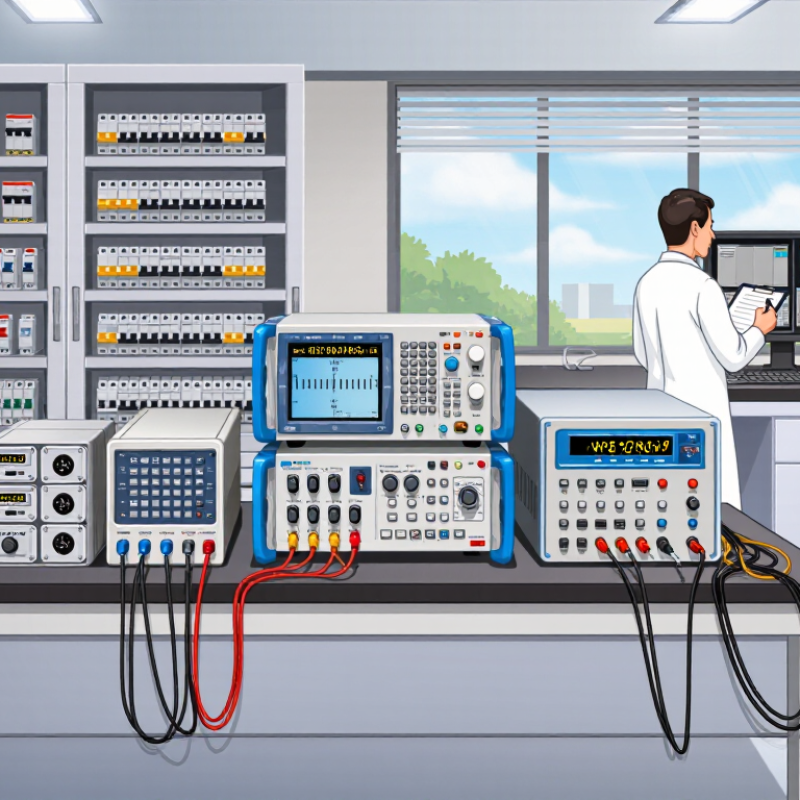
What Switch Test Equipment Measures and Why Buyers Need It
Switch test equipment turns hidden electrical behavior into measurable evidence. Depending on the device, it checks contact resistance in micro-ohms, insulation resistance, breaker opening and closing times, coil current, and operating travel. A timing analyzer can reveal slow pole movement; a micro-ohmmeter can flag rising resistance at a joint. Small drift counts. Comparing readings over time often tells buyers more than a single pass-or-fail result.
The U.S. Energy Information Administration reported that customers experienced an average of 5.5 hours of electricity interruptions in 2022, including major events. That figure describes the wider grid, not failures caused by individual switches, but it shows why dependable switching matters. For buyers, the useful question is whether equipment captures repeatable readings under stated test conditions. IEC 62271-1 also sets common requirements for high-voltage switchgear, helping teams specify comparable checks. A test result is not a guarantee; temperature, setup, and operator technique can affect it. Some reports look tidy, yet the field connection may still be poor. Ask for calibration details, uncertainty limits, and data export before comparing instruments.
2026 Best Switch Test Equipment for Buyers: What It Measures and Why It Matters
Contact resistance testing checks the resistance across closed switch contacts. These illustrative readings show how a tester can reveal variation over repeated operations; compare results with the switch manufacturer’s specifications when assessing a product.
Buyers can use repeatable resistance measurements to compare samples, spot inconsistent contacts, and assess whether test equipment provides the resolution and repeatability their application requires.
Key Performance Requirements for Different Switch Applications
2026 Best Switch Test Equipment for Buyers?
Key Performance Requirements for Different Switch Applications
Switch tests should match the load, not just the device label. Motor-control switches need reliable operation under starting and stopping currents. IEC 60947-4-1 distinguishes AC-3 motor switching from AC-4 inching and plugging duties. That difference changes the required test cycle and contact-wear assessment.
For distribution breakers, verify rated voltage, fault-current capability, opening time, and endurance against the relevant IEC 62271 requirements. A bench pass alone can mislead if the test waveform does not resemble the real installation.
Data-center power is another demanding case. The IEA’s Electricity 2024 report estimates that data-centre electricity consumption could exceed 1,000 TWh in 2026, up from about 460 TWh in 2022. For these installations, assess repeatable switching, contact resistance, timing consistency, and safe recording of transient behavior.
Low-current signal switches need a different focus: stable milliohm readings and dependable detection of contact bounce. Choose instruments with suitable measurement ranges and traceable calibration.
Tips: Match test current and duty cycle to the application. Small detail. Record the fixture, cable length, and ambient temperature with each result. Then compare repeat tests; small variations can reveal setup issues, not switch failure.
Main Types of Switch Test Equipment Available in 2026
Main Types of Switch Test Equipment Available in 2026
Switch testing starts with the failure mode being checked. A micro-ohmmeter measures contact resistance across closed contacts, often using a high-current test to reveal worn or contaminated joints. A circuit-breaker analyzer records opening and closing times, pole synchronization, and contact travel. On site, technicians connect sensors to the mechanism and compare traces with equipment tolerances. Small timing differences can matter.
Insulation resistance testers check leakage across open contacts and to ground. Dielectric test sets apply controlled voltage to assess insulation strength, while primary-injection systems pass high current through a circuit to verify trip performance. These tools answer different questions. One result rarely proves overall condition. Test records should include setup, ambient conditions, and instrument calibration; field notes are not always as complete as they should be.
Infrastructure growth raises the value of repeatable testing. The International Energy Agency’s 2023 Electricity Grids and Secure Energy Transitions report says nearly 80 million kilometres of grids need to be added or refurbished by 2040, roughly the length of today’s global grid. That is a planning estimate, not a forecast of test-equipment sales. For buyers, the practical choice depends on switch type, test frequency, portability, and whether results can be compared over time. A compact kit helps in cramped substations. It may not replace specialized high-current or motion-analysis equipment.
How to Compare Accuracy, Safety, Compatibility, and Cost
2026 Best Switch Test Equipment for Buyers?
Accuracy is useful only when the instrument measures the right things. Compare stated accuracy across the ranges you will actually use, not just the headline specification. Check resolution, repeatability, and calibration records. A stable reading matters. For timing tests, confirm the equipment can capture contact transitions at the required speed. For resistance checks, consider whether its measurement range suits your expected contact values.
Tips: Match the tester’s voltage, current, connectors, and test modes to your switch type. Review probe and lead ratings, protective features, and setup instructions before connecting equipment. Never assume two instruments use the same test method. Small differences can affect comparisons.
Compatibility can save hours on site. Confirm control-circuit requirements, data export options, and whether the unit works with your existing accessories. Then compare total cost: include calibration, training, replacement leads, and service support, not only the purchase price. If possible, trial the tester on a representative switch and compare repeated readings. I would still question a result that looks unusually neat; setup, contact condition, and operator technique can all introduce variation. That is worth checking.
A Step-by-Step Checklist for Selecting and Verifying Equipment
2026 Best Switch Test Equipment for Buyers?
A Step-by-Step Checklist for Selecting and Verifying Equipment
Start with the switch’s rated voltage, current, and expected test conditions. Record the measurements you need: contact resistance, operating time, coil current, or insulation resistance. Check that the equipment covers those ranges without pushing readings near its limits. IEC 62271-100 provides requirements for high-voltage circuit-breaker testing. That matters.
Compare stated accuracy with the tolerance your maintenance decision requires. Use calibration records traceable to recognized standards, and inspect leads, clamps, and adapters for wear. Verify a unit against a known reference before field use, then repeat the check after transport or repair. ESFI’s 2024 workplace electrical injury data report records 1,322 electrical fatalities from 2011 through 2022. Safe isolation and suitable protective equipment belong on the checklist, too.
Run a sample test on a known switch or reference load. Compare displayed values with expected results, and save raw traces, timestamps, settings, and ambient conditions. Repeat measurements to see whether results remain stable. Do not assume. A calibration sticker alone cannot show that the complete setup works for your specific switch. Recheck the method when connectors, software, or test leads change; small details can shift readings.



 Customer Support
 Request Sample
 Contact