
What is an 8K 3D Printer? Exploring Benefits and Applications in 2023
The advancement of 3D printing technology has ushered in a new era of innovation and precision, with the emergence of the 8K 3D printer standing at the forefront of this transformation. Offering unparalleled resolution and detail, the 8K 3D printer allows users to produce intricate designs with exceptional clarity and accuracy. This leap in technology opens up a plethora of possibilities across various sectors, from intricate prototyping in engineering to mesmerizing applications in art and design.
In 2023, the potential benefits and applications of the 8K 3D printer are more relevant than ever. With industries seeking faster production times and superior quality, the rise of this advanced printing technology can significantly enhance workflows, reduce material waste, and foster creativity. Moreover, the capability to create highly detailed prints is making waves in fields such as medical device manufacturing, architectural modeling, and personalized consumer goods. As we delve into the multifaceted uses of the 8K 3D printer, it becomes evident that its impact stretches far beyond traditional manufacturing, heralding a new age of customization and innovation.
Table of Contents
[Hide]
What is an 8K 3D Printer?
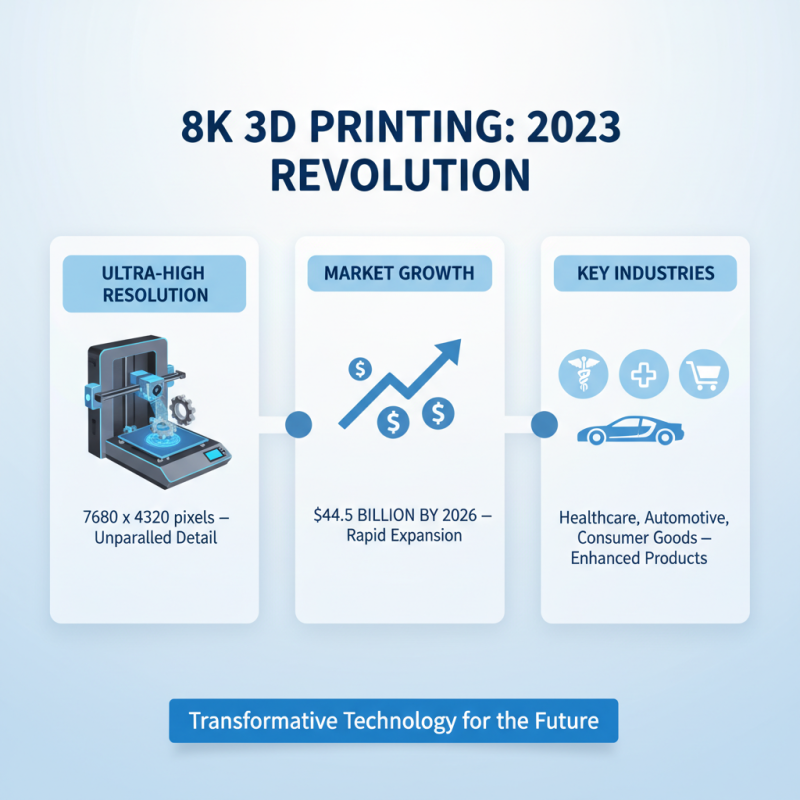
An 8K 3D printer is a cutting-edge additive manufacturing device characterized by its high-resolution printing capability, offering an impressive 7680 x 4320 pixel resolution. This level of detail allows for the creation of intricate designs and fine features that are challenging to achieve with lower-resolution printers. By employing advanced LCD technology, 8K printers utilize UV light to cure resin layer by layer, resulting in smooth surfaces and sharp edges that significantly enhance the quality of the final printed product.
The primary advantage of 8K 3D printing lies in its versatility across various applications. For industries such as jewelry, dental, and prototyping, the precision and clarity afforded by an 8K printer enable the production of complex geometries and detailed prototypes that often require minimal post-processing. Moreover, as the technology becomes more accessible, it stands to revolutionize fields such as education and hobbyist crafting, allowing creators to experiment with high-resolution printing techniques without the steep investment previously associated with such quality.
Key Features of 8K 3D Printing Technology
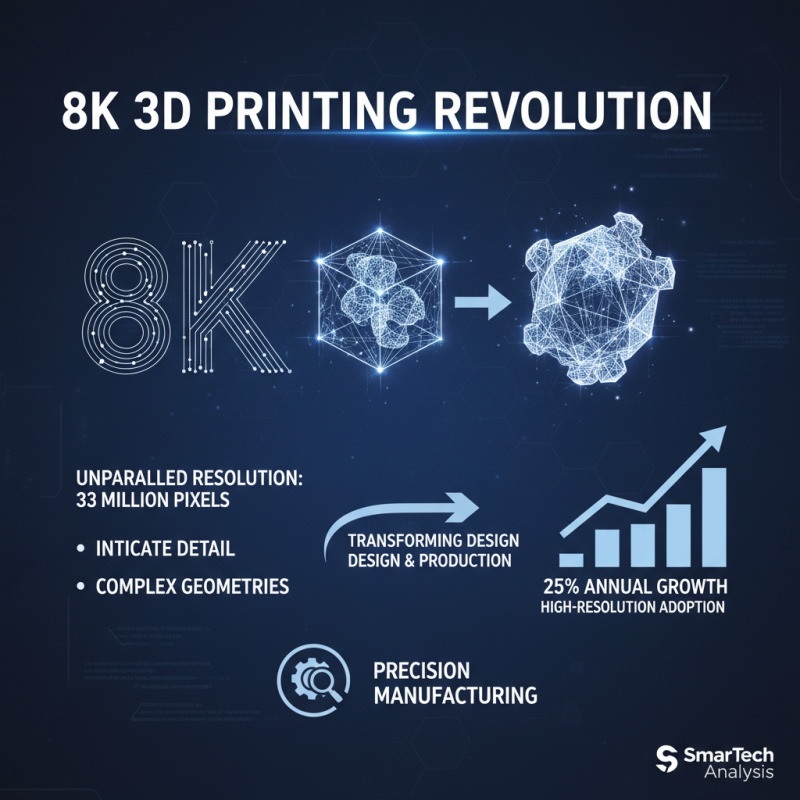
The emergence of 8K 3D printing technology has transformed how designers and manufacturers approach prototyping and production. One of the standout features of this advanced technology is its unparalleled resolution, which allows for intricate detail and precision in printed objects. The 8K resolution translates to approximately 33 million pixels, significantly enhancing the ability to produce complex geometries and detailed textures. According to a report by SmarTech Analysis, the adoption of high-resolution 3D printing is projected to grow by 25% annually, highlighting the increasing demand for precise manufacturing solutions across various industries.
In addition to resolution, 8K 3D printers boast improved print speeds and materials compatibility, allowing users to create parts with enhanced mechanical properties. The versatility of these machines makes them suitable for a wide range of applications, from dental models to aerospace components. The capability to print highly detailed models reduces the need for extensive post-processing, streamlining workflows and increasing overall efficiency in production environments.
Tips for getting the most out of 8K 3D printing include ensuring proper calibration of the printer, as this directly impacts the quality of the final product. Additionally, selecting the right materials is crucial; high-quality resin or filament that matches the intended application can lead to better performance and durability. Lastly, embracing the design capabilities of 8K printing can help users push the boundaries of innovation, resulting in unique and functional prototypes.
Advantages of Using 8K 3D Printers in Various Industries
In 2023, 8K 3D printers are rapidly transforming various industries by offering exceptional resolution and detail that were previously unattainable. The significant increase in pixel density facilitates the production of intricate parts and prototypes that meet the stringent demands of sectors such as aerospace, healthcare, and automotive. According to a recent report by Allied Market Research, the global 3D printing market is projected to surpass $62 billion by 2028, largely driven by advancements in high-resolution printing technologies like 8K. This has enabled manufacturers to produce components with features as small as 0.02 mm, enhancing both functionality and aesthetics in final products.
The adoption of 8K 3D printing also brings substantial cost savings and time efficiency, key metrics valued across multiple industries. By enabling rapid prototyping, businesses can significantly reduce their time-to-market, thus maintaining a competitive edge. A study conducted by Wohlers Associates revealed that companies utilizing advanced 3D printing technologies, including 8K printers, reported a 40% reduction in costs associated with traditional manufacturing methods while achieving up to 70% shorter lead times. This capability not only enhances production speed but also allows for greater customization, enabling businesses to cater to specific client needs more effectively, thereby enhancing customer satisfaction and opening new avenues for growth.
Potential Applications of 8K 3D Printing in 2023
8K 3D printing is rapidly emerging as a transformative technology across various industries in 2023. This advanced printing capability, with its ultra-high resolution of 7680 x 4320 pixels, allows for the creation of highly detailed and intricate designs, which can significantly enhance the quality of prototypes, models, and end-use products. Experts predict that the 3D printing market will reach $44.5 billion by 2026, with 8K 3D printing gaining substantial traction in sectors such as healthcare, automotive, and consumer goods.
In the healthcare sector, 8K 3D printing is particularly noteworthy for its potential applications in producing precise anatomical models for surgical planning and patient-specific implants. According to a recent industry report, 3D printing in healthcare is expected to grow at a CAGR of 21% from 2023 to 2030. This technology's capability to create tailored solutions can lead to better patient outcomes and improved surgical precision, ultimately driving down costs and time required for medical procedures.
Tips: When considering the adoption of 8K 3D printing, it's essential to assess the specific needs of your industry. Invest in training for your team to effectively utilize this technology, as proper handling can maximize its benefits. Additionally, experimenting with various materials will allow you to explore different applications that align with your business goals. Embrace the potential of 8K 3D printing to innovate your product offerings and streamline production processes in 2023.
Future Trends in 8K 3D Printing Technology and Market
The future of 8K 3D printing technology is poised for significant advancements as industries continue to explore its vast potential. With resolutions reaching up to 7680 x 4320 pixels, 8K printers can create intricate details that were previously unattainable with lower-resolution models. This capability is especially beneficial in sectors such as healthcare, where precision is critical for medical implants and prosthetics. Emerging trends suggest an increased integration of artificial intelligence and machine learning in 3D printing processes, enabling smarter design iterations and rapid prototyping, further streamlining production workflows.
Additionally, the market for 8K 3D printing is set to grow, driven by the rising demand for customized solutions across various industries. From aerospace to architecture, the ability to produce highly detailed and complex geometries will enhance the creative possibilities for designers and engineers. Sustainability will also play a significant role in shaping the future of this technology, with efforts to develop eco-friendly materials and reduce waste during the printing process. As 8K 3D printing becomes more accessible and affordable, we can expect a wide range of innovative applications to emerge, revolutionizing how products are conceived and manufactured.
Growth of 8K 3D Printing Technology Adoption (2020-2023)
This bar chart illustrates the growth of 8K 3D printer sales from 2020 to 2023, showing a significant increase in adoption as technology continues to advance.
Related Posts
-
Mastering the Basics of Powder 3D Printing with Our Step by Step Guide
-
How to Optimize Your Workflow with a Professional 3D Printer: Insights from Industry Experts
-
Challenges Faced by Businesses in Adopting Commercial 3D Printers
-
Unlocking the Future Best 8K 3D Printer for Global Buyers
-
Exploring the Impact of Polymer 3D Printers at the 138th China Import and Export Fair 2025
-
Exploring the Future of 3D Metal Printing Technology and Its Impact on Manufacturing Efficiency