10 Best Heat Recovery Ventilators for Energy Efficiency
Choosing the right Heat Recovery Ventilator can change how a home feels, sounds, and performs throughout the year. A well-selected unit exchanges stale indoor air with filtered outdoor air while recovering much of the heating energy already paid for. On a cold morning, that may mean fresh air without an uncomfortable draft beside the sofa. However, performance depends on more than recovery efficiency.
Building-science expert Joe Lstiburek often says, “A building is a system.” That principle matters here. Duct design, airtightness, climate, humidity, filter quality, and installation all influence real-world results. A powerful ventilator can still disappoint when ducts are crushed, grilles are poorly positioned, or controls are confusing. Small details matter.
This guide examines 10 leading Heat Recovery Ventilator models for energy efficiency and everyday usability. The comparison considers sensible recovery, airflow control, filtration, frost protection, operating noise, maintenance access, and warranty support. It also considers independent testing where reliable data is available. Specifications can look impressive on paper. Actual comfort may tell a different story. No ranking fits every building.
Some homes need stronger moisture management. Others prioritize quiet bedrooms or compact equipment rooms. Homeowners should confirm local ventilation requirements and seek professional sizing before purchasing. I have found that simpler controls often encourage better long-term use, although that is not always true. Filters need regular attention. So do condensate drains and outdoor hoods.
The strongest choices balance engineering with practical ownership. They should deliver clean air, reasonable energy savings, and predictable operation without demanding constant adjustment. That balance—not a single laboratory number—defines useful efficiency.
How Heat Recovery Ventilators Improve Home Energy Efficiency
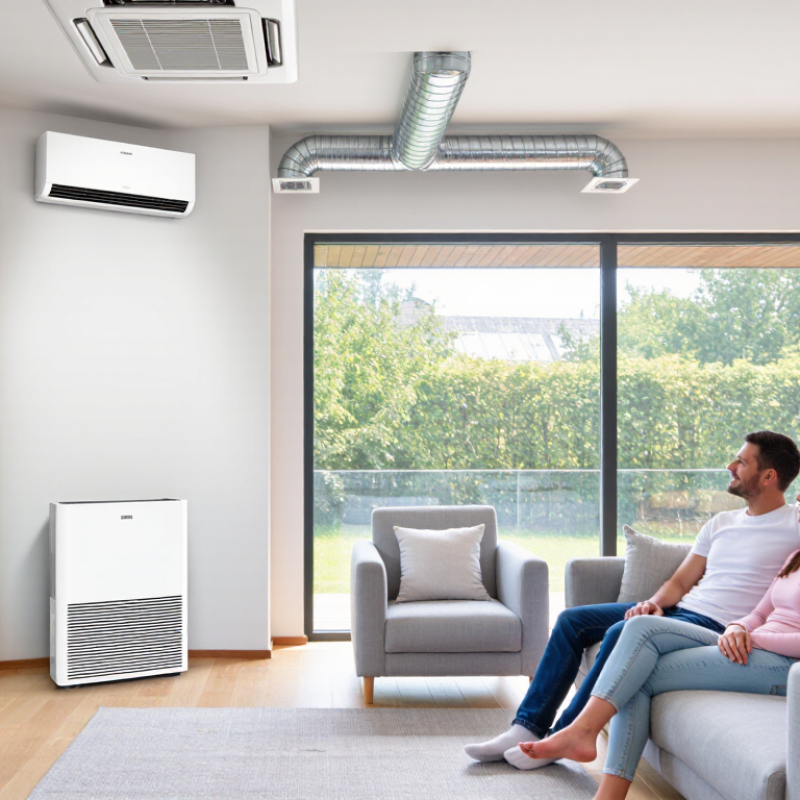
Heat recovery ventilators improve home energy efficiency by exchanging stale indoor air for fresh outdoor air. During winter, the outgoing warm air transfers much of its heat to incoming cold air. In summer, the process can reduce the heat entering the home. Less heating and cooling energy is wasted.
A well-sized system can also control moisture, odors, and indoor pollutants without keeping windows open. Picture a bedroom at 2 a.m.: carbon dioxide rises, but a balanced ventilator quietly removes stale air. Its filters capture dust before fresh air reaches living spaces. Performance depends on airtight construction, correct duct design, and suitable airflow settings. A powerful unit is not automatically better.
Maintenance matters. Replace or clean filters as recommended, and inspect outdoor grilles for leaves or snow. Poor upkeep can restrict airflow and increase fan energy. Climate also changes the calculation. In mild regions, energy savings may be modest, while cold regions often gain more from heat recovery. Humid climates require careful moisture control.
A practical evaluation should compare measured airflow, heating demand, and indoor humidity before and after installation. Estimates alone can mislead. I would not promise dramatic savings without reviewing insulation, window quality, and occupant habits. Even efficient equipment performs poorly when doors remain open or controls are ignored. Small details count.
Key Features to Compare When Choosing an HRV
Choosing an HRV requires more than comparing advertised efficiency percentages. Check sensible heat recovery efficiency under a recognized testing standard. Ask whether the rating reflects your climate and airflow needs. A unit rated for a mild region may perform differently during freezing winters. Confirm the recommended ventilation rate for your home size, occupancy, and moisture levels. Oversizing can increase cost, noise, and unnecessary electricity use.
Listen to the sound rating, especially for bedrooms and home offices. Look for balanced supply and exhaust airflow, adjustable controls, frost protection, and accessible filters. A good filter protects the core from dust, but restrictive filters may reduce airflow. Examine the duct layout too. Short, insulated ducts usually waste less energy than long, poorly sealed runs. Verify that replacement filters are readily available and reasonably priced. This detail is easy to overlook.
Tips: Request real operating data, not only laboratory claims. Compare low, normal, and boost modes. Check whether the controls include humidity sensing or a timer. Ask an experienced installer to measure airflow after installation. Do not assume the factory setting is correct. Maintenance also matters: clean filters every few months, inspect the core seasonally, and watch for condensation near duct joints. No rating tells the whole story. In practice, a slightly less efficient unit may work better when it is quieter, easier to maintain, and correctly balanced. I would also leave room for uncertainty, because household use rarely matches test conditions exactly.
10 Best Heat Recovery Ventilators for Energy Efficiency
Key specifications to compare when choosing an HRV. The chart shows typical residential performance ranges; actual values vary by model, airflow setting, climate, and test standard.
Higher sensible recovery efficiency can reduce heating demand, while lower sound and power consumption improve comfort and operating efficiency. Confirm certified performance at the airflow rate your home requires.
Ten Top Heat Recovery Ventilators for Different Home Needs
The ten top heat recovery ventilators suit different home needs, not one universal standard. Compact HRVs fit apartments and smaller homes with limited mechanical space. High-capacity models serve large houses, workshops, or homes with many occupants. Cold-climate systems need frost protection and reliable defrost controls. According to the U.S. Department of Energy, many HRVs can recover up to 80% of outgoing heat under suitable conditions. The HVI Certified Ratings Program also reports strong tested performance across certified ventilation products. Real results still depend on duct design, balancing, and maintenance.
Homeowners with allergies should prioritize accessible filters and quiet continuous operation. Families in humid regions may need careful moisture control, although an HRV does not replace a dehumidifier. During field inspections, poor airflow balancing appears surprisingly often. A powerful unit cannot fix blocked ducts or badly placed grilles. ASHRAE Standard 62.2 provides residential ventilation guidance, but local codes and occupancy levels still matter. Energy efficiency improves when the ventilator runs steadily, rather than only during cooking or showering.
Tips: Choose capacity from floor area and occupancy. Check certified airflow, recovery efficiency, sound ratings, and frost protection. Leave service clearance around the filter compartment. Replace filters regularly, especially after renovations or wildfire smoke. A commissioning test is worth the cost. Without measured airflow, performance remains partly guesswork.
Installation, Ventilation Capacity, and Maintenance Considerations
Choosing among the 10 best heat recovery ventilators requires more than comparing efficiency labels. Installation quality often determines real performance. The U.S. Department of Energy reports that many heat recovery ventilators can recover about 70–80% of heat from outgoing air. However, poorly sealed ducts can reduce those gains. Installers should balance supply and exhaust airflow, insulate ducts in unconditioned spaces, and provide a reliable condensate drain. Shorter duct runs usually mean less resistance and quieter operation.
Ventilation capacity must match the building, not just the largest advertised setting. ASHRAE Standard 62.2-2022 uses floor area and occupant numbers when establishing residential ventilation rates. A practical design should also consider cooking, bathrooms, airtightness, and local climate. A larger unit is not automatically better. Excessive airflow can waste energy and create dry indoor air. My earlier assumption would be wrong here: peak capacity alone says little about comfortable daily operation.
Maintenance protects both airflow and indoor air quality. The U.S. Environmental Protection Agency notes that indoor pollutant levels can be two to five times higher than outdoor levels, and sometimes much higher. Check filters every one to three months, especially in homes with pets or renovation dust. Clean the heat-exchange core and inspect fans annually. A neglected filter can quietly increase pressure drop. That detail is easy to miss. Maintenance intervals should remain flexible, because real household conditions rarely match laboratory testing.
How to Select the Best HRV for Your Climate and Budget
Selecting the best heat recovery ventilator starts with climate, not the product label. In cold regions, choose an HRV with strong frost protection, insulated ducts, and tested sensible recovery efficiency. U.S. Department of Energy guidance indicates that many HRVs recover roughly 70–80% of heat from outgoing air. That figure depends on airflow balance, installation quality, and outdoor temperature. Real homes are less tidy than test chambers.
ASHRAE Standard 62.2 provides residential ventilation guidance based on floor area, occupancy, and indoor pollutants. Use those requirements to estimate continuous airflow before comparing prices. A small, quiet unit may suit an apartment, while a larger home needs higher capacity without excessive fan speed. Check sound ratings, filter access, drain design, and controls you will actually use. Low noise matters at night.
Your climate also changes the budget. In humid regions, a standard HRV may bring unwanted moisture indoors because it mainly transfers heat, not humidity. An enthalpy recovery system may perform better, though its higher purchase price requires careful payback analysis. The International Energy Agency reports that buildings consume about 30% of global final energy, making ventilation efficiency relevant beyond one utility bill. Ask for independent test data, installation costs, and seasonal performance. A cheaper unit can become expensive when ducts leak, filters are neglected, or balancing is skipped. Get airflow measured after installation. That step is often overlooked.



 Customer Support
 Request Sample
 Contact