
contact-button

Best Large Outdoor Ceramic Flower Pots in 2026?

Choosing a large planter is about more than finding a color that suits the patio. The right pot must support healthy roots, drain excess water, and stand securely in its intended spot. This guide explores ceramic flower pots large outdoor spaces can accommodate, from sheltered porches to sunny garden beds. Looks matter. So does weight.

Ceramic can bring rich glaze, texture, and a substantial feel to an outdoor setting. Yet not every ceramic pot is suited to every climate. Standing water and repeated freeze-thaw cycles may cause some pots to crack, so drainage holes and the maker’s care guidance deserve close attention. A wide opening helps when planting shrubs or spreading-rooted flowers, while the pot’s depth should match the plant’s needs. Measure the site, too; a beautiful container that blocks a walkway is still the wrong choice. Heavy pots can be difficult to move after planting. Plan the placement before filling one.

The sections ahead explain which materials and features to compare, how size and drainage affect everyday use, and what to check before buying in 2026. They also consider finish, stability, and maintenance, so readers can weigh appearance against practical demands. No single pot is perfect. A frost-resistant design may cost more, and a lightweight alternative may feel less secure in strong wind. Careful comparisons can help you choose a planter that suits both your plants and your space.
Best Large Outdoor Ceramic Flower Pots in 2026?

What Defines a Large Outdoor Ceramic Flower Pot?

A large outdoor ceramic flower pot has no universal industry size threshold. A useful buying definition is a vessel roughly 18 inches wide or more, with enough depth for the plant’s mature roots. Check the interior dimensions, not just the broad rim. A tapered pot may look generous yet hold surprisingly little soil. The 2024 National Gardening Survey estimated U.S. lawn and garden spending at $52.3 billion in 2023, reflecting substantial demand for garden products, though the figure does not define pot sizes.

Size also means capacity, stability, and weight. A broad base helps resist wind, while open drainage holes prevent water from pooling around roots. Once filled with damp growing medium, a large ceramic vessel can become difficult to move. Measure the intended spot first. ASTM C373 describes testing ceramic products for water absorption and related properties; low absorption can inform material assessment, but it does not alone guarantee outdoor frost durability. Ask how the pot is fired and rated for freeze-thaw exposure. Looks large. May not be. A slightly imperfect rule: choose by the plant’s root needs and the site’s weather, not appearance alone.

How Ceramic Pots Are Built for Outdoor Conditions

Best Large Outdoor Ceramic Flower Pots in 2026?
How Ceramic Pots Are Built for Outdoor Conditions

A large outdoor ceramic pot faces more than rain and sun. Water can seep into tiny pores, then expand as it freezes. The USGS reports that water expands by about 9% during freezing, creating pressure inside the clay. Small details matter. A dense, high-fired body generally absorbs less moisture, while a properly formed drainage hole helps prevent water from pooling around roots.

Look for a pot with an even glaze, a stable base, and an open drainage hole. Glaze can slow water entry, but it does not make every pot frost-proof; hairline cracks and unglazed surfaces still need attention. ASTM C1026-13(2021) describes freeze-thaw testing for ceramic and glass tile. It is a useful reference for understanding durability, not proof that a flowerpot has passed the same test. Ask for product-specific test information when winter exposure is likely.

Set the pot slightly above the ground with feet or a breathable stand. This lets water drain beneath it and reduces contact with frozen paving. Empty saucers after rain, and avoid letting wet soil sit through repeated freezes. A thick wall may feel reassuring, yet thickness alone does not guarantee frost resistance. Even a well-made pot can crack if drainage is blocked or water collects at its base.

Best Large Outdoor Ceramic Flower Pots in 2026: Built for Outdoor Conditions

Water expands by about 9% when it freezes. Good drainage and ceramic bodies designed for low water absorption can help reduce freeze–thaw damage; actual durability depends on the pot’s materials and construction.

Approximate volumes for the same 1 kg of water: about 1.00 L as liquid water at 0°C and 1.09 L as ice. Values are rounded from the densities of water and ice near 0°C.

Popular Styles and Features to Compare in 2026

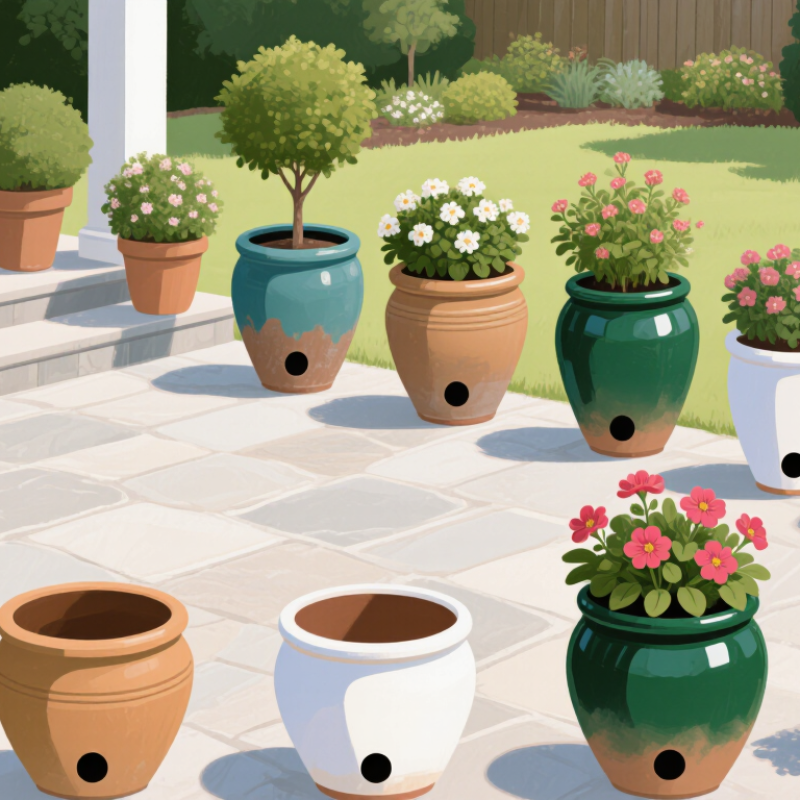
Large outdoor ceramic pots in 2026 span clean, architectural cylinders, rounded Mediterranean forms, and textured, earthy finishes. Glazed surfaces offer stronger color and wipe clean easily; unglazed clay gives a softer, natural look but can dry out faster. Check the base before choosing. A drainage hole matters more than a decorative saucer when rain is frequent.

Scale is not just about height. Measure the planting spot, then compare the pot’s opening, base width, and empty weight. The National Gardening Association’s 2023 National Gardening Survey estimated that 80% of U.S. households took part in lawn and garden activities in 2022. That broad interest makes practical details worth checking: a wide opening suits shrubs, while a deep form gives larger roots room. Heavy ceramic can also be difficult to move once filled with wet soil.

Look closely at the rim, glaze, and foot ring for chips or uneven finishing. Ask whether the pot is rated for outdoor use and freezing conditions; water absorbed into porous ceramic may expand in cold weather. A liner can help protect delicate surfaces, though it may complicate drainage. Not every stylish pot is easy to live with. Compare capacity and weight alongside appearance, and remember that the best-looking finish may show mineral marks after repeated watering.

How to Choose the Right Pot for Your Plants and Climate

A large outdoor ceramic pot should suit both the plant’s root system and your local weather. Match its interior width to the plant’s mature growth, not just its nursery pot. A small shrub needs room for roots, but an oversized container stays wet longer after rain. Drainage holes are essential. No standing water.

The USDA’s 2023 Plant Hardiness Zone Map uses 30-year averages of annual extreme minimum winter temperatures. Check your zone, then consider local wind, sun exposure, and sudden temperature swings. Zone data is useful, but it cannot predict every cold snap on an exposed patio. Ceramic can crack when water absorbed into the clay freezes and expands; a glazed finish alone does not prove frost resistance. Ask sellers about frost-rated construction, and raise pots slightly so drainage holes stay clear.

University of Minnesota Extension’s container-gardening guidance also stresses drainage and choosing containers suited to outdoor conditions. A saucer can help protect paving, though it should not hold water beneath the pot. I would still be cautious: “large” and “winter-safe” are not precise standards. Check the pot’s weight when wet, too, especially on balconies.

Drainage, Placement, and Care for Long-Lasting Use

Large ceramic pots stay healthier when excess water can drain freely. Choose a pot with an open drainage hole, then set it on feet so water does not pool beneath the base. Skip gravel at the bottom; it does not replace a clear hole. Use a free-draining potting mix, and check after watering that water escapes rather than sitting on the surface. A glazed finish may resist moisture, but it does not automatically make a pot frost-proof.

Placement matters as much as care. Set the pot where its mature plant gets suitable light, and avoid exposed spots where strong wind can topple it. In cold climates, standing water can freeze and stress ceramic walls; move vulnerable pots under shelter before hard freezes. EPA WaterSense reports that outdoor use accounts for over 30% of household water use nationally, and can reach 60% in drier areas. That is a broad household estimate, not a pot-specific figure, but it’s a useful reminder to water deliberately. I still find it easy to overwater after a hot afternoon.

Tips: Lift the pot slightly, clear blocked holes, and water slowly until runoff appears. Check soil with a finger before watering again. For a very heavy pot, choose its final spot before filling it.