
contact-button

10 Best Modular Sofa Manufacturers for Global Buyers

Choosing a Modular Sofa for an international project involves more than comparing photographs. Buyers must consider frame materials, cushion options, module connections, upholstery performance, and replacement-part availability. A beautiful corner unit can still disappoint if its clips loosen or matching covers become difficult to source. Details matter. Shipping dimensions and packaging also affect cost, handling, and delivery schedules. These practical questions deserve attention before a sample becomes a full order. Not every supplier publishes the same level of technical information. That gap is worth noting.

This guide introduces ten modular sofa manufacturers for global buyers, with attention to product range, customization, manufacturing capabilities, and export support. The goal is not to treat a list as proof of quality. Each project has different needs, from compact apartment layouts to hospitality spaces that require durable fabrics and easy-to-replace components. Fit comes first. Buyers should request current specifications, material samples, warranty terms, and delivery estimates directly from manufacturers. Ask for evidence. Capabilities and product details can change, and a polished catalogue cannot show how a sofa feels after months of daily use. Comparing clear documentation with hands-on testing can help buyers make a more informed shortlist. No overview can replace careful supplier checks, but it can make the first conversations more focused.
10 Best Modular Sofa Manufacturers for Global Buyers

Modular Sofa Basics: Configurations, Frames, Connectors, and Upholstery

Modular Sofa Basics: Configurations, Frames, Connectors, and Upholstery

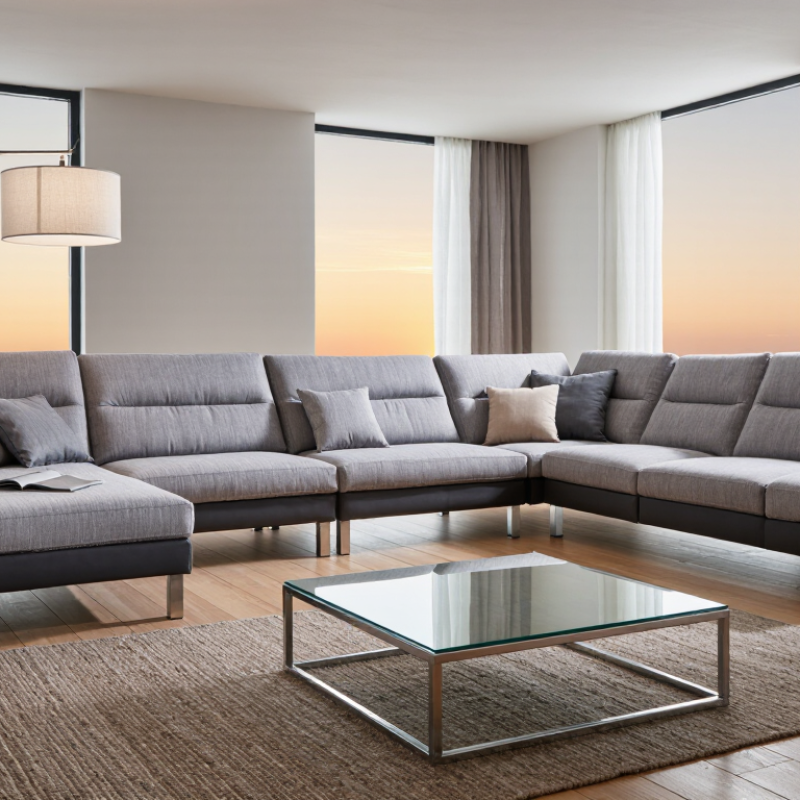
A modular sofa is built from separate units, such as corner pieces, armless seats, and ottomans. Buyers can arrange these into an L-shape, a straight row, or a compact lounge layout. Check each module’s width and depth against room plans, doorways, and lift dimensions. A beautiful configuration is less useful if one section cannot reach the apartment.

Frame materials affect weight, support, and repair options. Plywood, solid timber, and metal each behave differently, so ask manufacturers about construction details rather than relying on material labels alone. Inspect sample joints and look for secure fastening around seat rails.

Connectors matter, too. Metal clips or interlocking brackets should hold sections firmly while still allowing practical rearrangement. Test them with repeated assembly; a connector that feels stiff in a showroom may loosen over time.

Upholstery choices shape comfort and maintenance. Request fabric samples and compare texture, color, cleaning guidance, and test results under consistent methods. Performance figures need context. A high abrasion rating does not automatically mean a fabric resists stains or fading. Small details count. Ask whether covers are removable, whether replacements can be ordered, and how fabric batches are matched. Specifications can still leave questions, so confirm them in writing before production begins.

Global Buyer Benchmarks: EN 12520, EN 1022, and ISO 7173

For modular sofa buyers, three standards help separate test evidence from sales language. EN 12520:2015 sets safety, strength, and durability requirements for domestic seating. EN 1022:2023 covers seating stability. ISO 7173:2023 describes strength and durability test methods for chairs and stools. These standards are technical benchmarks, not a universal sofa score. Confirm that the tested configuration and standard scope match the sofa being purchased.

Ask suppliers for the laboratory report, not just a “passed” claim. Check the tested module layout, applied forces in newtons, cycle counts, and recorded failures. A corner unit can behave differently from a straight seat; connectors may loosen even when cushions look unchanged. The standards do not make those product differences disappear. Not perfect. Independent testing reduces uncertainty, but real homes add uneven floors, children jumping, and years of shifting modules. Treat test results as comparable evidence, not a guarantee. Cite the standard edition and test laboratory in procurement records, and flag any untested layout before approving a large order.

10 Best Modular Sofa Manufacturers for Global Buyers - Global Buyer Benchmarks: EN 12520, EN 1022, and ISO 7173
Brand-neutral buyer benchmark for comparing modular sofa suppliers. The entries below are screening criteria, not a ranking of named manufacturers or claims that any supplier has passed a test. Request reports for the exact model and configuration being purchased.
No. Buyer screening dimension Relevant benchmark Evidence to request from the manufacturer Global-buyer check
1 Domestic-use safety and durability EN 12520 specifies requirements for the safety, strength, and durability of domestic seating. A test report identifying the standard, test laboratory, product model, tested configuration, and result. Confirm the tested product is domestic seating and matches the proposed sofa construction.
2 Seating stability EN 1022 addresses determination of the stability of seating. Stability test results and a description of the tested unit, including its configuration and any relevant setup details. Check whether the report covers the complete sofa or only an individual module.
3 Strength and durability test method ISO 7173 provides methods for determining the strength and durability of chairs. The test method and report scope, with the tested seating unit and configuration clearly identified. Confirm with the supplier and laboratory that the method and setup are appropriate for the product under review.
4 Module-to-module connections Use applicable seating strength and durability testing as a reference; the standard alone does not establish performance for every modular connector. Connector design details, assembly instructions, and any test evidence for joined modules under representative use. Ask which layouts and connection points were tested; do not assume one layout represents all combinations.
5 Frame and load-bearing structure EN 12520 requirements and applicable strength or durability test methods can inform evaluation of domestic seating. Frame material and construction description, together with relevant model-specific strength and durability reports. Match the report to the production model, frame specification, and intended domestic-use category.
6 Stability in different layouts EN 1022 is relevant to seating stability; a report applies to the tested setup and scope. Identification of the module arrangement tested and any setup conditions used during stability assessment. Request separate clarification for corner, chaise, armless, or other materially different configurations.
7 Test-report traceability The cited standards provide a benchmark only when the report identifies the method and the product tested. Full report or verifiable report reference, test date, laboratory identity, model identifier, and tested configuration. Verify that the document is a test report for the relevant product—not merely a general declaration or brochure statement.
8 Production consistency A test result relates to the submitted sample; it does not by itself demonstrate that every production unit is identical. Documented material and component specifications, change-control process, and production quality checks. Ask how design, supplier, or material changes are controlled after testing.
9 Scope of compliance claims EN 12520, EN 1022, and ISO 7173 address distinct requirements or test methods; they are not interchangeable claims. A standard-by-standard statement showing the model, scope, configuration, and supporting report for each claim. Do not treat a report to one standard as proof of conformity to the others.
10 Buyer approval before order Use the applicable standard requirements and test methods alongside the buyer’s product specification. Final drawings, bill of materials, assembly instructions, configuration options, and matching test documentation. Approve the documented configuration and specifications before confirming a bulk order.
Note: Standards and test reports should be checked against their applicable editions, product scope, and tested configuration. This table contains no manufacturer-specific test results or certification claims.

How to Compare 10 Manufacturers Across 6 Sourcing Criteria

Comparing ten modular sofa manufacturers is less about showroom polish than repeatable fit. Grand View Research valued the global furniture market at USD 541.52 billion in 2023, in its 2024 market analysis. That scale makes supplier consistency a practical concern, not a brochure claim. Score six criteria: frame and joint engineering; fabric and foam specifications; module compatibility and customization; documented quality control; capacity and realistic lead times; export packing and after-sales support. Small details matter. Ask for sectional drawings, foam density, fabric abrasion results, and carton dimensions—not just attractive swatches.

Request a bill of materials, inspection checklist, current production photos, and sample-testing records. Compare connector alignment and seat-height differences across modules. ISO 9001 addresses quality-management systems, but certification alone does not prove every sofa passes inspection. That distinction gets missed. Verify the certificate’s scope and ask how defects are recorded, corrected, and traced to a production batch.

Compare quoted lead times with recent order history. Clarify whether they include upholstery, packing, and port handover. The World Bank’s Logistics Performance Index 2023 assesses customs, infrastructure, shipment arrangements, logistics competence, tracking, and timeliness. Use those checkpoints to examine each manufacturer’s export process. Request a packed sample or drop-test evidence for corner protection. Factory visits help, though one polished visit can mislead. Score all ten suppliers using the same evidence, and flag gaps rather than filling them with assumptions.

10 Best Modular Sofa Manufacturers for Global Buyers: Comparing 6 Sourcing Criteria

A practical weighting framework for comparing suppliers. Percentages show suggested buyer priorities, not verified ratings of specific manufacturers.

Use these weights as a starting point when evaluating suppliers: product quality and customization together account for 40% of the example assessment. Adjust the weighting to match your market, order size, and compliance requirements, then score each manufacturer using documented evidence such as samples, quotations, test reports, and shipping records.

10 Best Modular Sofa Manufacturers for Global Buyers: Capabilities and Markets

Modular sofa manufacturers differ in more than catalog size. Strong suppliers can adjust seat widths, arm styles, fabrics, and connector systems without disrupting the whole production plan. Ask how they keep modules aligned when a room layout changes.

Small details matter. A loose clip or uneven cushion can undermine an otherwise attractive sofa. Buyers should also review frame materials, foam options, stitching samples, and inspection steps. Request clear production timelines and ask how defects are recorded and corrected. Capacity matters, but an impressive factory floor does not guarantee consistent finishing.

Global markets bring different shipping conditions, customer preferences, and product requirements. Some manufacturers are better prepared to pack modules compactly, protect fabric corners, and provide assembly instructions for distant customers. Check which export markets they regularly serve, and confirm that their documentation suits your destination.

Do not assume one sample proves repeatable quality. A trial order can reveal packaging damage, color variation, or slow communication. Ask how spare parts and replacement covers are handled after delivery. The process may still have rough edges. That is worth discussing openly, rather than treating every capability claim as settled fact.

A careful comparison should weigh design flexibility, quality control, logistics support, and realistic production capacity together.

Supplier Due Diligence: MOQ, Lead Times, Certifications, and Shipping Terms

For modular sofas, ask each manufacturer to quote MOQ by configuration, fabric, and color—not just by total units. A 100-piece order may still split into several costly variants. Request the carton dimensions, replacement-module policy, and price breaks in writing. Get it in writing. Confirm whether the quoted lead time starts after deposit, material approval, or final sample approval. Those dates are not interchangeable.

Check certificates against the factory’s legal name, production address, scope, and expiry date. A certificate for a trading office does not verify the upholstery plant. Ask for current test reports covering the actual foam, fabric, and frame proposed for your order. Verify that the tested materials match the production specification. Paperwork can look convincing and still leave a gap.

Shipping terms deserve equal scrutiny. UNCTAD’s Review of Maritime Transport 2024 notes that more than 80% of world trade by volume moves by sea, making port delays relevant to furniture schedules. Ask for the named port, Incoterms rule, loading responsibility, and a clear list of destination charges. Request a shipment plan with production completion, booking, and estimated arrival dates. Build in contingency time; a neat spreadsheet cannot remove port congestion or inspection delays. My own weak spot in supplier reviews would be assuming “ready to ship” means the cargo is already booked.