


Design and development by Raincastle Communications.

Selecting the right Tapered Bearing can influence uptime, noise levels, and maintenance costs across demanding industrial systems. These bearings support combined radial and axial loads, making them suitable for conveyors, gearboxes, wheel assemblies, pumps, and heavy machinery. However, product choice should never rely on brand reputation alone. Load ratings, operating speed, shaft dimensions, lubrication, sealing, and installation conditions all deserve careful review.
This guide examines ten strong tapered bearing options for industrial applications. Each selection is considered through practical engineering factors, including durability, temperature tolerance, availability, and service support. In a working plant, a bearing may face dust, shock loads, uneven mounting, or frequent start-stop cycles. A clean specification sheet cannot show every problem. Field experience matters. So does honest testing.
The comparison focuses on recognizable manufacturers and commonly used bearing designs. It also explains where each option may perform best, from low-speed conveyors to high-load transmissions. Readers should verify catalog data, fit requirements, and supplier documentation before purchasing. Small differences in clearance can affect vibration and heat. Incorrect preload can shorten service life dramatically.
No bearing is perfect. One model may offer excellent load capacity but require stricter installation control. Another may cost less yet provide weaker support in harsh environments. These limitations deserve attention. The goal is not to promote a universal winner, but to help maintenance teams make a defensible, application-specific decision. Practical details often matter most.
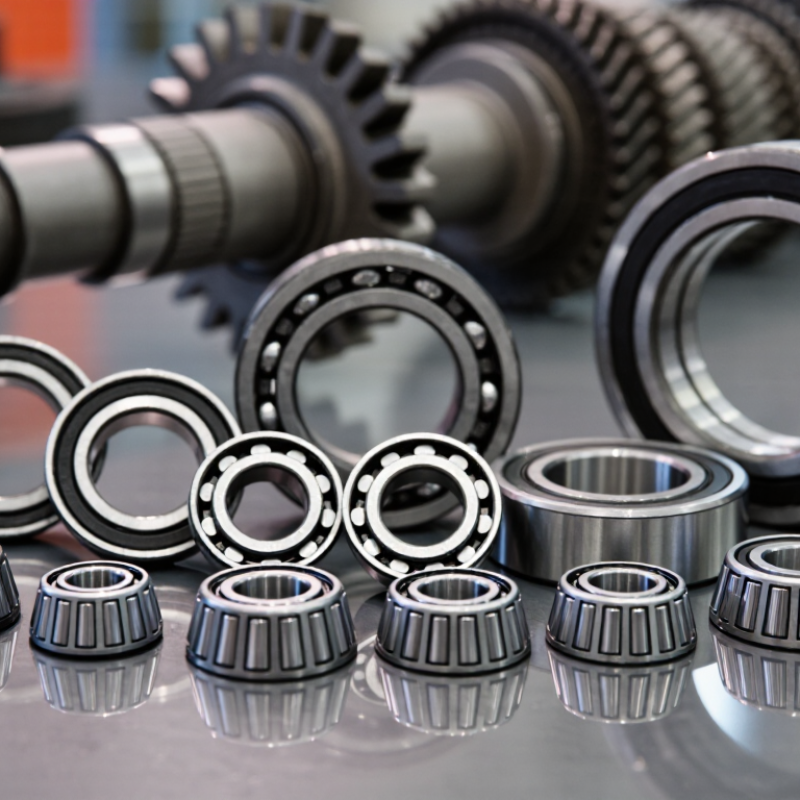
10 Best Tapered Bearings for Industrial Applications?
Tapered bearings use conical rollers between an inner ring and an outer ring. These parts are commonly called the cone, cup, rollers, and cage. Their angled raceways create a controlled contact path. This geometry supports radial loads and axial loads at the same time. Load direction matters.
During operation, roller contact transfers force through the bearing axis. A steeper contact angle usually improves axial-load capacity. However, it can also increase friction and heat. The cage keeps rollers evenly spaced and supports stable motion. Proper alignment remains essential. Even a strong bearing can fail early when the shaft or housing is distorted.
In industrial inspections, I look for discoloration, uneven wear, and damaged roller ends. These signs may indicate poor lubrication, excessive preload, or contamination. Correct internal clearance is critical. Too little clearance raises operating temperature. Too much clearance can create vibration and uneven load distribution. Lubricant selection should match speed, temperature, and surrounding conditions. Seals and clean installation also protect the raceways.
A calculation is not the whole answer. Real machinery experiences shock, thermal expansion, and small alignment errors. I have seen a bearing appear correctly sized yet perform poorly because the mounting fit was ignored. Engineers should verify load ratings, speed limits, shaft tolerances, and adjustment procedures before choosing a tapered bearing. Inspections should record temperature and vibration trends, not only visible damage.
| Selection | Standard Series | Design Type | Nominal Dimensions (Bore × Outside Diameter × Width, mm) | Primary Load Capability | Operating Principle | Typical Industrial Application | Selection Strength |
|---|---|---|---|---|---|---|---|
| 1 | 30204 | Single-row metric tapered roller bearing | 20 × 47 × 15.25 | Moderate radial and axial loads | Conical rollers run between a tapered inner raceway and outer raceway, producing a combined-load reaction. | Compact gearboxes, small conveyor drives, pumps, and general machinery. | CompactCost-effective |
| 2 | 30205 | Single-row metric tapered roller bearing | 25 × 52 × 16.25 | Moderate radial and axial loads | The tapered geometry guides rolling elements so radial and thrust forces are carried through the same bearing. | Automotive hubs, small industrial transmissions, agricultural equipment, and shaft supports. | Balanced capacityEasy replacement |
| 3 | 30206 | Single-row metric tapered roller bearing | 30 × 62 × 17.25 | Moderate-to-high radial and axial loads | The separable cone and cup permit accurate installation, preload adjustment, and service inspection. | Medium-duty gear drives, wheel ends, mixers, and material-handling equipment. | VersatileServiceable |
| 4 | 30207 | Single-row metric tapered roller bearing | 35 × 72 × 18.25 | High radial and axial loads | Line-contact rolling reduces sliding compared with plain bearings while the taper accommodates thrust in one direction. | Industrial gearboxes, conveyors, machine-tool assemblies, and axle supports. | High load densityRigid support |
| 5 | 30208 | Single-row metric tapered roller bearing | 40 × 80 × 19.75 | High radial and axial loads | A matched opposing bearing is commonly used when bidirectional axial location is required. | Heavy-duty reducers, industrial fans, pumps, and conveyor head shafts. | RobustBidirectional arrangement |
| 6 | 30209 | Single-row metric tapered roller bearing | 45 × 85 × 20.75 | High radial and axial loads | Controlled roller-rib contact supports thrust while maintaining stable roller guidance under heavy radial loading. | Mining conveyors, process machinery, gear drives, and large wheel-end assemblies. | Heavy-dutyHigh stiffness |
| 7 | 30210 | Single-row metric tapered roller bearing | 50 × 90 × 21.75 | High radial and axial loads | Separability enables independent mounting of the cup and cone, followed by controlled clearance or preload setting. | Large gearboxes, industrial shafts, construction equipment, and material-handling systems. | High capacityAdjustable clearance |
| 8 | 32206 | Wider single-row tapered roller bearing | 30 × 62 × 21.25 | Higher axial and radial capacity than a comparable narrow design | The greater effective bearing width increases load distribution and improves resistance to overturning moments. | Compact reducers, rotating equipment, pumps, and moderate-duty industrial transmissions. | Wider sectionImproved moment resistance |
| 9 | 31308 | Flanged single-row tapered roller bearing | 40 × 90 × 25.25 | High radial and axial loads | The larger outside diameter and wider section provide greater load-carrying capability within a controlled housing envelope. | Heavy-duty gearboxes, machine tools, pumps, and industrial drive units. | High capacityRigid support |
| 10 | 32310 | Extra-wide single-row tapered roller bearing | 50 × 110 × 42.25 | Very high radial and axial loads | The deep, wide geometry increases effective roller length and load-sharing capability for demanding combined loads. | Mining equipment, large reduction gearboxes, crushers, conveyors, and heavy industrial machinery. | Very high capacityHeavy-duty service |
| Dimensions are nominal ISO metric boundary dimensions for the listed bearing series. Actual dynamic load ratings, static load ratings, speed limits, internal clearance, lubrication requirements, and service life depend on the specific manufacturer’s internal design and operating conditions. Single-row tapered bearings normally carry axial load in one direction and are commonly installed in opposed pairs when axial loads act in both directions. | |||||||
Design and development by Raincastle Communications.
 Customer Support
 Request Sample
 Contact