


Design and development by Raincastle Communications.

China’s stainless steel clamp market spans large export manufacturers and specialized workshops. This guide examines ten suppliers through practical buyer questions. Can they hold a steady diameter tolerance? Do their welds look clean under close inspection? Are material grades and test records clearly documented? These details matter when a clamp faces vibration, moisture, or repeated adjustment.
Stainless Steel Clamps are not interchangeable just because they share a polished finish. Steel grade, band thickness, screw design, and edge treatment all affect performance. A useful selection principle, drawn from materials-selection expert Michael F. Ashby’s approach, is: “Choose a material for the job it must do, not for its label alone.” This is an editorial summary, not a verbatim quotation. It points buyers toward operating conditions, rather than marketing language.
This comparison considers product range, manufacturing capability, quality controls, customization, and export support. It also looks for evidence: published specifications, inspection processes, and clear communication about lead times. Small details can reveal a lot. A rounded band edge may reduce hose damage; a poorly finished screw can complicate installation. Still, public information rarely tells the whole story. That is worth remembering. Buyers should request drawings, samples, and current documentation before making a final choice. The ranking is a starting point, not a substitute for technical review.
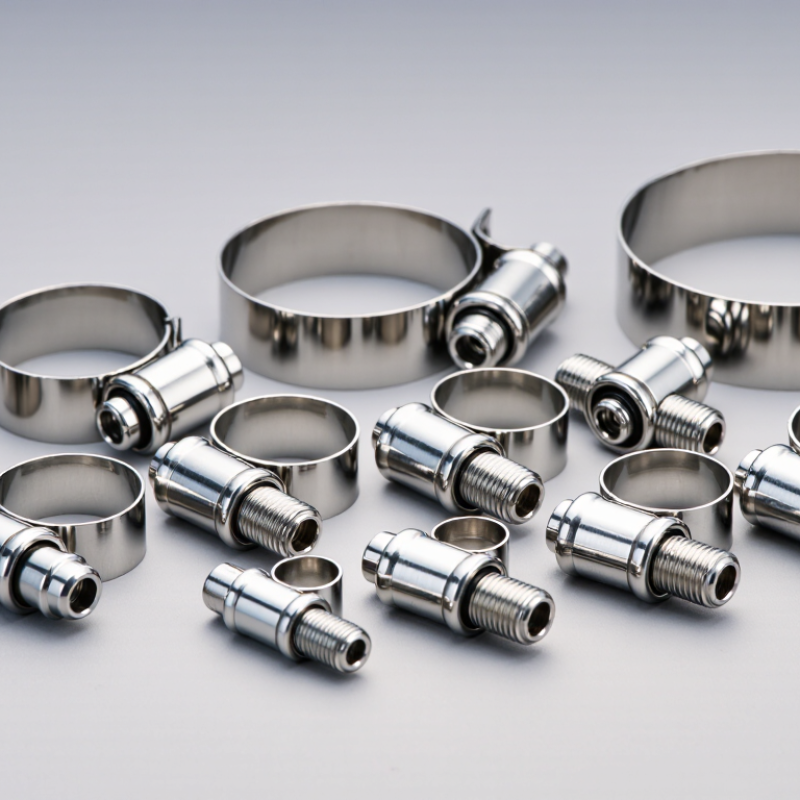
China Top 10 Stainless Steel Clamp Manufacturers?
China’s Clamp Market: Product Types, Applications, and Supply-Chain Scope
China’s clamp market serves plumbing, automotive, industrial equipment, and construction needs. Common products include worm-drive hose clamps, T-bolt clamps, pipe clamps, and V-band assemblies. Each design handles different pressure, vibration, and installation demands. Small parts matter. A clamp with uneven band edges can damage a hose, even when its steel grade is suitable.
Material selection often centers on stainless steel grades 304 and 316. Grade 316 is useful in chloride-rich or coastal environments, while 304 suits many general-purpose installations. The World Stainless Association reported 58.4 million tonnes of global stainless crude steel production in 2023, with China producing about 36.7 million tonnes. This provides useful supply context, but it is not a clamp-market sales figure. Clamp-specific public data is limited, so production totals should not be mistaken for market size.
The supply chain can include steel coil processing, stamping, band forming, screw machining, surface finishing, assembly, and inspection. Buyers commonly check band thickness, edge smoothness, tightening range, corrosion performance, and consistency between samples and production batches. Applications vary widely. A hose clamp for a vehicle may face repeated vibration, while a pipe support clamp must fit its mounting system precisely. Fit is unforgiving. Even capable suppliers may differ in testing depth and documentation, so specifications deserve careful review.
| Product Segment | Typical Construction and Materials | Common Applications | Typical Supply-Chain Scope | Key Selection Considerations |
|---|---|---|---|---|
| Worm-drive hose clamps | Perforated or embossed metal band, housing, and screw; stainless steel versions commonly use 304 or 316 components. | Flexible hoses for water, air, automotive, marine, and general industrial service. | Coil and strip supply, slitting, band forming, housing and screw production, assembly, and dimensional inspection. | Hose outside diameter, band width, corrosion environment, tightening range, and risk of hose damage from band edges. |
| T-bolt clamps | Band tightened by a T-bolt and nut, often with a spring or bridge design; stainless steel is available for corrosive service. | Large-diameter hoses, heavy-duty ducting, charge-air systems, and industrial piping connections. | Metal forming, bolt and nut sourcing or manufacture, welding or fastening, assembly, and load or fit checks. | Required clamp load, vibration, hose construction, operating temperature, and available installation clearance. |
| Constant-tension hose clamps | Spring-steel band or spring-assisted assembly designed to maintain force as the joined materials expand or contract. | Automotive and equipment hoses subject to temperature cycling or changes in hose dimensions. | Spring material processing, forming and heat treatment where applicable, assembly, and force or dimensional checks. | Temperature range, spring characteristics, hose material, diameter range, and the manufacturer’s specified installation method. |
| Pipe repair clamps | Metal shell or band with an elastomer sealing element and bolted closure; stainless steel shells are used where corrosion resistance is required. | Temporary or permanent repair of selected pipe leaks, subject to product design and service conditions. | Shell fabrication, gasket sourcing or molding, fastener supply, assembly, and pressure-related product testing when specified. | Pipe outside diameter, pipe material, pressure and temperature limits, fluid compatibility, and repair-clamp design rating. |
| Rubber-lined pipe clamps and supports | Metal clamp halves or bands lined with elastomer to cushion and support pipework; stainless steel is an option for exposed or corrosive locations. | Building services, HVAC, plumbing, industrial pipe supports, and installations requiring vibration isolation. | Stamping or forming, liner extrusion or molding, bonding or mechanical retention, fastener assembly, and fit checks. | Pipe diameter, support load, liner hardness and compatibility, vibration needs, and mounting configuration. |
| Sanitary tri-clamp fittings | Two ferrules are joined by a hinged or bolted clamp around a gasket; product-contact components commonly use stainless steel such as 304 or 316L, depending on requirements. | Removable connections in food, beverage, pharmaceutical, and biotech process systems. | Stainless stock preparation, ferrule forming or machining, surface finishing, gasket supply, clamp fabrication, and dimensional inspection. | Ferrule dimensions, gasket material, product-contact requirements, cleaning method, surface finish, and applicable process specifications. |
| V-band clamps | Formed V-section band that draws matching flanges together, usually secured with a bolt or quick-release mechanism. | Exhaust connections, turbocharger assemblies, ducting, and other joints designed for V-band flanges. | Strip forming, band and fastener fabrication, joining or assembly, and fit verification against the mating flange profile. | Flange geometry, diameter, temperature, vibration, material grade, and required joint retention. |
| U-bolt pipe clamps | U-shaped rod or bolt with a saddle, plate, or nuts; stainless steel versions are used when corrosion resistance is needed. | Pipe attachment to frames, supports, vehicles, and structural members. | Rod or wire supply, bending or thread rolling, saddle and plate fabrication, fastener assembly, and dimensional checks. | Pipe outside diameter, thread size, support arrangement, load, corrosion exposure, and whether a protective liner is needed. |
| Cable and conduit clamps | Single- or multi-cable retaining hardware, often with a metal body and optional insulating or cushioning insert. | Electrical panels, machinery, cable routing, and conduit support in industrial and infrastructure installations. | Stamping or machining, insert molding or sourcing where applicable, surface finishing, assembly, and size verification. | Cable or conduit diameter, bundle size, insulation protection, mounting method, and exposure to moisture or chemicals. |
| Ear clamps | One-piece band with one or more raised ears that are compressed with a dedicated installation tool; stainless steel designs are available. | Small hoses and tubing in automotive, appliance, fluid-transfer, and general equipment assemblies. | Strip blanking, stamping and forming, deburring, finishing, packaging, and inspection of clamp dimensions and closure geometry. | Hose diameter, material stack, installation-tool compatibility, service environment, and whether removal or adjustment is required. |
Note: This table compares product segments and typical supply-chain activities; it is not a ranking of individual manufacturers. Material grades, dimensions, pressure limits, and compliance requirements should be confirmed against the relevant product specification.
Design and development by Raincastle Communications.
 Customer Support
 Request Sample
 Contact