
China Top Wire Rope Thread Lifting Loop Manufacturer
A Wire Rope Thread Lifting Loop may look simple: a threaded fitting, a wire-rope eye, and a compact connection point. Yet each detail matters. Buyers should check the rope construction, loop dimensions, termination quality, and stated working load limit. A smooth finish cannot prove sound internal construction. Ask for traceable product information and clear inspection guidance before selecting a supplier.
Wire-rope authority Don Sayenga is a relevant industry reference, but no source text was provided to verify a verbatim quotation from him. Rather than inventing words and attributing them to an expert, this introduction uses a practical guiding line: “A lifting connection earns confidence through evidence, not appearance.” That distinction matters when comparing a China-based manufacturer’s samples, documentation, and quality controls. Look closely at the rope where it enters the fitting; check for uneven strands, sharp edges, or visible damage. Small details count.
This outline will examine product design, manufacturing checks, supplier evaluation, and questions buyers should ask before ordering. It will also consider how clear specifications support safer selection and consistent use. No single feature tells the whole story. Even a well-made loop requires correct application, inspection, and handling. Some claims deserve a second look. A careful buyer should ask for evidence, compare like with like, and treat unclear ratings as a reason to pause.
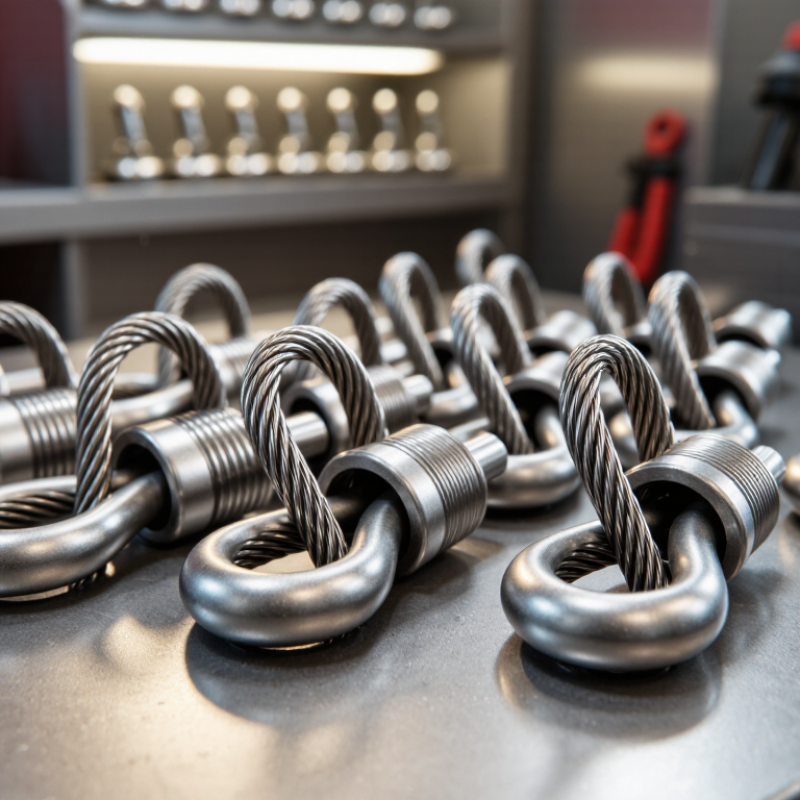
Table of Contents [Hide]
Wire Rope Thread Lifting Loops: Definition and Core Components
A wire rope thread lifting loop is a flexible lifting assembly with a threaded end fitting for connection to a compatible threaded point. Unlike a rigid lifting eye, its wire rope body can bend around a load or align with changing angles. The rope carries the load; the threaded fitting provides the attachment interface. That distinction matters. Exact construction varies by design, so the term does not guarantee one standard configuration.
Core components commonly include steel wire rope, a threaded terminal, and a secured connection between them. The rope consists of strands wound around a core, giving it flexibility and strength. A swaged ferrule or similar termination may hold the rope firmly to the fitting. Some designs also include a protective sleeve near the loop, where contact can cause wear. Check the assembly’s marked working load limit and thread size against the intended connection. Never assume a familiar-looking thread will fit safely. In real use, inspect for broken wires, crushed strands, corrosion, and loose fittings before lifting. Small defects can be easy to miss, especially near the termination.
How Threaded Lifting Loops Are Designed and Manufactured in China
In China, threaded lifting loops are designed around the load direction, attachment surface, and available clearance. Engineers select the rated capacity, thread size, and loop geometry before preparing production drawings. The loop must articulate as intended without striking nearby parts. Material choice and heat treatment also affect strength and wear. A drawing can look complete yet miss a real installation detail, such as a shallow threaded hole.
Manufacturing usually begins with forging or machining the load-bearing body, followed by thread cutting and finishing. Workers check thread dimensions with gauges and inspect surfaces for cracks or defects. Assemblies are fitted and tested according to the agreed product specification. Load testing, where specified, helps verify performance; records should link the test results to the production batch. Clear instructions matter too. Users need to know how to seat the loop fully and keep the load within its permitted direction. Small process variations can still occur, so inspection should not rely on appearance alone.
Tips: Confirm thread engagement and mounting strength before use. Never lift from a partly seated loop. Check the maker’s rated capacity and inspection guidance.
Materials, Load Ratings, and Manufacturing Standards
China Top Wire Rope Thread Lifting Loop Manufacturer
Materials, Load Ratings, and Manufacturing Standards
wire rope lifting loops with threaded ends depend on suitable materials, secure terminations, and clear inspection records. Galvanized carbon steel can suit many general applications, while stainless steel may help in corrosive environments. Neither choice fits every job. Confirm the rope grade, core construction, fitting material, and operating conditions before selecting an assembly. Salt spray, sharp edges, and repeated bending can shorten service life.
Load ratings are not determined by rope diameter alone. They can change with the loop configuration, lifting angle, hitch type, and termination efficiency. Ask for the rated capacity and its test basis, plus batch traceability and inspection criteria. Where applicable, request documentation against relevant requirements, such as EN 13414-1 or ASME B30.9. Check that markings remain readable and match the supplied records. A rating without context is hard to use safely.
Tips: Compare the tag with the work plan before each lift. Look for broken wires, crushed strands, loose fittings, or damaged threads. Stop and seek qualified assessment if anything seems uncertain. I would still verify the actual connection geometry; a neat-looking fit can hide a mismatch.
| Category | Technical Detail | Practical Selection and Safety Notes |
|---|---|---|
| Wire Rope Material | Common options include carbon-steel wire rope, galvanized carbon-steel rope, and stainless-steel rope. | Select material for the environment and application. Galvanizing can improve corrosion resistance, while stainless steel may be suitable for some corrosive environments. Material choice alone does not establish the assembly’s rated capacity. |
| Rope Grade | Steel wire rope strength grades are expressed in N/mm². Available grades and properties depend on rope construction and the applicable product specification. | Use the rope grade and construction specified on the product documentation. Do not estimate a lifting loop’s Working Load Limit (WLL) from rope grade alone. |
| Rope Construction | Stranded rope constructions include designs such as 6×19 and 6×36 families; the actual strand and wire arrangement varies by rope type. | Construction affects flexibility, abrasion behaviour, and suitability for bending around a connection. Confirm the exact construction with the manufacturer’s technical data. |
| Core Type | Typical core options include a fibre core and an independent wire rope core (IWRC). | Core selection affects rope behaviour, including flexibility and resistance to crushing. The appropriate option depends on the design and intended service conditions. |
| Threaded End Connection | A threaded end or fitting must be designed for the specific rope assembly and mating connection. Thread diameter, pitch, engagement, and fitting design are application-specific. | Verify thread compatibility and the fitting’s rated capacity from its documentation. Do not mix components based only on a matching nominal thread size. |
| Loop and Eye Design | A wire rope loop may use a formed eye, a thimble, or a purpose-designed end fitting, depending on the assembly. | Check that the loop geometry and connection suit the pin, hook, or other attachment. Small bend radii and unsuitable contact surfaces can damage rope and affect capacity. |
| Working Load Limit (WLL) | The WLL is the rated maximum load for a specified, complete assembly and its stated conditions of use. | There is no universal WLL for a wire rope threaded lifting loop. Use the marked rating and product documentation for the exact assembly; do not calculate capacity from rope diameter alone. |
| Load Configuration | Capacity can depend on the number of legs, sling angle, loading direction, hitch type, and how the load is shared. | Follow the manufacturer’s rating chart for the exact configuration. Avoid side loading or out-of-plane loading unless the product is specifically rated for it. |
| Manufacturing Standard | EN 13414-1 specifies requirements for steel wire rope slings for general lifting service. EN 12385-4 covers stranded steel wire ropes for general lifting applications. | Check that the standard cited applies to the product being purchased. A rope standard and a sling standard address different product scopes. |
| Inspection and Use | Inspection requirements depend on the applicable regulations, standards, product instructions, and service conditions. ISO 4309 provides guidance on care, maintenance, inspection, and discard of wire ropes used on cranes and hoists. | Inspect before use and remove assemblies from service when damage, deformation, corrosion, or other rejection criteria in the applicable instructions or rules are present. Inspection does not replace required competent-person examinations. |
| Product Documentation | Relevant records may include the assembly identification, WLL, rope and fitting specifications, applicable standard, and inspection or test documentation where required. | Match the identification on the product to its documentation. Confirm traceability and the stated operating limits before lifting. |
Quality Inspection and Safety Requirements
Quality inspection of a wire rope thread lifting loop should start with clear records for each production batch. Check the wire rope for broken wires, flattening, corrosion, and uneven winding. Examine the threaded section for clean, undamaged threads and confirm that its dimensions match the approved drawing. Small defects matter. A thread that feels rough during a hand check may not seat correctly under load.
Testing should follow the product design and the buyer’s stated requirements. Keep test results traceable to the batch, and verify that capacity markings are legible and consistent with the documentation. Before use, confirm that the loop fits its intended threaded anchor and is fully engaged. Do not assume that a lifting loop can handle side loading unless its design specifically allows it. A qualified person should assess the setup and load path.
Visual checks cannot reveal every internal flaw. That is a limitation worth stating plainly. A checklist can become routine, too, so inspectors should record actual findings rather than simply tick boxes. Remove any loop with damaged threads, visible rope deterioration, or permanent deformation from service. When inspection results are uncertain, pause the lift and seek a competent assessment.
Wire Rope Lifting Loop: Broken-Wire Removal Limits
OSHA removal thresholds for wire-rope slings, measured within one rope lay.
Remove a wire-rope sling from service at either threshold: 10 randomly distributed broken wires in one rope lay, or 5 broken wires in one strand in one rope lay. Also remove it for damage such as kinking, crushing, bird-caging, heat damage, or defective end attachments. Follow the applicable regulations and the lifting loop manufacturer’s instructions.
Industrial Applications and Product Selection Factors
Wire-rope threaded lifting loops are used to connect lifting equipment to machinery, steelwork, and fabricated components. In workshops, they may help position a pump housing or lift a removable machine guard. On construction and maintenance sites, they can provide a compact attachment point where space is limited. Fit matters. The loop must suit the tapped hole, thread size, and usable thread depth, not just the expected load.
Selection starts with the load rating and how the loop will be loaded. A straight, aligned lift differs from a pull at an angle; side loading can reduce capacity or damage the connection. Check the working load limit, rope construction, loop dimensions, and any manufacturer guidance for permitted loading directions. Allow room for the lifting hook to seat freely. In wet, dusty, or corrosive environments, consider protective materials and coatings, while checking that they do not conceal damage. Ask for traceable product information and inspection guidance. A catalog choice can look obvious, but access around the attachment point often changes the answer. That detail gets missed. Inspect the rope for broken wires, crushing, or kinks before use, and remove damaged equipment from service.