
contact-button

How to Choose Commercial Trash Cans in 2026?

Choosing Commercial Trash Cans in 2026 requires more than comparing prices, colors, and advertised capacities. A busy café, warehouse, or office produces different waste patterns throughout the day. The right container must match volume, material type, collection frequency, cleaning routines, and available floor space. Small details matter. A narrow lid opening can slow service. A weak caster can damage floors. An attractive bin may still create unpleasant odors when ventilation is poor.

Industry data shows why this decision deserves careful planning. The U.S. Environmental Protection Agency reported 292.4 million tons of municipal solid waste generated in the United States during 2018. Its national recycling rate was 32.1 percent. The World Bank’s What a Waste 2.0 report estimated 2.01 billion metric tons of municipal waste globally in 2016. It projects that figure could reach 3.40 billion metric tons by 2050 without stronger waste management systems. These figures highlight the importance of practical separation, durable construction, and predictable collection workflows.

This guide examines how to choose Commercial Trash Cans for real operating conditions in 2026. It considers capacity, material, mobility, odor control, accessibility, fire-safety planning, and cleaning effort. Stainless steel may suit visible indoor areas. Heavy-duty polyethylene may perform better in loading zones. Measure the route before ordering. Check doorway widths, turning space, liner availability, and peak-hour waste. One mistake remains common: selecting by volume alone. That approach looks efficient on paper, but actual performance depends on people, placement, and maintenance. A better choice is not always the largest container.
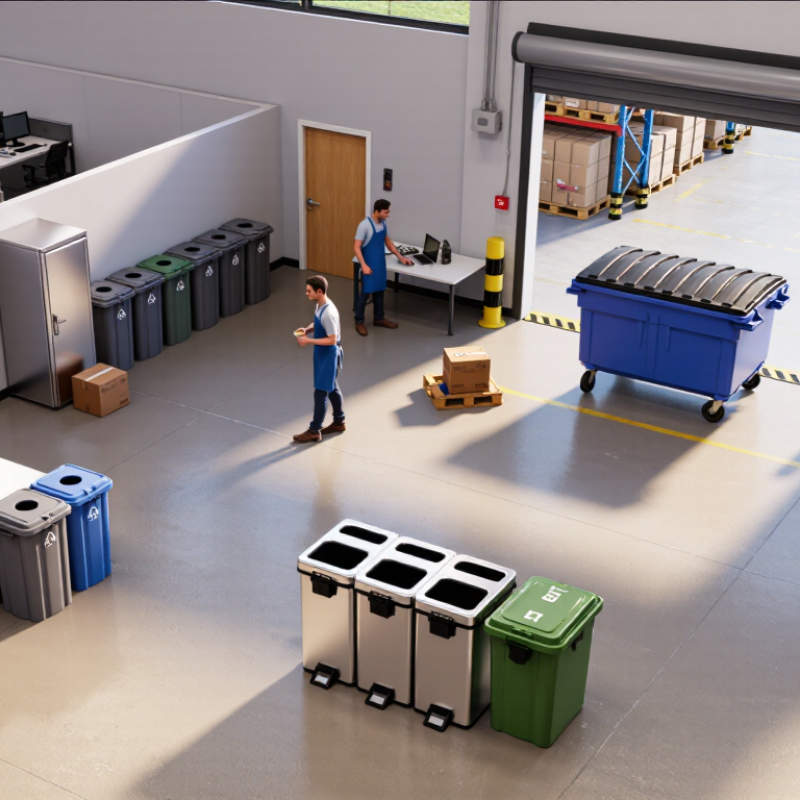
How to Choose Commercial Trash Cans in 2026?

Define Your Commercial Waste Management Needs

How to Choose Commercial Trash Cans in 2026?

Define Your Commercial Waste Management Needs

Choosing commercial trash cans should begin with a waste audit, not a catalog search. Record waste types, daily volume, peak periods, and collection frequency. The World Bank’s What a Waste 2.0 report projects global waste generation could reach 3.4 billion tonnes annually by 2050. Your operation may contribute only a small share, but poor sizing still creates visible problems.

Separate food scraps, recyclables, general waste, and liquids where practical. A cafeteria needs leak-resistant containers near preparation areas. An office may need smaller bins beside printers and shared workstations. EPA data reports that the United States generated 292.4 million tons of municipal solid waste in 2018. That figure includes household and commercial sources, showing why simple disposal habits deserve closer review.

Measure the busiest day, not the average day. A container filled every afternoon may need greater capacity or more frequent collection. Use lids in outdoor areas, especially where wind and rain are common. Consider wheels, liner compatibility, cleaning access, and clear openings for staff. Placement matters more than expected. A poorly positioned bin becomes invisible. I have seen teams buy attractive containers before checking doorway widths, service routes, or washing space. That mistake is easy to repeat. Review local accessibility, sanitation, and fire-safety requirements before final selection.

Compare Trash Can Types, Sizes, and Capacity

How to Choose Commercial Trash Cans in 2026?

Choosing commercial trash cans in 2026 starts with the waste your site actually produces. A busy café needs fast access, while a clinic needs enclosed, easy-clean containers. Open cans suit dry office waste and frequent collection. Swing-top or lid-equipped cans help control odors and visible litter. Foot-pedal models reduce hand contact, but their hinges need regular inspection. In my facility checks, a sturdy lid mattered more than a decorative finish. It sounds obvious, yet it is often missed.

Size should match traffic, not optimism. A 20-gallon can may serve a small restroom, while a 32- to 44-gallon container fits a shared break area. High-volume kitchens may require 64 gallons, but only when staff can move it safely. Measure doorways, elevator gaps, and storage corners before ordering. A tall, narrow can saves floor space; a wider can is usually harder to tip. Capacity labels can mislead when liners are loosely fitted or waste is bulky. Leave roughly 15 percent free space to prevent overflow and simplify removal.

Compare capacity with collection frequency. Two smaller cans can outperform one oversized unit in a long corridor. They also distribute weight better. For recycling, use separate, clearly marked compartments and check whether openings fit bottles, cartons, or paper. Color helps, but signs matter more. I would test one unit for a week before a full purchase. Staff habits may expose problems that a product sheet cannot. Even good planning needs revision.

How to Choose Commercial Trash Cans in 2026? — Compare Trash Can Types, Sizes, and Capacity

Trash Can Type Typical Capacity Approx. Dimensions
(W × D × H)
Best Commercial Use Recommended Placement Key Advantages Important Considerations
Open-Top Wastebasket 7–13 gal
(26–49 L)
10–15 × 7–11 × 20–28 in
(25–38 × 18–28 × 51–71 cm)
Offices, guest rooms, small workstations, and low-volume areas Beside desks, under counters, and inside private rooms Fast disposal, simple access, compact footprint, and easy liner replacement Waste remains visible; the open top offers limited odor and pest control
Slim Rectangular Waste Container 18–23 gal
(68–87 L)
11–14 × 18–22 × 28–34 in
(28–36 × 46–56 × 71–86 cm)
Corridors, offices, classrooms, retail areas, and narrow service points Against walls or beside entrances where floor space is limited Uses narrow spaces efficiently and provides more capacity than a desk bin Check the opening size and liner dimensions; narrow units can be less stable when overfilled
Swing-Top Waste Container 10–23 gal
(38–87 L)
12–16 × 12–18 × 28–36 in
(30–41 × 30–46 × 71–91 cm)
Offices, hotels, healthcare support areas, and front-of-house locations Indoor public areas and locations where waste should be concealed Conceals contents, improves appearance, and reduces direct visibility of waste The lid requires regular cleaning and may slow disposal during busy periods
Step-On Pedal Bin 8–21 gal
(30–79 L)
12–17 × 14–21 × 24–32 in
(30–43 × 36–53 × 61–81 cm)
Food preparation areas, clinics, laboratories, washrooms, and staff kitchens Back-of-house areas where hands-free operation is valuable Foot-pedal operation supports better hygiene and keeps the lid closed between uses Requires clear pedal access; hinges, pedals, and lids need routine inspection
Large Front-Opening Container 32–44 gal
(121–167 L)
18–24 × 20–28 × 34–44 in
(46–61 × 51–71 × 86–112 cm)
Cafeterias, food courts, event venues, warehouses, and high-traffic facilities Central collection points with sufficient clearance around the opening High capacity, fast disposal, and convenient access for large waste volumes Needs a strong floor area and frequent servicing when used in busy locations
Outdoor Dome-Top Container 32–44 gal
(121–167 L)
20–26 × 20–28 × 38–48 in
(51–66 × 51–71 × 97–122 cm)
Parks, campuses, loading areas, outdoor dining, and building entrances Outdoor areas protected from vehicle impact and excessive standing water Dome helps shed rain, limits access to waste, and supports controlled disposal openings Choose weather-resistant construction and anchor the unit where wind or vandalism is a concern
Roll-Out Wheeled Cart 32–96 gal
(121–364 L)
20–31 × 24–36 × 36–48 in
(51–79 × 61–91 × 91–122 cm)
Back-of-house collection, warehouses, restaurants, and scheduled waste pickup Service corridors, loading docks, and designated collection points Large capacity and mobility reduce manual carrying over longer distances Requires wide travel paths, a level surface, and enough room for lid and handle movement
Under-Counter Waste Bin 10–18 gal
(38–68 L)
10–15 × 16–22 × 20–30 in
(25–38 × 41–56 × 51–76 cm)
Bars, cafés, office kitchens, hotel service areas, and compact prep spaces Under worktops, inside cabinets, or beneath service counters Saves floor space and keeps waste close to the point of generation Measure cabinet clearance carefully and ensure the bin can be removed without obstruction
Recycling and Waste Station 20–40 gal total
(76–151 L)
24–40 × 18–30 × 32–48 in
(61–102 × 46–76 × 81–122 cm)
Offices, campuses, airports, cafeterias, and public buildings High-visibility areas near food service, entrances, and shared seating Combines multiple waste streams and makes sorting more convenient for users Use clear labels and consistent opening shapes; incorrect sorting can reduce recycling quality
Washroom Sanitary Waste Bin 4–13 gal
(15–49 L)
8–14 × 8–14 × 16–28 in
(20–36 × 20–36 × 41–71 cm)
Commercial restrooms, changing rooms, and personal-care facilities Individual stalls or beside washroom fixtures, without blocking access routes Compact size and covered designs help contain sensitive waste and odors Service frequently and select smooth, non-porous surfaces that are easy to disinfect

Selection note: Capacity, dimensions, and daily waste volume vary by container design, liner thickness, material density, and local collection practices. For most facilities, select a container that can be serviced before it reaches full capacity and confirm clearance, accessibility, fire-safety, and sanitation requirements before installation.

Evaluate Materials, Durability, and Workplace Safety

How to Choose Commercial Trash Cans in 2026?

Evaluate Materials, Durability, and Workplace Safety

A commercial trash can should match its environment, not merely its advertised capacity. Stainless steel resists corrosion and looks suitable in kitchens, clinics, and food-service areas. Galvanized steel often costs less, but damaged coatings can expose weak spots. HDPE plastic is lighter and quieter. It may deform near heat. Material choice needs evidence. Ask for load ratings, impact testing, cleaning guidance, and replacement-part availability. These details matter more than polished product language.

Durability also depends on daily handling. Inspect hinges, pedal mechanisms, caster wheels, seams, and lid alignment before installation. A can with smooth edges reduces snagging and minor hand injuries. Stable casters help prevent tipping when workers move full containers across uneven floors. Foot pedals support hands-free use, especially where employees handle food or cleaning tools. However, pedals can fail under rough use. A backup inspection schedule is sensible.

Workplace safety includes airflow, odor control, and lifting demands. Choose a size that workers can move without twisting or dragging. Heavy liners may reduce leaks, but they can increase lifting weight. That trade-off deserves attention. Keep cans away from exits, hot equipment, and narrow walkways. I would not judge durability from appearance alone. A sturdy-looking container can still have fragile wheels or a poorly sealed lid. Test one unit during a normal work shift before ordering in quantity.

Check Features for Hygiene, Mobility, and Accessibility

How to Choose Commercial Trash Cans in 2026?

A commercial trash can should control contact, odors, leaks, and unnecessary movement. During facility walk-throughs, I look at the lid, liner fit, and cleaning access first. Hands-free operation reduces touchpoints near food counters and restroom exits. The Centers for Disease Control and Prevention recommends regular cleaning of high-touch surfaces, especially in shared environments. A smooth, nonporous interior makes that routine faster. Small details matter.

Capacity must match the room’s real waste pattern. The U.S. Environmental Protection Agency reported 292.4 million tons of municipal solid waste generated in 2018, or about 4.9 pounds per person daily. That figure does not predict one office perfectly. A busy lobby may need two medium containers instead of one oversized unit. Overfilled cans create odor, spills, and awkward lifting. Underused cans waste floor space. Measure waste for one week before purchasing.

Mobility and accessibility deserve equal attention. Lockable casters help staff move a full container without dragging it across tile. Wide wheels perform better over thresholds, but they also occupy more space. For covered facilities in the United States, ADA Standards generally place operable parts between 15 and 48 inches above the floor, with limited operating force. Choose openings that wheelchair users can reach without twisting. Avoid heavy foot pedals when balance is uncertain. I have seen attractive cans fail here. Local accessibility rules still require verification.

Assess Regulations, Sustainability, and Total Cost

How to Choose Commercial Trash Cans in 2026?

Commercial trash cans should meet current local regulations before appearance becomes a deciding factor. Check requirements for accessibility, fire safety, ventilation, and waste separation. Rules can vary between cities, building types, and public spaces. Ask your facilities manager or local authority for written guidance. A practical site inspection often reveals problems that product pages miss.

Tips: Measure doorways, service lifts, and collection points first. Record daily waste volume for one week. Choose clearly marked containers with secure lids, smooth surfaces, and replaceable parts. Consider recycled or recyclable materials, but verify their durability and end-of-life options. A green claim means little if the container breaks after one season.

Total cost includes purchase price, liners, cleaning time, transport, repairs, and replacement. A cheaper can may need frequent washing or create overflowing waste. In facility reviews, I have found that placement affects labor more than expected. However, forecasts are never perfect. My early estimates often ignored weekend events and seasonal demand. Recheck capacity after installation. A reliable choice balances compliance, long service life, lower maintenance, and realistic site behavior.