


Design and development by Raincastle Communications.

Choosing Flap Turnstile Gates in 2026 requires more than comparing prices and polished product photos. A gate may look impressive in a showroom, yet perform poorly beside a crowded reception desk. Buyers must examine pedestrian flow, site layout, accessibility, security needs, and daily operating conditions. A narrow lobby needs a compact design. A busy office entrance needs fast, quiet passage. A transport facility may require stronger construction and clearer safety controls.
This guide explains the practical details behind a reliable purchase. It considers sensor accuracy, lane width, emergency release functions, motor durability, noise levels, maintenance access, and system compatibility. Integration with access cards, QR readers, biometric devices, visitor platforms, and real-time monitoring can improve control. However, compatibility should be tested before installation. Marketing claims are not enough.
Experience also matters. Ask how the gates behave during morning rushes, power interruptions, wheelchair access, and repeated daily use. Request performance data, warranty terms, installation guidance, and service response records from established suppliers. A lower purchase price may become expensive when replacement parts are slow to arrive. Small details matter.
No single model fits every entrance. That is the uncomfortable part. A highly secure gate can feel restrictive, while a comfortable gate may need stronger supervision. The best decision balances protection, convenience, appearance, lifecycle cost, and responsible operation. This article offers a clear framework for evaluating Flap Turnstile Gates with practical judgment, technical awareness, and room for honest reconsideration.
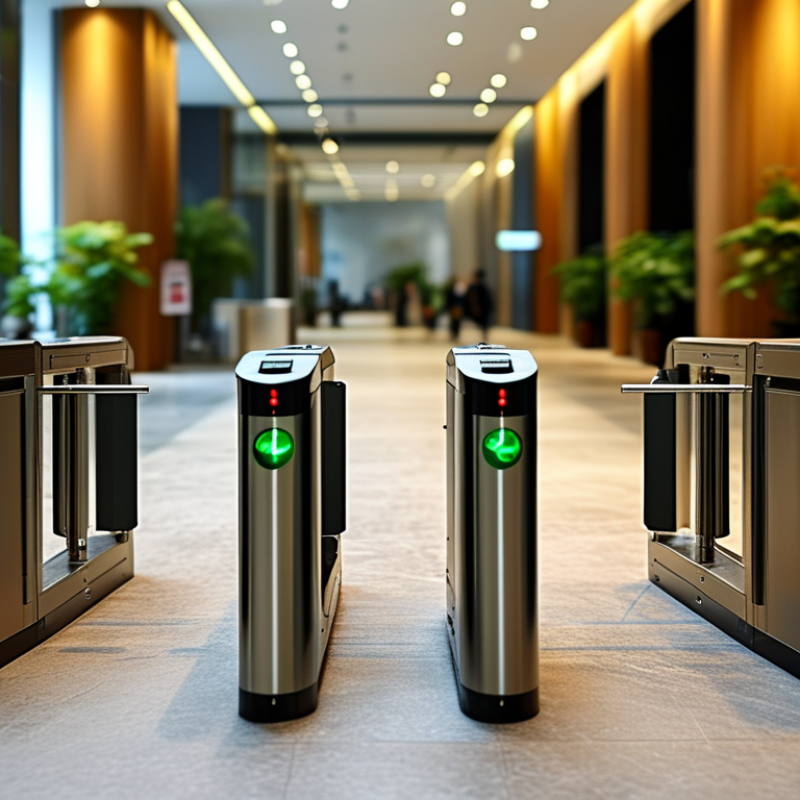
A flap turnstile gate controls pedestrian entry with two retractable glass or acrylic panels. When an authorized credential is detected, the panels slide or swing open. Optical sensors then confirm one person has passed. If someone follows too closely, the system can trigger an alert and close the lane.
The principle is simple. The engineering is not. A 2024 MarketsandMarkets report expects the global access control market to grow by more than 8% annually through 2029. That growth reflects demand for connected, measurable entry systems. For 2026, buyers should check reader compatibility, lane width, emergency release, and integration with access software. A quiet motor also matters in offices and transport hubs.
Throughput deserves a practical test. A narrow lane may slow groups during morning peaks. Sensor calibration must handle luggage, umbrellas, and children without creating false alarms. The system should also support accessible passage, clear status lights, and safe opening during power failure. Fortune Business Insights reports continued expansion in the physical security market, but market growth does not guarantee good installation. A sales specification can look perfect on paper. It may not match your floor, traffic pattern, or maintenance skills. Observe a working gate first. Then question the assumptions.
| Selection Dimension | What a Flap Turnstile Gate Is | How It Works | Typical Practical Data | Recommended Choice for 2026 |
|---|---|---|---|---|
| Basic Operating Principle | An entrance-control barrier with two retractable or swinging panels that regulate pedestrian access. | A valid credential sends an opening signal to the motor or actuator. The panels open, detect passage, and close after the user crosses. | One authorized person per passage cycle; configurable opening and closing time. | Choose a bidirectional model when the entrance must support both entry and exit. |
| Standard Passage Width | The clear distance between the two barrier cabinets or between the flap panels. | The control system opens the panels to create the selected walking lane. | Approximately 550–600 mm for standard lanes; approximately 900–1,000 mm for accessible lanes. | Use at least one accessible lane of approximately 900 mm clear width where building access requirements apply. |
| Pedestrian Throughput | The approximate number of people who can pass through one lane during normal operation. | Throughput depends on authentication speed, user spacing, opening time, and anti-tailgating settings. | Typically about 25–35 persons per minute with credential-based access and orderly movement. | Compare tested throughput using the same credential technology and passage conditions. |
| Authentication Methods | The technologies used to verify whether a person is authorized to enter. | The gate controller receives a permission signal from an access-control reader or security system. | Common options include RFID cards, NFC credentials, QR codes, PIN keypads, biometric readers, and mobile credentials. | Select an open interface such as Wiegand or OSDP when integration flexibility and encrypted reader communication are required. |
| Safety Detection | Sensors that help prevent the panels from closing on a person or object. | Infrared or other presence sensors monitor the passage area and can stop, reopen, or hold the flaps when an obstruction is detected. | Typical systems use multiple detection zones, including entrance, center, and exit monitoring. | Prioritize adjustable presence detection, obstruction reversal, and an emergency release function. |
| Anti-Tailgating and Anti-Passback | Security functions designed to prevent unauthorized users from following an authorized user through one opening cycle. | Passage sensors compare the credential event with the movement of people through the lane. | Detection performance varies with sensor layout, walking speed, user spacing, and control logic. | Choose a model with configurable detection sensitivity and event logging for higher-security locations. |
| Emergency and Power-Failure Behavior | The gate’s response during fire alarms, emergency signals, or loss of electrical power. | A fire-alarm or emergency input can command the panels to open; a backup battery or mechanical release may support controlled operation. | Fail-safe opening is commonly selected for evacuation routes, while fail-secure behavior may be used for restricted security zones where legally permitted. | Confirm the required emergency mode with the local fire-safety authority and building regulations. |
| Operating Speed | The time required for the panels to open and close after authorization. | A motor, gearbox, or actuator moves the panels according to programmed acceleration and timing. | Many commercial systems complete an opening or closing movement in roughly 0.5–1.5 seconds, depending on the design and safety settings. | Choose adjustable speed rather than maximum speed alone, especially in schools, hospitals, and crowded lobbies. |
| Cabinet and Flap Materials | The structural materials used for the housing and barrier panels. | The cabinet supports the drive mechanism, sensors, controller, and reader installation. | Common construction includes stainless steel or coated steel cabinets with tempered-glass, acrylic, or polycarbonate flaps. | Use corrosion-resistant stainless steel in public areas and higher-impact transparent panels where visibility is important. |
| Ingress Protection | The degree of protection against dust and water entering the equipment enclosure. | The enclosure design and seals reduce exposure of electrical and mechanical components to the environment. | Indoor models commonly use basic protected enclosures; outdoor models should be selected with a verified outdoor IP rating. | For exposed installations, specify a documented rating such as IP54 or higher when suitable for the site conditions. |
| Installation Environment | The location and conditions in which the gate will operate. | Floor levelness, drainage, temperature, humidity, lighting, and pedestrian flow affect reliable operation. | Best suited to level, stable floors in offices, transit facilities, campuses, gyms, and controlled public entrances. | Use an indoor unit for dry lobbies; select an outdoor-rated design for unprotected entrances. |
| Power Requirements | The electrical supply needed to operate the controller, sensors, reader, and drive system. | The power supply converts building electricity to the low-voltage power used by the gate electronics and motor. | Commercial units commonly use 100–240 V AC input with internal low-voltage electronics; exact consumption varies by model and operating cycle. | Verify voltage, standby consumption, peak motor demand, grounding, and backup-power compatibility before installation. |
| Control and Integration | The electrical and software connection between the gate and a wider access-control system. | Inputs and outputs exchange authorization, door status, alarm, emergency, and passage events. | Common interfaces include relay inputs and outputs, Wiegand, RS-485, OSDP, Ethernet, and API-based integration. | Choose documented interfaces and status feedback when connecting to visitor management, elevator control, CCTV, or a central security platform. |
| Maintenance Requirements | The routine inspection, cleaning, adjustment, and replacement work needed to keep the gate reliable. | Technicians inspect sensors, fasteners, panels, drive components, wiring, and emergency-release functions. | Maintenance frequency depends on traffic, dust, humidity, impact risk, and manufacturer instructions. | Plan periodic inspection and keep critical items such as sensors, panels, fuses, and drive components available. |
| Accessibility and User Flow | The design features that allow people with mobility aids, luggage, or strollers to pass safely. | A wider lane and suitable sensor configuration provide additional clearance and more controlled movement. | Accessible lanes are commonly designed around approximately 900–1,000 mm clear width, subject to local requirements. | Provide clear signage, adequate approach space, visual status indicators, and a wider lane where required. |
| Best-Fit Application | The type of site where the gate provides the most practical balance of security, appearance, and pedestrian control. | The system combines credential verification, barrier movement, passage detection, and event reporting. | Well suited to office lobbies, corporate campuses, educational facilities, fitness centers, residential buildings, and controlled public venues. | Choose flap gates for organized pedestrian traffic where a visible, compact, and relatively quiet barrier is preferred. |
| Limitations to Consider | Conditions in which a flap turnstile may not be the most suitable access solution. | The mechanism relies on correct sensor alignment, controlled pedestrian behavior, and a suitable installation environment. | It may be unsuitable for vehicle access, heavily exposed outdoor locations without weather protection, or sites requiring frequent trolley and large-equipment movement. | Consider swing gates, sliding doors, or full-height turnstiles when the site requires wider equipment access, stronger perimeter resistance, or different weather performance. |
Note: The figures shown are typical planning ranges rather than guaranteed specifications. Confirm final dimensions, throughput, electrical ratings, accessibility provisions, emergency behavior, and local compliance requirements for the selected installation.
Design and development by Raincastle Communications.
 Customer Support
 Request Sample
 Contact