contact-button

How to Choose Marble Countertops for Your Home

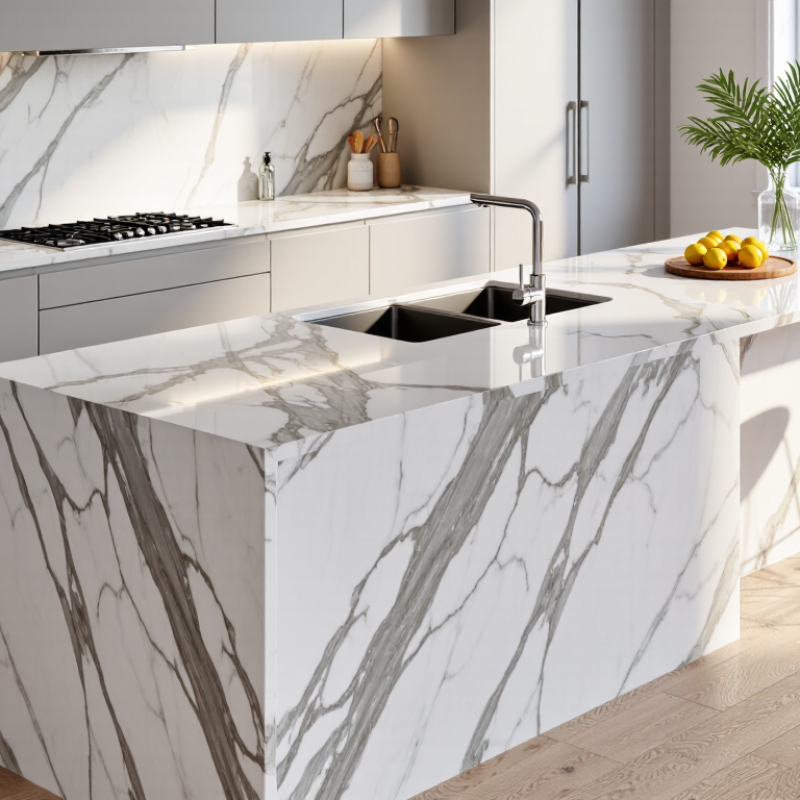
Marble Countertops can make a kitchen feel calm and luminous, but choosing a slab takes more than liking its color. Veins shift. The polished surface catches window light, while a honed finish feels softer and more muted. Each slab has its own pattern, so a small sample may not show the full effect.

Renaissance sculptor Michelangelo, a master of working with marble, is often credited with saying, “I saw the angel in the marble and carved until I set him free.” His words speak to the material’s individuality, though they are not countertop advice. For a home, that individuality means inspecting the actual slab, not relying only on a showroom photo. A dark vein near the sink may become the room’s focal point—or a detail you tire of.

This guide looks at practical choices: color, veining, finish, edge profile, and slab layout. It also considers maintenance, sealing, installation, and everyday wear, so appearance is balanced with realistic care. Ask the fabricator how the stone will be cut and where seams may fall. Bring cabinet and flooring samples, too. Small details matter.

Marble can etch when acidic foods meet its surface. That is not a flaw to hide; it is part of living with the material. Still, some households may prefer a less demanding option. The right choice depends on your habits, budget, and tolerance for patina—not just a beautiful showroom moment.

How to Choose Marble Countertops for Your Home

Assess Your Kitchen’s Needs and Countertop Requirements

Before choosing marble, watch how your kitchen works for a few ordinary days. Do you roll dough, set down hot pans, or prepare acidic foods like lemons and tomatoes? Marble can etch when acids contact its surface, and it may stain if spills sit too long. Be honest about your habits. A pale, polished slab may look beautiful, but it can show marks sooner than a busier household expects.

Tips: Measure the full counter run, including corners, sink cutouts, and overhangs. Note where seams might fall. Bring cabinet and flooring samples to the stone yard, since indoor lighting can change how a marble’s veining appears. Ask a fabricator about slab thickness, edge options, sealing, and care instructions for the specific stone. Small details matter.

Also consider your sink and daily cleanup routine. An undermount sink creates a clean edge, but the cutout and support need careful planning. Honed finishes often soften glare, though they can still mark; polished surfaces reflect more light and may make etching easier to notice. Marble varies from slab to slab, so inspect the actual piece rather than relying only on a small sample. I once underestimated how a strong vein would cross a narrow counter section. It looked different at home. Decide whether that variation feels lively or distracting before fabrication begins.

How to Choose Marble Countertops for Your Home

Assess Your Kitchen’s Needs and Countertop Requirements

Consider how your countertop will handle everyday use. Marble is relatively soft, so it can scratch or etch more readily than harder natural stones.

Approximate Mohs hardness ranges; natural stone can vary. Hardness is one factor to consider alongside appearance, maintenance, and how you use your kitchen.

Compare Marble Types, Colors, Veining, and Finishes

Marble varies from quiet, fine-grained stones to dramatic slabs with bold, branching veins. Carrara-style marble often has a soft gray background and gentle movement, while Calacatta-style varieties may show stronger contrast. Names are not consistent across suppliers, so inspect the actual slab rather than relying on a label. Hold a sample beside your cabinets and view it in morning and evening light. Small samples can mislead.

Color affects the room’s feel. White marble can brighten a dim kitchen, while green, beige, or deep gray stones add warmth and weight. Veining also changes how seams and cutouts appear. Ask the fabricator to mark sink and cooktop openings on a slab photo before cutting. It is a small step, but easy to overlook.

Tips: Compare honed and polished samples. Polished marble reflects more light and can show scratches; honed finishes feel softer but may absorb stains more readily. Marble can etch when acids such as lemon juice touch the surface. Ask how the selected stone should be sealed and maintained. Even careful owners get marks. Decide which signs of use you can live with.

Inspect Slabs for Quality, Patterns, and Natural Defects

When choosing marble countertops, inspect the actual slab in daylight, not only a small sample. Move along its full length and look for changes in color, veining, and surface texture. Strong veins can create a striking focal point, but check how they will meet at corners and seams. A pattern that looks balanced on one slab may feel busy across a large island. Take photos from several angles. I’ve found that phone screens can distort pale tones, so compare them with the stone in person.

Tips: Ask the fabricator to mark visible fissures, filled areas, and planned cutouts. Natural lines are common, but a deep crack near a sink or cooktop deserves closer review. Run your hand gently over the surface. Notice rough spots, small pits, or repairs. Ask how each feature may affect fabrication and daily use.

Look closely at the edges and back of the slab, too. Uneven thickness or poorly bonded repairs may matter during installation. Marble varies naturally, and not every vein is a flaw. Still, it can be hard to judge from one visit. Bring cabinet or flooring samples, then view them beside the slab. If a mark worries you, ask for a clear explanation before approving the layout.

Match Marble to Your Design, Budget, and Maintenance Needs

Marble can make a kitchen feel calm and luminous, but choose it for how you live, not just how it photographs. Houzz’s 2024 U.S. Kitchen Trends Study found that 42% of renovating homeowners chose quartz countertops, a reminder that many prioritize lower upkeep. Marble is softer and can etch when acidic foods, such as lemon juice or vinegar, touch the surface. Ask to inspect the actual slab in daylight: gray veining may read warm indoors, while a dramatic vein can dominate a small island. Look closely at the edges and back, too.

Budget for more than the stone. Get an itemized quote covering fabrication, cutouts, delivery, installation, and sealing; prices vary by slab, thickness, and local labor. The Natural Stone Institute recommends prompt cleanup and stone-safe cleaners for marble. Sealing can reduce staining, but it does not prevent etching. Keep a soft cloth nearby. A pale slab may look pristine in a showroom, then feel too precious beside a busy breakfast table. That trade-off deserves an honest pause. If you cook often, compare a sample against coffee, citrus, and your lighting before committing; a small test cannot predict every spill, but it can reveal whether the finish suits your routine.

Confirm Measurements, Edge Profiles, Sealing, and Installation Details

Before ordering marble, have the fabricator measure after the cabinets are secured and level. Check wall runs, sink and cooktop cutouts, overhangs, and seams on a site template; a small error can leave a visible gap beside a backsplash. The Natural Stone Institute’s Dimension Stone Design Manual identifies 20 mm and 30 mm as common slab thicknesses. Confirm the selected slab’s actual thickness and support needs, especially around wide cutouts. Ask to see the slab and mark vein direction before fabrication. It is easy to overlook this.

Choose an edge profile that suits the room and the stone’s use. A softened edge can reduce sharp corners, while an intricate profile may expose more veining and require extra cleaning. Ask the fabricator how the chosen marble performs with acidic spills, then confirm whether a penetrating sealer is recommended. Sealing can slow absorption; it does not make marble stain-proof. Get the product, application timing, and care instructions in writing. I would recheck these details, even when the showroom sample looked simple.

Tips: Request a written drawing showing dimensions, seams, sink position, edge profile, and overhangs. Confirm who handles plumbing disconnection, cabinet protection, delivery access, and final sealing. Keep a spare tile or sample nearby for color comparison; the installed slab may read differently in your kitchen light.

How to Choose Marble Countertops for Your Home — Confirm Measurements, Edge Profiles, Sealing, and Installation Details

Decision Area What to Confirm Practical Guidance Questions to Ask Before Fabrication
Slab and appearance Stone type, color, veining, surface finish, and the specific slab selected. Natural marble varies from slab to slab. View the actual slab when possible, and check how its veining will appear across the planned countertop and any seams. Can the selected slab be reserved? Where will seams fall, and how will the veining be oriented?
Measurements and template Cabinet dimensions, wall angles, sink and cooktop openings, faucet holes, and countertop overhangs. Have the fabricator template the cabinets after they are installed and leveled. Confirm appliance specifications and sink details before cutting begins. Who takes the final measurements? Which fixtures and appliances must be on site or specified before templating?
Thickness and support Stone thickness, cabinet support, seams, and any required reinforcement. Common nominal marble slab thicknesses include about 2 cm and 3 cm. Support needs depend on the slab, layout, overhang, cutouts, and cabinet construction; follow the fabricator’s specifications. Will the chosen thickness need a built-up edge or extra support? How will seams and cutouts be supported?
Edge profile Profile shape, edge thickness, corners, and consistency with the room’s style and use. Common options include eased, rounded, beveled, and ogee edges. A simpler eased edge has a clean appearance, while more decorative profiles add visual detail. Rounded edges can reduce sharp corners. Can I review a physical edge sample? Does the selected profile change the finished thickness or price?
Sealing and care Whether the stone needs sealing, the recommended product, and the care instructions. Sealer can reduce liquid absorption but does not make marble stain-proof or prevent etching from acids. Follow the stone supplier’s guidance; test absorbency and reseal only as recommended. Will the countertop be sealed after fabrication? What product and care routine are recommended for this stone and finish?
Everyday performance Exposure to acidic foods, oils, spills, heat, and abrasive cleaners. Marble is calcite-based and can etch when exposed to acidic substances such as lemon juice or vinegar. Wipe spills promptly, use cutting boards and trivets, and clean with a stone-safe product. What marks or changes are typical for this finish? Which cleaners should be avoided?
Installation logistics Access route, cabinet readiness, plumbing disconnection, seam placement, and installation schedule. Confirm that cabinets are secure, level, and ready before templating and installation. Large stone pieces are heavy; the installer should plan handling, access, and any necessary supports. Who is responsible for removing the old countertop and reconnecting plumbing? How will the slab be carried into the home?
Final inspection Fit, seams, edge finish, cutouts, surface condition, and cleanup. Inspect the installed work under normal room lighting. Review seam alignment and the finished areas around sinks, walls, and appliances before signing off. How should chips, fit concerns, or installation issues be reported, and within what period?

Planning note: Marble is a natural stone, so veining and color variation are expected. Confirm measurements, support, sealing, and care requirements with the fabricator for the specific slab and installation.