
How to Choose the Best Spunlace Machine from China?
Choosing the best Spunlace Machine from China requires more than comparing prices on a supplier website. The right decision begins with your material, production capacity, and finished product requirements. Cotton, viscose, polyester, and blended fibers may behave differently during web forming and hydroentanglement. A machine designed for facial wipes may not suit medical fabrics or heavy cleaning cloths. Small details matter.
Experienced buyers usually examine line speed, working width, water pressure, filtration, energy consumption, and drying performance. They also review the supplier’s installation support, spare-parts availability, and operator training. A factory visit can reveal practical details that brochures often hide, such as workshop organization, welding quality, and test-line cleanliness. Ask for sample production using your own fiber blend. Real material tells the truth.
Technical documents should be clear and traceable. Request machine layouts, component brands, maintenance schedules, and performance records from comparable installations. Independent inspections and documented quality checks can reduce avoidable risks. Still, no supplier is perfect. A polished video does not prove stable long-term performance. I have seen promising specifications become difficult when communication is vague or changes are poorly recorded. That possibility deserves attention.
This guide explains how to assess Chinese Spunlace Machine manufacturers with a practical, evidence-based approach. It considers engineering capability, customization, total operating cost, delivery reliability, and after-sales service. The cheapest quotation may become expensive later. A thoughtful comparison protects your investment and supports consistent nonwoven production. Performance matters most.
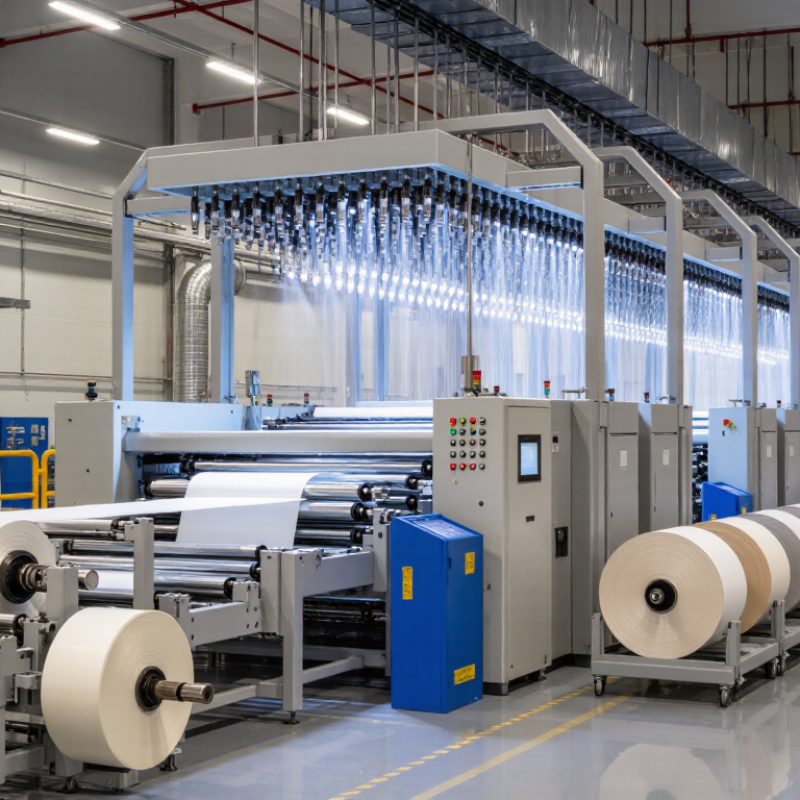
Table of Contents [Hide]
Spunlace Machine Basics and Production Requirements
How to Choose the Best Spunlace Machine from China?
A spunlace machine forms nonwoven fabric by entangling fibers with high-pressure water jets. Its basic process includes web forming, hydroentangling, dewatering, drying, and winding. The machine should match your fiber blend, target GSM, fabric width, and daily output. Cotton, viscose, polyester, and recycled fibers behave differently during web formation. A trial can reveal problems that a specification sheet hides. Small details matter.
Define the required fabric weight and line speed before contacting a supplier. For example, lightweight wipes may need stable control at low GSM, while medical or industrial materials require stronger entanglement. Check pump pressure, nozzle design, water filtration, drying capacity, and energy consumption. Ask for actual production data, not only maximum speed. Maximum speed can be misleading. Confirm whether the machine can maintain uniformity across the full working width. Uneven edges may increase waste and reduce usable rolls.
A reliable Chinese supplier should provide layout drawings, utility requirements, inspection records, and commissioning support. Request samples made with your own fibers. Measure tensile strength, absorbency, thickness, appearance, and shrinkage in an independent laboratory when possible. Review spare-part availability and operator training before signing. I would also inspect the water-recycling system carefully. It may look efficient, yet poor filtration can damage nozzles and interrupt production. Leave room for adjustment; real fibers rarely behave exactly like test materials.
Key Specifications for Comparing Chinese Spunlace Machines
How to Choose the Best Spunlace Machine from China?
Key Specifications for Comparing Chinese Spunlace Machines
When comparing Chinese spunlace machines, start with output requirements, not advertised speed. Check usable web width, target basis weight, fiber types, and finished roll diameter. A 3.2-meter line may sound impressive, but it is unsuitable if your product needs narrow, frequent changes. Ask for stable speed at your actual GSM range. Not only the maximum.
Evaluate the forming and entanglement sections closely. Compare carding capacity, cross-lapper accuracy, nozzle pressure, pump flow, and filtration design. Confirm whether the machine maintains even strength across the web. Request trial results using your fiber blend, such as viscose and polyester. Measure tensile strength, thickness, absorbency, and defects. Photos are not enough. Energy and water consumption also deserve careful attention. Ask for figures per kilogram of finished fabric, not vague hourly estimates.
Controls should record pressure, speed, moisture, alarms, and recipe changes. Inspect access doors, cleaning points, spare-part availability, and maintenance intervals. A reliable supplier should provide drawings, commissioning support, operator training, and documented acceptance tests. Verify electrical standards and safety documentation for your destination market. I would also speak with operating customers, when possible. One warning: the cheapest quotation can hide weak pumps or costly downtime. Yet the highest specification is not automatically the best choice. My own comparison might still miss small maintenance habits that affect output. Leave room for an on-site audit and a second technical review.
How to Choose the Best Spunlace Machine from China?
Key specifications for comparing Chinese spunlace machines. The figures below show representative reference configurations; actual performance depends on fiber type, web-forming process, hydroentanglement pressure, drying system, and product requirements.
Wider working widths and higher line speeds can increase output, while the basis-weight range indicates the machine’s flexibility for producing wipes, medical nonwovens, hygiene materials, and filtration media. When evaluating a supplier, also verify energy consumption, water filtration, automation level, fabric uniformity, and after-sales support.
How to Evaluate Machine Quality, Materials, and Technology
Choosing a spunlace machine from China requires more than comparing prices. The real test is how consistently it handles your planned fiber blend, web weight, and production speed. Ask for material samples before discussing final specifications. During a factory visit, inspect the forming line, water filtration, nozzle condition, and control cabinet. Small details matter. A clean water circuit often reveals disciplined maintenance.
Evaluate fiber compatibility carefully. Viscose, polyester, cotton, and recycled fibers may behave differently. Request trial records using your target blend, not a convenient substitute. Check web uniformity across the full working width. Measure basis weight, tensile strength, moisture, and thickness at several points. Look for calibrated sensors and traceable test reports. If data seems perfect, question it. Machine quality also depends on frame rigidity, roller balance, weld finish, and spare-part access. A polished surface is not proof of durability.
Technology should solve a production problem, not decorate a brochure. Examine PLC functions, alarm history, recipe storage, energy monitoring, and remote diagnostic options. Confirm whether operators can adjust settings without stopping the entire line. Ask about commissioning, training, response times, and documented acceptance tests. Independent inspection is worthwhile. I would also leave room for doubt: laboratory results may not match a busy factory floor. Run a sustained trial with real operators, changing humidity and shift conditions. That imperfect test often exposes the machine’s truth.
Supplier Verification, Certifications, and Factory Capabilities
How to Choose the Best Spunlace Machine from China?
Choosing a spunlace machine from China requires more than comparing prices. Supplier verification should begin with a traceable company profile, export history, and stable technical team. Ask for business registration records, production photos, and recent customer references. A video call can reveal practical details: machine assembly space, spare-parts storage, testing areas, and control cabinet conditions. Do not rely on polished photographs alone. They can hide important gaps.
Request certificates relevant to electrical safety, pressure systems, electromagnetic compatibility, and quality management. Check certificate numbers with issuing bodies when possible. Confirm that the listed factory matches the contract entity. For nonwoven production, request test data for web width, line speed, fiber blending, energy use, and fabric uniformity. A reliable supplier should explain tolerances, maintenance intervals, and operator training clearly. Vague answers deserve caution.
Factory capability is best judged through a witnessed trial, not promises. Send your actual fiber mix or production specification. Inspect basis weight, tensile strength, moisture, and edge quality. Speak with engineers who will support installation after shipment. Confirm lead times for rollers, pumps, sensors, and software updates. I have learned that a fast quotation can still signal weak preparation. No checklist is perfect. Leave room for an independent inspection, especially for large or technically unfamiliar projects. Reliable decisions come from matching documents, observed workmanship, and repeatable test results.
Cost, Support, Installation, and Long-Term Operating Value
How to Choose the Best Spunlace Machine from China?
A low purchase price is attractive, but it rarely measures total operating value. Grand View Research valued the global nonwoven fabrics market at approximately US$53.5 billion in 2022. Its forecast also indicates strong growth through 2030. This demand makes machine reliability more important than a cheap initial quotation. Compare output, usable width, fabric weight range, water consumption, and energy use. Ask for verified production data, not only catalogue figures.
Support becomes visible during installation. Request a detailed commissioning schedule, operator training, remote diagnosis, and spare-parts availability. A supplier should provide electrical drawings, maintenance intervals, and acceptance-test standards. Installation delays can leave workers waiting beside an expensive idle line. It happens. The Institute for Supply Management reports that supplier performance affects production continuity and operating costs across manufacturing sectors. Therefore, evaluate response times and technical language skills before signing.
Long-term value depends on stable quality. Smithers’ industry analysis expects continued expansion in spunlace applications, including hygiene, medical, and filtration materials. A machine should maintain even hydroentanglement, low web breaks, and consistent moisture control. Calculate cost per tonne, including filters, pumps, needles, wastewater treatment, labor, and downtime. I would also inspect a running reference line, though this step is often skipped. That was a mistake in one evaluation. A technically impressive machine may still disappoint when local maintenance is weak or spare parts arrive slowly.
How to Choose the Best Spunlace Machine from China? - Cost, Support, Installation, and Long-Term Operating Value
Indicative planning comparison for nonwoven producers. Actual values depend on fiber type, product specification, automation level, utilities, freight, and local installation conditions.
| Evaluation Dimension | Pilot / Entry Line | Standard Commercial Line | High-Capacity Industrial Line | Why It Matters |
|---|---|---|---|---|
| Typical annual output | 1,000–2,000 tonnes | 3,000–6,000 tonnes | 8,000–15,000 tonnes | Use realistic production estimates based on operating hours, line speed, uptime, and product weight. |
| Usable web width | 1.6–2.5 m | 2.5–3.5 m | 3.5–5.0 m | The width should match target products, converting equipment, and expected order volume. |
| Indicative line speed | 40–80 m/min | 60–120 m/min | 100–180 m/min | Rated speed is not the same as saleable output; allow for startup, cleaning, changeovers, and rejects. |
| Indicative equipment investment | US$1.5–3.0 million | US$4.0–8.0 million | US$9.0–18.0 million | Planning ranges generally exclude land, buildings, utilities, freight, import duties, taxes, and working capital. |
| Estimated installed project cost | US$2.2–4.2 million | US$5.5–11.0 million | US$12.0–25.0 million | Include electrical work, water treatment, compressed air, steam or thermal oil, commissioning, and local construction. |
| Typical energy consumption | 2.0–3.5 kWh/kg | 1.5–2.8 kWh/kg | 1.2–2.3 kWh/kg | Values are indicative total electrical consumption; drying, water circulation, and auxiliary systems can significantly affect results. |
| Water circulation requirement | 80–150 m³/h | 150–300 m³/h | 250–500 m³/h | Closed-loop filtration and water treatment help reduce operating cost and stabilize hydroentanglement quality. |
| Operators per shift | 4–8 people | 6–12 people | 10–18 people | Automation can reduce labor, but quality control, maintenance, packing, and material handling still require trained personnel. |
| Manufacturing and delivery lead time | 5–8 months | 7–11 months | 10–16 months | Confirm the schedule for design approval, fabrication, factory testing, packing, shipping, and site commissioning. |
| On-site installation period | 4–6 months | 6–9 months | 8–12 months | The period includes mechanical and electrical installation, dry testing, wet commissioning, trial production, and operator training. |
| Recommended commissioning support | 2–4 specialists | 4–7 specialists | 6–10 specialists | Support should cover forming, hydroentanglement, dewatering, drying, winding, automation, and process optimization. |
| Standard warranty expectation | 12 months after acceptance | 12 months after acceptance | 12 months after acceptance | Define whether the warranty begins at shipment, installation, successful acceptance, or a maximum long-stop date. |
| Remote technical response target | Within 24–48 hours | Within 12–24 hours | Within 4–12 hours | Response time should be written into the service agreement, especially for production-critical failures. |
| Critical spare-parts package | US$50,000–120,000 | US$100,000–250,000 | US$200,000–500,000 | Budget for pumps, valves, sensors, cutters, bearings, electronic modules, filters, seals, and wear components. |
| Expected planned uptime after stabilization | 75–85% | 80–90% | 85–93% | Uptime depends on preventive maintenance, raw-material consistency, operator skill, spare-parts availability, and product mix. |
| Typical maintenance intensity | Moderate; frequent manual checks | Moderate; scheduled preventive maintenance | High; condition monitoring recommended | Ask for maintenance intervals, lubrication plans, service manuals, and a list of locally serviceable components. |
| Best fit for | Product development, regional demand, and flexible small-batch production | Most general-purpose commercial applications | Large-volume contracts and continuous export production | Choose capacity from confirmed market demand rather than maximum rated output alone. |
| Long-term operating value | Lower entry cost and high flexibility, but higher unit cost | Balanced capital cost, productivity, and operating efficiency | Lowest potential unit cost, but highest capital and utilization risk | Compare 10-year total cost of ownership: capital, energy, labor, water, maintenance, downtime, waste, and financing. |
Cost and evaluation note: All figures are indicative industry-planning ranges in 2026 USD, not quotations. Before purchase, request a detailed technical specification, material and product trial, factory acceptance test, guaranteed output and quality targets, utility list, installation scope, spare-parts list, training plan, and written after-sales service terms.