


Design and development by Raincastle Communications.

Choosing the right Big Roots Blower is not simply a matter of selecting the largest available model. The correct choice depends on airflow, pressure, operating temperature, gas composition, and installation conditions. A blower sized for one process may perform poorly in another. This mistake can cause overheating, excess noise, higher energy consumption, or premature wear.
Start with the process requirements. Measure the required flow rate in actual operating conditions, not only standard cubic meters per hour. Check the discharge pressure, inlet temperature, elevation, and duty cycle. A wastewater aeration system may need steady airflow, while pneumatic conveying often requires higher pressure and careful moisture control. Small details matter. Pipe length matters too.
Review the blower curve, shaft power, clearance design, and cooling method before comparing prices. Ask manufacturers for certified performance data and maintenance recommendations. Reliable suppliers should explain tolerances, lubrication intervals, vibration limits, and expected service life. Their answers should be clear, not vague.
Noise and energy use deserve attention. A quiet workshop can reveal a poor installation quickly. Listen for unusual pulsation. It may indicate an unsuitable operating point or a restricted filter. Even experienced buyers can overlook seasonal temperature changes. That deserves a second look.
This guide explains how to match a Big Roots Blower with real operating demands. It also examines sizing, materials, controls, efficiency, and lifecycle cost. The goal is practical selection, not an impressive specification sheet. When uncertain, verify the calculations with a qualified engineer and the equipment manufacturer.
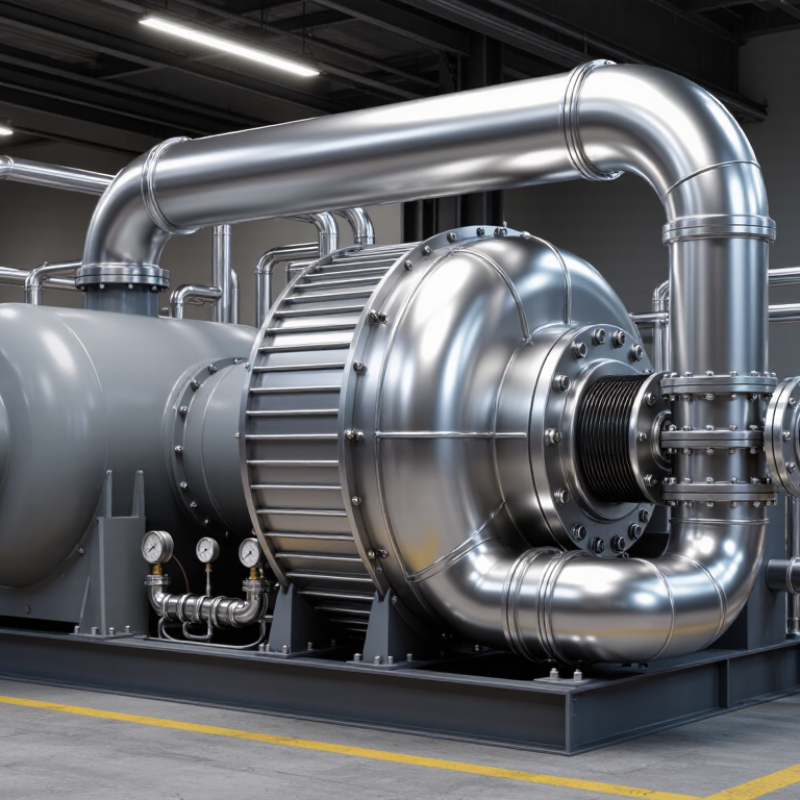
A big Roots blower is a positive-displacement machine. It moves a fixed air volume during each rotor revolution. Two-lobe models use simple rotors and suit moderate pressure duties. Three-lobe rotors usually produce smoother airflow and lower pulsation. Some systems add timing gears, acoustic covers, or external cooling features.
The operating principle is straightforward. Two counter-rotating lobes trap air between the rotors and housing. The air travels from the inlet toward the discharge outlet. The rotors do not normally touch each other. Clearances must remain precise. Excessive pressure does not create more airflow; it increases heat, power demand, and mechanical stress.
Choose the blower by required airflow, pressure rise, gas temperature, altitude, and duty cycle. Check the full performance curve, not only the maximum flow number. A wastewater aeration system may need steady air, while pneumatic conveying needs stronger pressure control. Field technicians should measure inlet restriction, discharge temperature, vibration, and motor current during operation. Small details matter.
A larger blower is not automatically better. It may run below its efficient range and waste energy. In practice, incorrect relief-valve settings cause avoidable failures. I have also seen operators overlook dirty filters until the discharge temperature climbs. That mistake is easy to repeat. Allow service access around the blower, inspect belts or couplings, and confirm lubrication intervals from reliable technical documentation.
| Blower Type | Rotor and Operating Principle | Typical Flow Range | Typical Pressure Range | Efficiency and Noise Characteristics | Recommended Applications | Key Selection Considerations |
|---|---|---|---|---|---|---|
| Two-Lobe Roots Blower | Two counter-rotating lobed rotors trap fixed volumes of gas at the inlet and move them toward the discharge side. The rotors do not normally contact each other or the casing. | Approximately 100–10,000 m³/h, depending on frame size, speed, and operating conditions. | Commonly used for pressure differentials of approximately 0.1–1.0 bar in continuous-duty air service. | Simple and robust design with good reliability. Pulsation and tonal noise are generally higher than with three-lobe or helical profiles. | Wastewater aeration, pneumatic conveying, combustion air, vacuum service, and general industrial air supply. | Suitable when purchase cost, mechanical simplicity, and proven maintenance procedures are more important than minimum noise or energy consumption. |
| Three-Lobe Roots Blower | Three-lobed rotors transfer gas through a positive-displacement action. Each rotation produces more frequent delivery events than a two-lobe design. | Approximately 100–12,000 m³/h, subject to model size, rotational speed, and inlet conditions. | Commonly applied around 0.1–1.2 bar differential pressure; the allowable value must be confirmed from the equipment duty curve. | Lower flow pulsation, vibration, and noise than a conventional two-lobe design at comparable operating conditions. Efficiency is usually improved when the blower is correctly sized. | Municipal and industrial wastewater treatment, aquaculture, pneumatic conveying, and process air systems requiring smoother airflow. | A strong general-purpose choice when reduced pulsation, lower acoustic output, and stable continuous operation are required. |
| Helical Three-Lobe Roots Blower | Three-lobe rotors use a helical or twisted profile to distribute compression and discharge events progressively rather than releasing the full trapped volume at once. | Approximately 200–15,000 m³/h, depending on rotor diameter, rotor length, speed, and pressure ratio. | Commonly selected for approximately 0.2–1.5 bar differential pressure in air applications, subject to cooling and package design. | Smoother discharge, lower pulsation, and improved acoustic performance compared with straight-lobe designs. Energy savings depend on duty point and system resistance. | Large aeration systems, process gas transfer, dense-phase conveying support, and installations with strict noise or vibration limits. | Consider when the blower will operate for long periods, when sound reduction matters, or when the system requires smoother airflow. |
| Air-Cooled Roots Blower Package | A positive-displacement Roots element removes a fixed volume per revolution while casing fins, airflow, or an integrated cooling arrangement dissipate heat. | Approximately 100–10,000 m³/h, depending on package configuration and ambient conditions. | Generally preferred for moderate pressure differentials, often around 0.1–0.8 bar in continuous operation. | Compact and easier to install where cooling water is unavailable. High ambient temperature, high pressure ratio, or inadequate ventilation can reduce service life. | Outdoor installations, small and medium process-air systems, pneumatic conveying, and applications without a reliable cooling-water supply. | Check ambient temperature, enclosure ventilation, maximum allowable discharge temperature, and motor derating requirements. |
| Water-Cooled Roots Blower Package | The Roots element provides positive displacement while a water jacket, oil cooler, or related heat exchanger controls operating temperature. | Approximately 500–20,000 m³/h for large industrial packages, depending on the selected frame and operating speed. | Often used for higher pressure differentials than air-cooled packages, commonly around 0.5–1.5 bar when designed for the duty. | Better temperature control for demanding continuous service. Requires water-quality management, flow monitoring, and protection against freezing or scaling. | Large wastewater plants, industrial process gas systems, high-load conveying, and applications with elevated compression heat. | Confirm cooling-water temperature, flow rate, pressure, water chemistry, and the consequences of a cooling-water interruption. |
| Positive-Pressure Roots Blower | Gas enters near atmospheric pressure and is displaced into a pressurized discharge line. A pressure relief valve is required because the blower itself does not regulate downstream pressure. | Commonly available from approximately 50 to 20,000 m³/h across industrial frame sizes. | Typical operating differential pressure is approximately 0.1–1.5 bar, with the exact limit determined by temperature, speed, and construction. | Delivers nearly constant volume flow over a range of discharge pressures, but power demand rises as pressure increases. Flow pulsation control may be necessary. | Aeration, fluidization, low-pressure conveying, furnace combustion air, and general process-air duties. | Select from required flow at the actual discharge pressure, not from free-air capacity alone. Include a correctly sized relief valve and check valve. |
| Vacuum Roots Blower | The same positive-displacement principle is used in reverse service: gas is removed from a vessel or process line and discharged to a higher-pressure region. | Approximately 100–15,000 m³/h, depending on the required vacuum level and allowable inlet pressure. | Typical inlet vacuum levels range from approximately −0.2 to −0.8 bar gauge for many industrial systems; deeper vacuum may require a multi-stage arrangement. | Provides high pumping capacity at relatively low and medium vacuum levels. A bypass, filter, separator, or pre-pump may be needed for condensable or contaminated gas. | Vacuum lifting, degassing, sewage suction, vapor recovery support, and industrial vacuum conveying. | Define ultimate vacuum, operating vacuum, gas composition, moisture content, inlet temperature, and the need for filtration or condensation control. |
| Variable-Speed Roots Blower System | A variable-frequency drive changes rotor speed so that blower output follows process demand. The positive-displacement element still moves a nearly fixed volume per revolution. | Approximately 40–100% of rated flow when operated within the manufacturer's approved speed range. | Pressure capability remains limited by the blower design; lower speed does not automatically permit operation above the rated pressure. | Can reduce throttling losses and energy consumption under fluctuating demand. Requires suitable motor insulation, control logic, minimum-speed protection, and operating-limit monitoring. | Wastewater aeration with changing oxygen demand, batch processes, variable conveying loads, and facilities with large daily flow variations. | Compare annual energy use at the complete operating profile rather than comparing only the rated motor power. |
| Oil-Free Process-Air Roots Blower | The compression chamber is designed so that lubricating oil does not enter the conveyed gas stream. Bearings and gears, when present, are isolated from the process air. | Approximately 100–20,000 m³/h, depending on the frame, gas type, and required pressure. | Commonly used for low- and medium-pressure service, often around 0.1–1.2 bar differential pressure. | Helps protect product and downstream equipment from oil contamination. Filtration, sealing, temperature control, and maintenance quality remain important. | Food and pharmaceutical support systems, clean conveying, wastewater aeration, and sensitive process-air applications. | Verify the required air-quality class, allowable particles, moisture conditions, materials of construction, and certification requirements. |
Selection guide: Choose the blower from the required flow at the actual inlet temperature, elevation, gas composition, and discharge pressure. Then verify motor power, discharge temperature, sound level, relief-valve setting, filtration, cooling method, and maintenance access.
Design and development by Raincastle Communications.
 Customer Support
 Request Sample
 Contact