
contact-button

How to Choose the Right Carbon Black Masterbatch

Choosing the right Carbon Black Masterbatch starts with the finished part, not the darkest sample on a supplier’s chart. The grade must suit the base polymer, processing method, and end-use requirements. A film line, an injection-molded fitting, and an outdoor panel may need different pigment loading and dispersion behavior. Small differences matter. A poorly matched carrier resin can affect flow, surface appearance, or mechanical performance.

Define what the part must do before comparing grades. Is deep black appearance essential, or are UV protection, electrical properties, and stable processing more important? Review the recommended let-down ratio, carbon black content, carrier resin, and processing temperature. Then check whether those values fit your equipment and production conditions. A datasheet is useful, but it cannot show every result in your own process. Even a clean datasheet can leave questions unanswered.

Ask for representative samples and run controlled trials using your normal resin, screw settings, and cooling conditions. Inspect molded parts or film for streaks, specks, gloss changes, and color variation. Compare batches where consistency matters. Consider filtration, scrap rates, and adjustment costs—not just price per kilogram. A higher carbon black loading is not automatically better; it may affect handling or dispersion. Record trial conditions and discuss unexplained defects with the supplier. The best choice is the grade that performs reliably in the real application, supported by testing rather than a promising label.
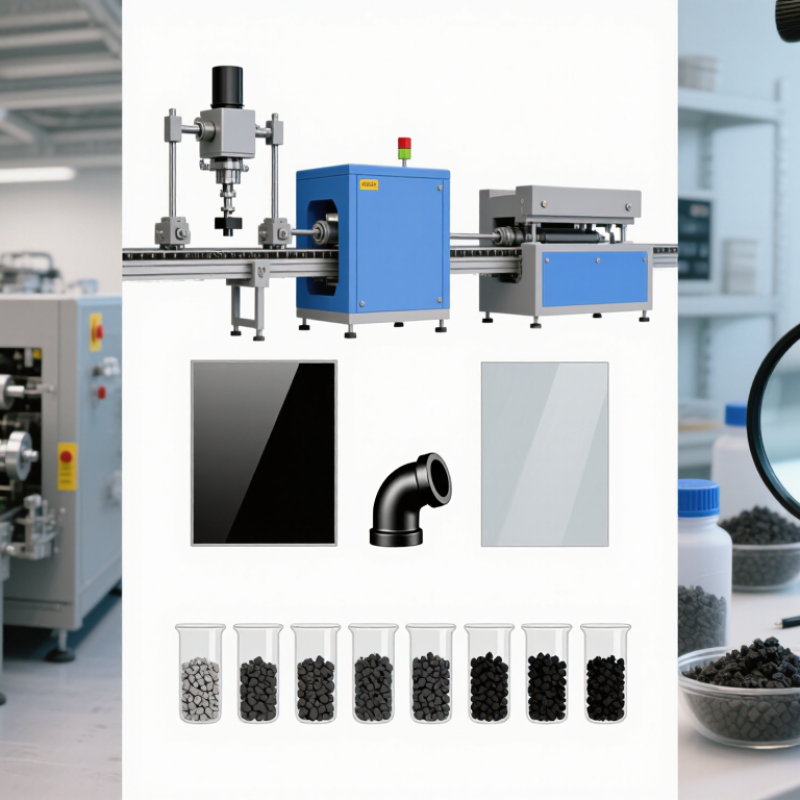
How to Choose the Right Carbon Black Masterbatch

Understand the Composition and Function of Carbon Black Masterbatch

Carbon black masterbatch combines carbon black pigment with a carrier resin and, sometimes, dispersing or processing additives. Its performance depends on the pigment grade, concentration, and how evenly particles are dispersed. The carrier should suit the target polymer; poor compatibility can show up as streaks, specks, or uneven flow. Small details matter.

Carbon black can provide deep color, UV shielding, or electrical conductivity, but one grade rarely optimizes every function. PlasticsEurope’s Plastics – the Fast Facts 2024 reports global plastics production of 413.8 million tonnes in 2023. That scale makes reliable dosing and dispersion practical quality concerns, not just cosmetic details. The figure describes plastics production, not masterbatch demand.

When comparing formulations, check pigment loading, carrier type, dispersion quality, and the intended end use. A stated loading alone tells little about final performance. I would also watch melt flow: higher pigment concentration may increase viscosity and make processing less forgiving. I have seen color attract attention first; it is not always the most important measure. Test samples in the actual polymer and process conditions before selecting a grade.

How to Choose the Right Carbon Black Masterbatch

Understand the Composition and Function of Carbon Black Masterbatch

This illustrative formulation contains 40% carbon black, 58% carrier resin, and 2% dispersing or processing additives by weight. Actual formulations vary with the polymer, desired color strength, dispersion, and processing requirements. When selecting a masterbatch, check its carbon black loading, carrier compatibility, and recommended let-down ratio.

Identify Your Polymer Type and Processing Requirements

Start by confirming the exact polymer grade, not just the resin family. Polyethylene film and pipe grades can melt and flow differently. Choose a carbon black masterbatch with a carrier resin compatible with the base polymer. Poor compatibility may cause specks, weak weld lines, or uneven gloss. For blends or recycled feed, test the actual production mixture. Labels do not tell the whole story.

Map the processing conditions. Record melt temperature, screw speed, residence time, and whether the line uses extrusion, injection molding, or blow molding. High shear can improve dispersion, but excessive heat or long residence may damage sensitive polymers. Begin with a suitable trial loading, then inspect thin sections and molded corners. Look for streaks, agglomerates, and pressure changes across the screen pack. Small details matter.

The target also matters. UV protection, conductivity, and deep black appearance may call for different carbon black structures and loadings. Do not choose by color strength alone. Check impact, tensile properties, surface finish, and filter pressure after adding the concentrate. Keep batch notes; this is easy to neglect when production is busy. Not always. Moisture, recycled content, and screw design can shift results, so leave room for another controlled run.

Compare Carbon Black Grades, Loadings, and Dispersion Quality

Choose by measured performance, not the grade label alone. ASTM D1765 classifies common carbon blacks, while ASTM D6556 measures nitrogen surface area. Higher surface area can improve jetness, but it may also raise viscosity and make dispersion harder. In production, that trade-off can appear as rising pressure across the screen pack. Small details matter. For a fair trial, hold the resin lot, screw speed, and let-down ratio constant. Compare melt pressure and color under the same conditions.

For polyethylene pipe, ISO 4427-1:2019 specifies 2.0–2.5% carbon black in the compound, and ISO 18553 provides a method to assess dispersion. At that target, a 40% concentrate would require a calculated 5–6.25% dosage, before process adjustments. Treat this as an example, not a universal recipe. Compare grades using color strength, moisture, ash, pellet consistency, and filter-pressure data. Ask for measured results. Inspect a thin molded plaque and a cut pellet cross-section; streaks can hide beneath a glossy surface. Looks can mislead. No single test captures every processing issue, and that limitation deserves attention.

Assess Compatibility and Required End-Product Performance

Choosing a carbon black masterbatch starts with the polymer it must enter. A carrier resin that matches the base polymer usually blends more smoothly and reduces the risk of weak spots. Check the technical data for carrier type, pigment concentration, and recommended let-down ratio. Then run a small trial on the actual processing line. A sample that looks uniform in a cup may still streak in a molded part.

Define the end product’s needs before adjusting the dosage. Outdoor components may require consistent color and suitable weathering performance; films may need clean dispersion without disrupting thickness or flexibility. For conductive applications, measure electrical resistance rather than relying on appearance. Watch melt pressure, surface finish, and mechanical properties after processing. Small changes matter. Record the temperature, screw speed, and feed rate, so results can be repeated. I would not assume a higher carbon black loading always improves performance; it can make mixing harder or alter the finished part. Compatibility is sometimes less tidy than a data sheet suggests. Compare trial pieces against clear acceptance limits, and retest when the resin grade or processing conditions change.

How to Choose the Right Carbon Black Masterbatch - Assess Compatibility and Required End-Product Performance
End-Product Polymer Compatibility Check Typical Masterbatch Carbon Black Content Performance to Prioritize Useful Validation Checks
Polyethylene (PE)
Film, pipe, and molded parts
Select a PE-based carrier suited to the target grade and process. Check melt-flow behavior and whether the product will be used in a multilayer structure. Often about 25–40 wt%; confirm the grade specification. Uniform blackness, dispersion, weathering resistance where exposed outdoors, and suitable processing flow. Check film or molded-part appearance, visible specks, color consistency, and performance after the intended weathering exposure.
Polypropylene (PP)
Fibers, packaging, and molded parts
Use a compatible polyolefin carrier and verify that its flow and thermal behavior suit the PP grade and conversion process. Often about 25–40 wt%; confirm the grade specification. Consistent color, dispersion, and retention of required mechanical properties; fiber applications may need especially fine dispersion. Inspect molded surfaces or fiber appearance; compare tensile or impact properties with an uncolored control when relevant.
Polystyrene (PS) and ABS
Housing and consumer parts
Check that the carrier is compatible with the specific styrenic resin. A polyolefin carrier may not provide the same compatibility as a styrenic carrier. Typically formulation-dependent; request the grade's stated loading and let-down guidance. Surface appearance, color uniformity, impact performance where required, and stable molding behavior. Evaluate the finished-part surface, weld lines, color consistency, and key mechanical properties.
Polyamide (PA)
Engineering components
Confirm compatibility with the specific PA type. Control resin and masterbatch moisture according to the resin supplier's processing guidance. Formulation-dependent; verify loading, drying instructions, and recommended addition rate. Dispersion, thermal stability during processing, and retention of the component's required mechanical properties. Follow the specified drying procedure; check appearance, processing stability, and relevant mechanical properties.
Polyethylene terephthalate (PET)
Fiber, sheet, and packaging
Use a grade designed for PET processing. Verify drying requirements and compatibility with the intended extrusion or spinning process. Formulation-dependent; obtain the recommended let-down rate from the grade documentation. Fine dispersion, color uniformity, process stability, and preservation of the required product properties. Check drying records, surface or fiber quality, color consistency, and relevant properties of the finished product.
Polyvinyl chloride (PVC)
Profiles, cable, and flexible products
Confirm suitability for the PVC formulation and processing method. Check interactions with the formulation's stabilizers, plasticizers, and other additives. Formulation-dependent; confirm the grade's loading and compatibility guidance. Color consistency, dispersion, thermal-process suitability, and retention of flexibility or rigidity as required. Run a formulation trial and assess color, surface quality, processing behavior, and the required end-use properties.
Selection note: Carbon black content and let-down rate vary by formulation and application. Confirm carrier-resin compatibility, processing conditions, and product requirements using the grade's technical data and a trial under representative production conditions.

Test Candidate Masterbatches and Confirm Supplier Reliability

Request small, traceable samples of each carbon black masterbatch and test them in your own resin. Keep the resin lot, letdown ratio, screw settings, and production speed consistent. Run the same trial more than once; a single clean run can mislead. Record melt pressure, screen-pack changes, and visible specks, then compare molded or extruded parts under consistent lighting. Check color strength and dispersion, but also assess the properties your product needs, such as impact strength or surface finish. Small changes matter. A sample that looks uniform on a plaque may behave differently during a longer production run.

Supplier reliability needs practical checks, too. Ask for batch-specific certificates, clear storage guidance, and written notice of formulation or process changes. Review how the supplier handles traceability, delivery dates, and technical questions. Then verify those claims with a trial order and routine incoming checks. Note whether packaging arrives intact and whether batch details match the paperwork. If results vary, ask for an investigation rather than assuming the material is at fault. Even a careful test plan has limits; equipment differences and operator adjustments can affect results. Keep records of both successful and awkward trials, including the settings you would change next time.