
contact-button

How to Choose the Right Circuit Breaker Parts?

Choosing the right Circuit Breaker Parts is not a simple purchasing task. Each component affects safety, interruption performance, service life, and maintenance time. A breaker may look suitable on paper, yet fail to match the panel, trip unit, voltage, or fault-current rating. Small differences matter. A contact assembly, arc chute, operating mechanism, or auxiliary switch must fit the exact breaker model.

Electrical pioneer Thomas Edison once said, “The value of an idea lies in the using of it.” That principle applies directly to circuit protection. Technical knowledge becomes valuable only when it supports a safe, working installation. This guide explains how to evaluate Circuit Breaker Parts through practical details, not attractive catalog language. It considers electrical ratings, mechanical compatibility, operating conditions, manufacturer specifications, and relevant testing requirements.

Field conditions deserve attention. Dust may enter an enclosure. Heat can weaken insulation. Repeated short-circuit events may damage contacts before visible marks appear. A replacement part can seem correct and still create alignment problems. That is an uncomfortable possibility.

Experienced technicians compare part numbers, dimensions, terminal layouts, and certification records before installation. They also verify whether the part is original, approved, refurbished, or merely advertised as compatible. The cheapest option is not always economical. However, the most expensive part is not automatically the safest choice either.

This introduction will help readers ask better questions before selecting Circuit Breaker Parts. It also leaves room for judgment. Manufacturer data is essential, but real operating conditions can expose weaknesses that a checklist misses.
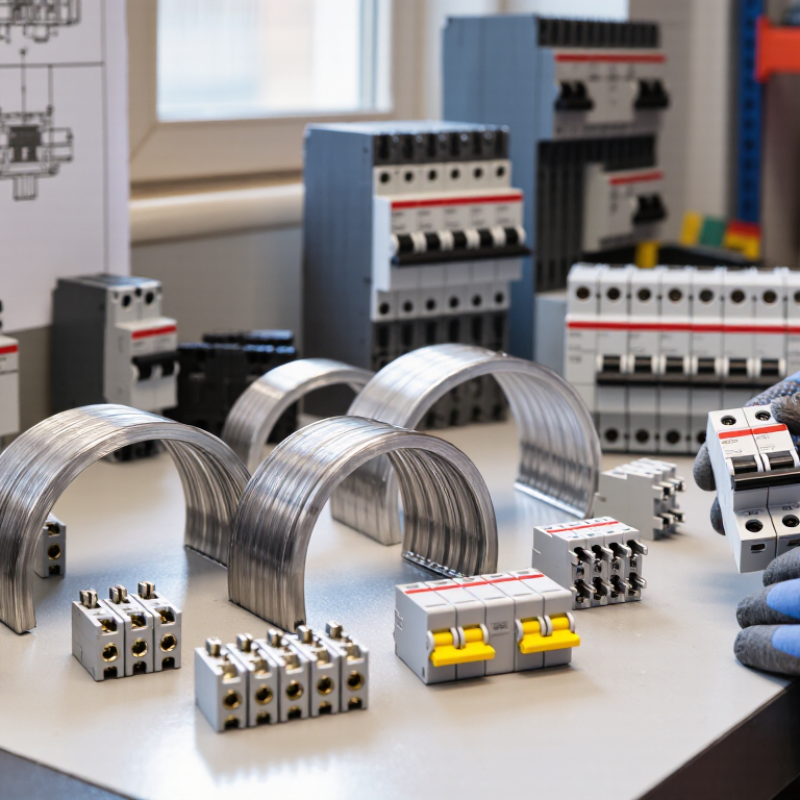
How to Choose the Right Circuit Breaker Parts?

Define Voltage, Current, and the NEC 80% Continuous-Load Rule

How to Choose the Right Circuit Breaker Parts?

Selecting circuit breaker parts starts with three measurements: voltage, current, and load duration. Voltage must match the circuit and equipment rating. A breaker rated too low may fail under normal conditions. A breaker rated for the wrong system voltage can create serious hazards.

Current needs closer attention. Add the expected noncontinuous load, then multiply the continuous load by 125 percent. Under the NEC, a continuous load usually operates for three hours or longer.

A standard 20-ampere breaker should generally carry no more than 16 amperes continuously. This is the practical meaning of the 80% rule. Do not guess.

When choosing parts, verify the trip unit, terminal ratings, contact assembly, and enclosure compatibility. The breaker must also match the conductor size and available fault current. In field inspections, I have seen people check amperage but ignore voltage. That shortcut can invalidate an otherwise careful selection. Measure twice. A 100%-rated breaker assembly may follow different requirements, but the complete system must be listed and installed accordingly. Local code adoption can vary, so a qualified electrician should confirm the final design. My own review process is not flawless; temperature, bundled conductors, and startup current can change the result. That is why I recheck the load calculation before ordering replacement parts.

Match Icu, Ics, and UL 489 AIC Ratings in kA

Selecting circuit breaker parts starts with the available short-circuit current at the installation point. Check voltage, frequency, poles, and the prospective fault current before comparing kA ratings. IEC 60947-2 defines Icu as ultimate short-circuit breaking capacity. Ics represents service breaking capacity after repeated fault operations. These values are not interchangeable. A breaker rated 25 kA Icu and 15 kA Ics may withstand the initial fault, but it offers less verified service performance afterward.

For equipment evaluated under UL 489, the AIC rating is usually stated in RMS symmetrical amperes, commonly shown in kA. The AIC must equal or exceed the available fault current at the system voltage. NFPA 70, 2023, Section 110.24, requires available fault-current marking for service equipment, supporting field verification. For example, a panel with 18 kA available fault current needs a suitable rating above 18 kA, not merely a convenient 10 kA option. A neat match can still be wrong when voltage changes.

Tips: Record the calculated fault current beside the breaker label. Confirm Icu and Ics from the tested manufacturer documentation. Never assume Ics equals Icu. Check the complete assembly, because terminals, enclosures, and connected parts can affect the final short-circuit rating. NEMA AB 4 guidance also emphasizes inspection and maintenance; ratings alone do not replace torque checks, condition assessment, or qualified review. Small oversights remain common.

Choose Thermal-Magnetic or Electronic Trip Units by Protection Needs

How to Choose the Right Circuit Breaker Parts?

Choose Thermal-Magnetic or Electronic Trip Units by Protection Needs

Selecting a circuit breaker trip unit starts with the load, fault risk, and operating environment. Thermal-magnetic units combine two dependable responses. The thermal element reacts to sustained overloads, while the magnetic element responds quickly to short circuits. They suit many standard distribution panels, workshops, and smaller commercial systems. Their simpler design can also reduce adjustment errors and maintenance demands.

Electronic trip units offer more precise protection. They measure current through sensors and allow adjustable long-delay, short-delay, instantaneous, and ground-fault settings. This flexibility helps protect large feeders, motors, generators, and systems with selective coordination requirements. For example, an electronic unit may delay an upstream breaker briefly, allowing a downstream breaker to clear a fault first. That small delay can keep more equipment operating.

Do not choose by amperage alone. Check available fault current, conductor ratings, inrush current, ambient temperature, and coordination studies. A breaker protecting a motor may need different settings than one protecting office receptacles. Review trip curves and installation instructions carefully. Qualified personnel should verify settings with calibrated test equipment. A common mistake is selecting electronic protection for its features without confirming staff training or maintenance capacity. More adjustment does not always mean better protection. Record the final settings inside the panel, and revisit them after major system changes.

Verify Contacts, Arc Chutes, Terminals, and Enclosure Compatibility

How to Choose the Right Circuit Breaker Parts?

Verify Contacts, Arc Chutes, Terminals, and Enclosure Compatibility

Choosing circuit breaker parts requires more than matching a catalog number. Start with the breaker’s rated voltage, current, interrupting capacity, and installation environment. Then inspect the existing contacts. They should close evenly, show no deep pitting, and maintain firm spring pressure. Silver-colored surfaces can still hide heat damage underneath. Use a calibrated resistance test when possible. A visual check alone is not enough.

Arc chutes need careful verification. Confirm their chamber shape, insulation rating, and mounting position match the breaker assembly. Look for cracked barriers, carbon deposits, or warped plates. These details affect how the arc is split and cooled during interruption. Do not mix parts because they appear similar. That shortcut can create unsafe clearances. I have found that old chute screws often look serviceable, yet their threads are weakened by heat and repeated maintenance.

Terminals must accept the conductor size and connection method specified for the assembly. Check lug dimensions, torque requirements, plating condition, and available cable space. A loose terminal can develop hot spots quickly. Enclosure compatibility also deserves a physical check. Measure rail width, depth, cover clearance, ventilation, and door movement. The enclosure must protect against dust and moisture without restricting heat release. Sometimes the drawing is incomplete. Recheck the actual panel before ordering, and record every measurement with photos. Independent testing is wise when ratings or temperature rise remain uncertain.

Confirm IEC 60947-2, UL 489, Endurance, Accessories, and Fit

Choosing the right circuit breaker parts starts with the application, not the product photograph. A breaker may look suitable yet fail under the required fault current, voltage, or operating conditions.

Confirm compliance with IEC 60947-2 or UL 489, depending on the installation and approval requirements. These standards address construction, performance, testing, and safe interruption behavior. Check the exact certification scope, not only a logo on a sales page. Ask for current test reports, declarations, and technical datasheets from reliable sources.

Endurance ratings deserve careful attention. Separate mechanical endurance from electrical endurance, because repeated switching under load causes greater stress. Then inspect the accessories: auxiliary contacts, shunt trips, undervoltage releases, motor operators, and terminal covers must match the breaker series. Small differences matter. A connector can fit physically but fail electrically.

Fit is more than width and mounting holes. Verify frame size, pole arrangement, terminal position, cable space, busbar alignment, insulation clearance, and compatible trip settings. Compare the replacement part with the original drawing, not memory. I once trusted a similar-looking accessory and missed a different control voltage. That mistake was preventable. Leave room for wiring and heat dissipation. Review ambient temperature, enclosure conditions, and tightening torque before installation. When information conflicts, pause and request clarification from a qualified engineer or the certifying documentation.