
How to Choose a Metal 3D Printing Factory?
Choosing a Metal 3d Printing Factory is not just a price comparison. The right partner must understand your part, material, and intended use. A thin titanium bracket has different needs from a stainless steel valve body. Ask how the factory controls powder condition, build orientation, and machine calibration. These details can affect strength, surface finish, and repeatability. Small details matter.
This guide explains what to check before requesting a quote. Review the factory’s experience with your alloy and part geometry. Ask for inspection records, material certificates, and clear information about post-processing. A capable supplier should explain its quality checks in practical terms, not only display impressive machines. Request a sample or discuss a pilot build when the project allows it. Even a polished sample can mislead if it does not match your production requirements. That deserves scrutiny. Lead times, communication, and support after delivery also matter. Compare them alongside cost. No single checklist guarantees a perfect supplier, and I would not trust a claim without evidence. Use the questions ahead to evaluate each factory against your design, risk level, and production goals.
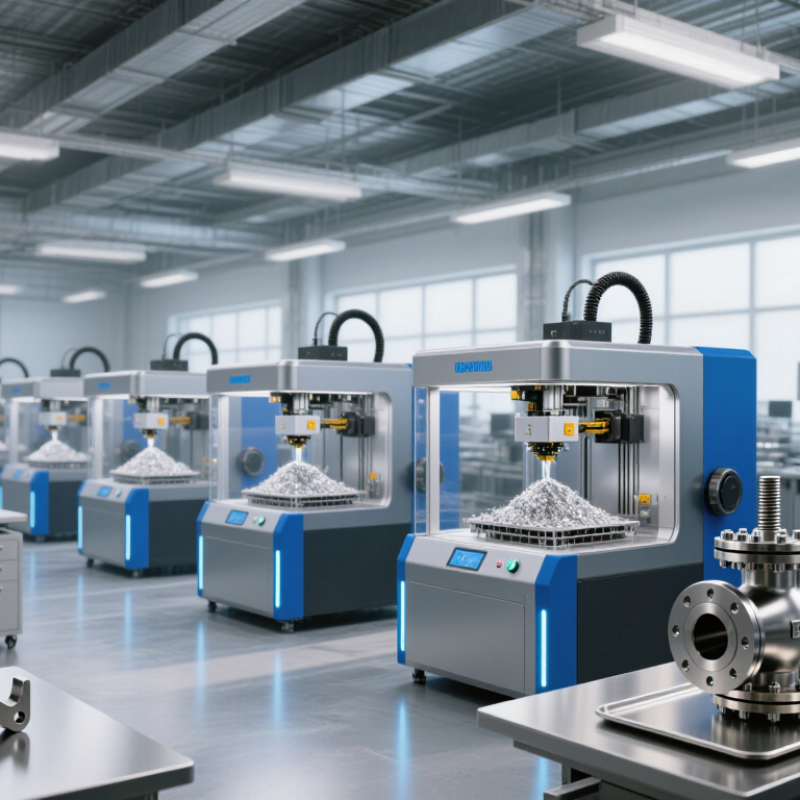
Table of Contents [Hide]
Define Your Metal 3D Printing Project Requirements
Start with its job. Will the part carry a steady load, face repeated vibration, or contact hot fluid? These conditions help determine the alloy and printing process. Note the operating temperature, expected loads, corrosion exposure, and service life. A bracket inside a dry machine enclosure needs different properties from a thin fluid manifold. Small details matter.
Share a current CAD file, expected order quantity, and the dimensions that must fit nearby components. Mark critical tolerances clearly; applying tight tolerances everywhere can add cost without improving function. Describe the surface finish you need and whether machining, heat treatment, or support removal is acceptable. Be precise here. Also state how the part will be inspected, such as dimensional checks on mounting holes or a material certificate for the selected alloy. Separate essential requirements from preferences. That gives a factory a clearer basis for discussing feasibility, lead time, and cost. If a feature is experimental, say so. I have seen project assumptions change after a first sample, so leave room to revise the design when test results reveal a weak wall or awkward assembly fit.
Compare Printing Technologies and Available Metal Materials
Choosing a metal 3D printing factory starts with matching its process to your part. Laser powder bed fusion (LPBF) suits fine features and thin walls, but support removal and heat treatment can affect dimensions. Directed energy deposition (DED) is useful for larger repairs or near-net-shape parts, though its surfaces often need machining. Binder jetting can produce multiple parts efficiently, but sintering introduces shrinkage that must be controlled.
Material choice matters just as much. Stainless steel offers corrosion resistance; aluminum keeps parts light; titanium and nickel alloys serve demanding strength or temperature needs. Ask which grades the factory prints regularly, and request material certificates, sample inspection data, and details about post-processing. The Wohlers Report 2024 estimated that the global additive manufacturing industry reached $20.035 billion in 2023, up 11.1% from 2022. Growth is broad, but it does not prove every factory can meet your tolerances. I would not choose on machine type alone.
Tips: Send a representative drawing and ask for a trial build. Compare surface finish, dimensional results, and total cost after machining—not just the quoted print price. A glossy sample can still hide a problem.
How to Choose a Metal 3D Printing Factory? - Compare Printing Technologies and Available Metal Materials
| Printing Technology | How It Works | Commonly Available Metal Materials | Key Advantages | Limitations and Post-Processing | Best Suited For | Questions to Ask the Factory |
|---|---|---|---|---|---|---|
| Laser Powder Bed Fusion (LPBF) Also called laser-based powder bed fusion | A laser selectively melts metal powder in thin layers inside a controlled build chamber. | Stainless steels such as 316L and 17-4 PH; aluminum alloys such as AlSi10Mg; titanium alloys such as Ti-6Al-4V; nickel alloys such as 625 and 718; cobalt-chrome; and selected copper alloys. | Produces detailed parts, complex internal channels, and thin features. Offers a broad range of established metal alloys and is widely used for functional components. | Parts generally require support removal and may need stress relief, heat treatment, machining, or surface finishing. Build orientation and support design affect cost and quality. | Complex, relatively small or medium-sized parts; lightweight structures; and components requiring detailed geometry or internal passages. | Which alloys are qualified for this process? What are the machine’s build dimensions? Are heat treatment, machining, and inspection included in the quotation? |
| Electron Beam Powder Bed Fusion (EB-PBF) | An electron beam selectively melts metal powder, typically in a vacuum environment with a heated powder bed. | Commonly associated with titanium alloys, including Ti-6Al-4V, and certain cobalt-chrome or other high-temperature alloys, depending on the machine and supplier. | The heated build environment can reduce residual stresses compared with some other powder-bed processes. It is established for certain titanium applications. | Material and process choices may be more limited than for laser powder bed fusion. Parts can have a comparatively rough surface and may need powder removal, machining, or heat treatment. | Titanium components where the available material, surface finish, and feature resolution meet the part requirements. | Does the factory regularly process the required alloy? Can it provide representative surface-finish and dimensional data for similar parts? |
| Directed Energy Deposition (DED) | A focused heat source melts metal powder or wire as it is deposited onto a substrate or existing part. | Stainless and tool steels; titanium alloys; nickel-based and cobalt-based alloys; and selected aluminum or copper alloys, depending on the feedstock and equipment. | Suitable for larger builds, adding material to existing components, and repair or feature addition. Wire-fed systems can use a high proportion of feedstock. | Typically has a coarser surface and lower feature resolution than powder bed fusion. Machining is often needed; heat input and deposition strategy require careful control. | Large components, repair work, cladding, and parts that can be finish-machined after deposition. | Is the process powder-fed or wire-fed? What machining allowance is required? Can the factory control and document the deposited material and repair procedure? |
| Metal Binder Jetting | A liquid binder joins metal powder layer by layer to create a “green” part, which is then debound and sintered. | Common options include stainless steels such as 316L and 17-4 PH, selected tool steels, and copper; additional alloys depend on the equipment and supplier. | Does not require the same type of laser-melting supports as LPBF and can be suitable for producing multiple parts in a build. Sintering can enable batch production. | Debinding and sintering can cause shrinkage, which must be accounted for in the process. Density, dimensional consistency, and mechanical properties depend on material and process control. | Repeatable production runs of parts that fit the available sintering setup and do not require extremely fine details. | How is sintering shrinkage compensated? What density and mechanical-property data are available for the specified alloy and part geometry? |
| Bound Metal Extrusion | A feedstock containing metal powder and a binder is extruded into shape, then debound and sintered to produce the metal part. | Depending on the process, options may include stainless steels, tool steels, copper, and selected nickel alloys. | Can provide an accessible route to metal parts with relatively simple equipment and a familiar extrusion-based workflow. | Debinding and sintering are essential. Shrinkage, feature size, surface finish, and achievable dimensions are process-dependent; design rules differ from those for fully melted metal processes. | Smaller parts with suitable geometries, especially when the factory has a validated feedstock and sintering workflow. | Which material grades are routinely produced? What minimum wall thickness and dimensional tolerances have been validated after sintering? |
Selection note: Material availability, achievable tolerances, surface finish, part size, and mechanical properties vary by machine, alloy, geometry, and post-processing route. Ask the factory for process-specific data and inspection records for parts comparable to yours.
Assess Factory Equipment, Expertise, and Quality Controls
How to Choose a Metal 3D Printing Factory?
Assess the factory’s equipment against your part’s alloy, dimensions, and required tolerances. Ask which printing processes it uses and how operators manage powder handling, build parameters, and machine maintenance. A clean, organized production area matters. So do practical details, such as calibrated measurement tools near the inspection station. Experienced staff should explain trade-offs clearly, including when a design may need thicker walls or support structures. A confident answer is useful; evidence is better.
Quality controls should cover more than a final visual check. Ask how the factory traces material batches, records build settings, and inspects parts after printing. Depending on the application, useful checks may include dimensional measurement, density assessment, or mechanical testing. Request sample inspection reports and ask how nonconforming parts are handled. A perfect-looking sample proves little. No checklist removes every uncertainty, and I would treat an unfamiliar process cautiously until its records and communication feel consistent.
Tips: Share a representative drawing and ask for a manufacturing review before placing an order. Compare the factory’s proposed inspection plan with your critical dimensions. Ask to see logs. Small gaps in documentation can reveal where follow-up questions are needed.
Review Production Costs, Lead Times, and Support
Choosing a metal 3D printing factory means looking beyond the quoted price. Ask for an itemized estimate. Separate build costs from material, support removal, heat treatment, machining, inspection, and shipping. A low quote may leave finishing out. For a fair comparison, send each factory the same CAD file, alloy, order quantity, and tolerance requirements. Ask how design changes or a failed build could affect the invoice. These details can outweigh a small discount.
Lead times need equal scrutiny. “Five days” might mean machine time, not delivery. Ask for dated milestones covering file review, printing, post-processing, inspection, and dispatch. Not just machine time. Check whether the quoted schedule assumes an available machine and material. If your part has thin walls or tight tolerances, request a sample inspection report or discuss a first-article check. Even a clear schedule can slip when a build needs rework; that risk is easy to underestimate.
Support is practical, not just friendly. Notice how quickly technical staff answer questions about orientation, tolerances, or surface finish. Ask who will handle your order after approval and how progress updates are shared. A short technical call can reveal gaps that a polished quote cannot. I would still compare written details carefully; verbal promises are easy to misremember.
Verify Certifications and Select a Suitable Factory
When choosing a metal 3D printing factory, verify that its certifications match the work you need. A certificate should name the certified site, cover the relevant process, and remain current. Ask for the full document, not just a logo on a website. Check the scope and expiry date, then confirm that inspection and material records are available for your parts. Small details matter. A quality management certificate can support consistent procedures, but it does not prove that a factory can meet every alloy, tolerance, or surface-finish requirement. Its scope matters.
Tips: Ask how powder batches are traced to finished parts. Request a sample inspection report, including dimensional measurements and any agreed test results. Clarify who handles calibration and what happens when a part fails inspection. Keep the questions specific.
Match the factory’s equipment and experience to your design. Ask for examples of similar geometries, wall thicknesses, and production volumes, while protecting any sensitive design information through an appropriate agreement. If possible, review a sample part and its documentation together. A certificate can create false confidence when its scope excludes the actual production process. It is also worth asking how the factory manages process changes between trial builds and repeat orders. Some answers may be incomplete at first; ask for evidence and consider whether the factory can explain its limits clearly.