How to Choose the Right Wheels for Your Business in 2026?
Choosing the right wheels for your business in 2026 requires more than matching a vehicle’s appearance. Wheels influence payload capacity, fuel efficiency, handling, maintenance costs, and customer confidence. A polished finish may attract attention, but an incorrect load rating can create expensive problems.
Wheel engineering consultant John C. H. Lee offers a practical reminder: “The right wheel must fit the vehicle, support its workload, and survive its environment.” That principle should guide every purchase. Check bolt patterns, center bore, offset, brake clearance, tire compatibility, and certified load ratings. Measure twice.
Then consider the working environment. Delivery vans face curbs, potholes, and constant stop-and-go driving. Construction fleets need durable wheels that tolerate dust, impacts, and uneven surfaces. Long-haul vehicles may benefit from lighter designs that reduce rolling resistance and operating costs. The cheapest option is not always economical.
Supplier reliability matters, too. Ask for test documentation, warranty terms, replacement availability, and clear fitment data. A trustworthy supplier should explain limitations instead of promising universal compatibility. That detail matters.
Still, no buying guide can predict every road, driver, or maintenance habit. Real-world performance may differ from laboratory results. Businesses should review damage records, seasonal conditions, and downtime expenses before deciding. Even experienced buyers sometimes focus too heavily on price. That is worth questioning.
This guide explores how to compare wheels intelligently in 2026, balancing safety, performance, appearance, lifecycle value, and operational reality.
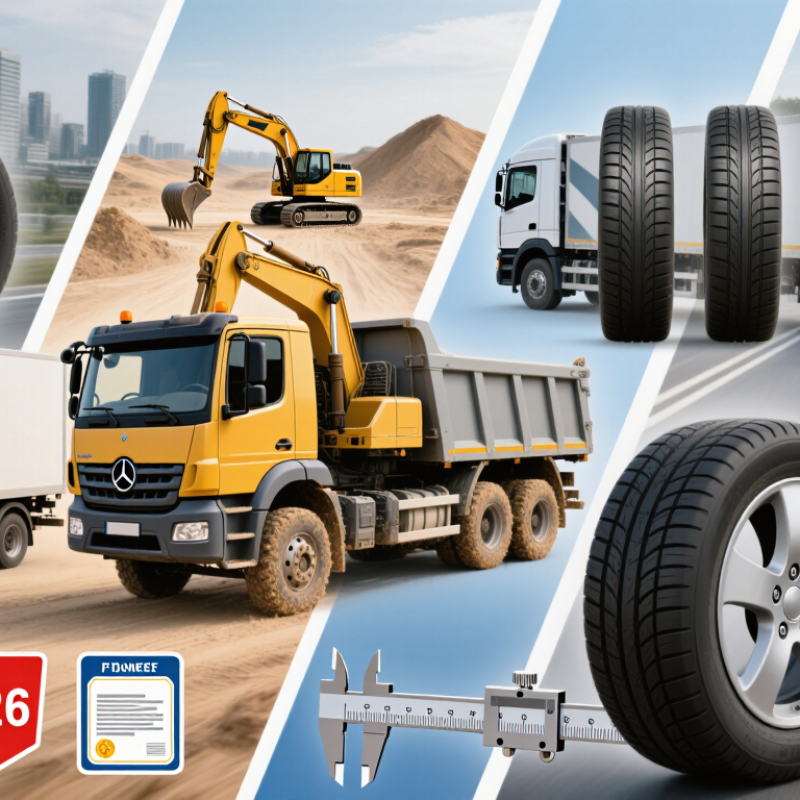
Define Your Business’s Wheel Requirements
Choosing wheels begins with observing work, not browsing catalogues. Walk through each route, from loading bay to storage rack, and record floor surfaces, slopes, thresholds, and turning space. Measure the total load, including equipment, materials, and the operator’s force during movement. A cart carrying 300 kilograms needs different support from one carrying 80 kilograms. Do not rely on average use. Peak loads matter.
Define operating conditions clearly. Will wheels face moisture, oil, dust, heat, or frequent cleaning? A smooth indoor floor may need low-noise wheels, while rough concrete demands stronger tread and larger diameters. Check how often the equipment moves, stops, pivots, and remains parked. Swivel wheels improve maneuverability, but fixed wheels can track straighter across long aisles. Brakes should hold securely without slowing routine handling. Leave enough clearance for toes, cables, and uneven floor joints.
Use measurements rather than assumptions. Compare wheel diameter, width, mounting height, bearing type, and rated capacity against the equipment’s actual frame. A safety margin is sensible, yet oversized wheels can raise the platform and affect stability. Test a sample on the hardest route before ordering in volume. Ask workers to push it when fully loaded. Their feedback may expose problems that specifications miss. In practice, teams sometimes choose quiet wheels, then discover poor rolling on debris. That mistake is useful, but expensive. Revise the requirement sheet after testing, even if the first choice appears acceptable.
Assess Wheel Types, Materials, and Performance
Choosing business wheels in 2026 starts with the working environment, not a catalog photo. During equipment audits, I have seen small wheel choices create large operating problems. Identify the wheel type first. Swivel casters improve turning in narrow aisles. Rigid casters track straight across longer routes. Heavy-duty wheels suit loaded racks, while low-profile wheels fit compact equipment. A wheel that moves well empty may struggle under a full load. Measure the total load, divide it across wheels, then add a safety margin.
Material changes performance dramatically. Polyurethane offers quiet rolling and good floor protection. Rubber absorbs vibration and handles uneven surfaces more comfortably. Nylon resists moisture and many chemicals, but it can sound harsh on hard floors. Steel supports extreme loads, although it may damage finished flooring without a suitable tread. Check temperature, debris, cleaning routines, and floor joints before deciding. These details often matter more than appearance. Ask suppliers for tested load ratings, tread hardness, and rolling-resistance data. Independent test records are more useful than vague claims.
Performance should be observed in real conditions. Push a loaded unit over thresholds and tight corners. Record starting force, noise, stopping control, and tread wear. Watch the operator, too. If shoulders twist repeatedly, the wheel choice may be wrong. I once favored softer wheels for comfort, then found their drag increased on dusty floors. That mistake changed our inspection checklist. Review results after several weeks, because early impressions can mislead. A practical choice balances movement, durability, maintenance, and worker safety.
How to Choose the Right Wheels for Your Business in 2026?
Assess wheel types, materials, and performance by comparing typical material density. Lower-density materials can help reduce unsprung weight and improve efficiency, while steel remains widely valued for durability and cost control.
Typical material density at room temperature: steel is approximately 7.85 g/cm³, aluminum alloys approximately 2.70 g/cm³, and carbon-fiber composites approximately 1.60 g/cm³. Final wheel selection should also consider load rating, impact resistance, operating conditions, maintenance, and total cost of ownership.
Evaluate Costs, Maintenance, and Long-Term Value
Choosing business wheels in 2026 requires more than comparing purchase prices. Start with total cost of ownership. Record the wheel price, delivery cost, fitting time, inspection labor, and expected replacement cycle. A cheaper wheel may become expensive after repeated corrosion repairs or premature replacement.
Load rating must match the vehicle’s real operating weight, not its brochure average. Include cargo, passengers, seasonal equipment, and uneven loading. The U.S. Department of Energy reports that underinflation can reduce fuel economy by about 0.2% for every 1 psi below the recommended pressure. Correct wheel and tire compatibility helps maintain pressure and reduce rolling losses. Small errors compound.
Maintenance conditions matter. Steel wheels may tolerate harsh work environments well, while lighter alloys can reduce unsprung weight but require closer inspection after impacts. Check cleaning access, corrosion protection, spare availability, and technician familiarity. The National Highway Traffic Safety Administration emphasizes regular tire pressure and tread inspections as essential safety practices. Wheel checks should follow the same discipline.
Long-term value also depends on downtime. A wheel that costs slightly more but uses common fasteners and arrives quickly may protect revenue during peak demand. The American Trucking Research Institute’s 2024 operational-cost analysis continues to identify maintenance and equipment expenses as major fleet cost categories. However, published averages cannot predict every route. A delivery fleet on salted roads needs different assumptions from an indoor warehouse fleet. Build a five-year spreadsheet, then challenge it with worst-case damage, labor shortages, and one missed inspection.
How to Choose the Right Wheels for Your Business in 2026? - Evaluate Costs, Maintenance, and Long-Term Value



 Customer Support
 Request Sample
 Contact