contact-button

How to Choose a Commercial Kitchen Range?

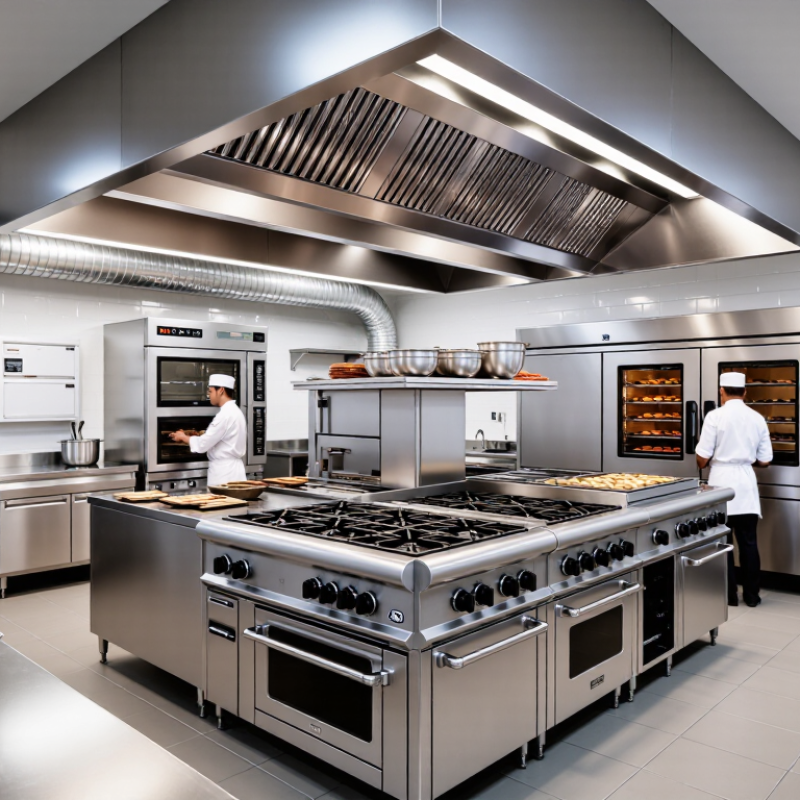
Choosing a Commercial Kitchen Range is not simply a matter of comparing burners, oven size, and stainless-steel finishes. It is a decision about workflow, energy use, safety, cleaning, and long-term operating cost. A range that looks powerful in a showroom may struggle during a crowded dinner service. That difference matters.

The U.S. Environmental Protection Agency’s ENERGY STAR program reports that restaurants use about 2.5 times more energy per square foot than other commercial buildings. Cooking equipment contributes significantly to that demand. The U.S. Department of Energy’s Commercial Buildings Energy Consumption Survey also shows why kitchen equipment deserves careful planning within broader facility energy management. These figures do not identify one perfect range. They provide a warning: small efficiency differences can become substantial costs over years of daily use.

This guide examines burner output, heat recovery, oven capacity, ventilation needs, controls, maintenance access, and applicable sanitation requirements. NSF/ANSI 4 addresses commercial cooking equipment sanitation, while NFPA 96 covers ventilation and fire protection considerations. Local authorities may apply additional requirements, so professional verification remains essential. A cheaper unit can become costly when it needs frequent repairs or slows production. I would not claim that the most powerful model always wins. Sometimes, better layout and recovery performance matter more than maximum BTU. The right Commercial Kitchen Range should match the menu, staff habits, service volume, and available ventilation system. That sounds obvious. It is often overlooked.

How to Choose a Commercial Kitchen Range?

Understanding the Main Types of Commercial Kitchen Ranges

Choosing a commercial kitchen range starts with identifying the main range types. Gas ranges deliver visible flame control and suit wok cooking, grilling, and high-volume sauté work. They also create more heat around the cookline, which increases ventilation demands. Electric ranges provide a flatter heat pattern and simpler cleaning. However, slow recovery can frustrate cooks during busy service.

Induction ranges heat compatible pans through magnetic energy, keeping the surrounding surface noticeably cooler. The U.S. Department of Energy reports induction efficiency near 80–90%, compared with roughly 35–40% for gas cooking. ENERGY STAR also notes that commercial kitchens can use about 2.5 times more energy per square foot than other commercial spaces. Those figures matter, but they do not decide everything. A kitchen with heavy wok use may value flame response over energy savings. A compact bakery kitchen may prefer electric or induction for steadier temperature control.

Consider modular ranges when the menu changes often. A six-burner base with a griddle, oven, or plancha can match different production tasks. Combination ranges save floor space, yet crowded controls may slow inexperienced staff. Measure the cookline, hood capacity, electrical service, and pan inventory before purchasing. I have seen efficient equipment perform poorly when staff receive little training. Specifications are useful, but real service conditions can expose gaps. Check recovery time during peak production, not only during a showroom demonstration.

Assessing Cooking Capacity, Fuel Sources, and Kitchen Layout

How to Choose a Commercial Kitchen Range?

Assessing Cooking Capacity, Fuel Sources, and Kitchen Layout

Cooking capacity should match your busiest service, not your average lunch. Count pans, burners, ovens, and cooking times during peak orders. A six-burner range may seem practical, but it can create bottlenecks when several pans need high heat simultaneously. Measure the available space carefully, including clearance, ventilation, and staff movement. Leave enough room for handles, ingredient containers, and safe door opening. Crowded kitchens slow people down.

Fuel choice affects heat control, installation, and daily operating costs. Gas provides visible flame adjustment and suits cooks who change temperatures frequently. Electric and induction equipment can offer steady heating and easier surface cleaning. However, electrical capacity must support the range during peak demand. Check the building’s supply before making assumptions. A qualified technician should verify connections, ventilation, and local safety requirements.

Layout matters as much as power. Place the range near preparation areas, refrigeration, and landing space for hot pans. Keep busy walkways away from open flames and oven doors. During a kitchen assessment, observe how staff actually move, rather than trusting a drawing. I once favored maximum burner capacity and overlooked landing space. The range performed well, but cooks kept crossing behind each other. That decision needed rethinking. Review service records, test the proposed workflow, and ask the kitchen team where delays usually begin. Small measurements can reveal expensive mistakes.

Comparing Key Features, Materials, and Performance Requirements

Choosing a commercial kitchen range starts with matching performance to the menu, not chasing the highest BTU rating. The U.S. Department of Energy’s Commercial Cooking Products analysis estimates that commercial cooking equipment uses about 1 quadrillion Btu annually in the United States. Efficiency matters. Compare burner output, turndown control, heat recovery, and idle energy use. A range with 30,000 to 40,000 Btu per burner may suit sauté work, but delicate sauces need stable low-heat control. A powerful burner can still cook poorly.

Material selection affects hygiene, service life, and cleaning time. Type 304 stainless steel resists corrosion around steam, salt, and acidic foods. Type 430 stainless steel costs less, but it generally offers lower corrosion resistance. Check welded corners, removable drip trays, sealed controls, and adjustable legs. NSF/ANSI 4 addresses commercial cooking equipment sanitation, while local certification requirements may also apply. The details are easy to overlook.

Performance should be tested under real service conditions. ASHRAE’s HVAC Applications Handbook treats cooking appliances as major heat and moisture sources, so hood capacity must match the range. A range that performs well in a showroom may overwhelm a weak exhaust system. I have seen teams compare burner numbers while ignoring recovery after a full oven load. That choice looks efficient on paper, but not during a busy dinner service. Keep records for preheating time, temperature stability, cleaning effort, and maintenance calls. The first specification is rarely the final answer.

How to Choose a Commercial Kitchen Range? - Comparing Key Features, Materials, and Performance Requirements

Evaluation Dimension Open-Burner Gas Range Gas Range with Griddle Induction Range Selection Guidance
Primary Cooking Function Direct flame cooking, sautéing, boiling, simmering, and pan work. Direct-flame cooking combined with flat-top cooking for eggs, burgers, pancakes, and vegetables. Fast, precise pan heating for sautéing, boiling, simmering, and temperature-sensitive recipes. Match the configuration to the menu mix rather than selecting the highest-rated unit.
Heat Control Immediate visual flame adjustment; performance depends on burner design and operator skill. Independent burner controls plus thermostatic or manually controlled griddle heat. Very responsive electronic power adjustment; heat is generated in compatible cookware. Choose precise controls for delicate sauces and repetitive production; verify staff familiarity with the control system.
Typical Burner or Zone Layout Common commercial layouts include 2 to 8 open burners, depending on width and duty level. Usually combines multiple open burners with a dedicated griddle section; exact proportions vary by model. Often configured with 2 to 6 induction zones; zone diameter and spacing affect pan compatibility. Confirm that the number and spacing of cooking positions support peak-period pan volume.
Fuel or Power Requirement Natural gas or propane; gas type, pressure, and connection size must match the installation specification. Natural gas or propane; the griddle adds additional gas demand to the total input requirement. Dedicated electrical supply is required; voltage, phase, amperage, and connected load must be verified. Have a qualified designer or electrician confirm site capacity before purchase.
Cooking Surface Material Cast-iron grates are common because they support heavy cookware and retain heat. Griddles commonly use polished or ground steel, chrome, or composite plates; each has different heat and cleaning characteristics. Heat-resistant glass-ceramic surface; it is smooth but can be damaged by impact or unsuitable cookware. Select materials based on cookware weight, cleaning procedures, expected abrasion, and replacement cost.
Cabinet and Exterior Materials Commercial units commonly use stainless-steel fronts, sides, and work surfaces, with removable components around burners. Stainless-steel construction is common, with a steel or chrome cooking plate and removable grease-management parts. Stainless-steel housing with a glass-ceramic cooking surface and electronic control components. Prioritize corrosion resistance, welded or sealed joints, accessible service panels, and robust adjustable legs.
Heating Response Rapid flame response; grate and cookware mass influence recovery after adding cold food. Burners respond quickly, while the griddle plate generally needs more time to reach and recover from operating temperature. Rapid pan heating and quick power changes; actual results depend on pan material and base condition. Evaluate recovery performance during realistic batch cooking, not only empty-pan preheating.
Energy Efficiency Considerations Some heat is lost around the cookware and into the kitchen; efficiency varies with flame, pan size, and ventilation. The griddle can retain heat effectively, but unused sections may continue to consume energy when operating. Transfers energy directly to magnetic cookware and generally releases less ambient heat than gas during operation. Compare total operating cost, utility rates, ventilation demand, and expected duty cycle rather than efficiency alone.
Ventilation and Heat Load Produces combustion gases, cooking vapors, and radiant heat; a properly designed commercial hood is normally required. Produces combustion gases plus grease-laden vapors from the griddle; hood design must account for the combined load. Produces cooking vapors but no on-site combustion gases; ventilation requirements still depend on menu and local code. Consult local mechanical and fire-code requirements before finalizing equipment placement.
Cleaning and Grease Management Requires cleaning of grates, burner caps, drip trays, and surrounding surfaces; spills can collect below the cooking deck. Requires routine scraping or wiping of the plate, emptying the grease trough, and cleaning burners and grates. Smooth surface is easy to wipe, but spills can spread across the glass and abrasive cleaners should be avoided. Choose removable parts, accessible grease paths, rounded corners, and surfaces compatible with the cleaning program.
Cookware Compatibility Works with most commercial cookware that is stable on the grate. Works with standard cookware on burners; food is cooked directly on the griddle plate. Requires magnetic cookware, such as cast iron or many stainless-steel pans designed for induction. Audit existing pans and replacement costs before selecting induction equipment.
Safety Features Common features include flame-failure protection, pilot or electronic ignition, and heavy-duty pan supports. Should include appropriate gas safety controls, stable grates, and accessible grease-management components. Common features include pan detection, residual-heat indicators, over-temperature protection, and automatic shutoff functions. Verify certification, interlocks, emergency procedures, and compatibility with the kitchen fire-suppression system.
Best-Suited Operations Restaurants requiring flexible pan cooking, high burner availability, and traditional flame techniques. Menus with significant breakfast, burger, sandwich, or flat-top production alongside conventional pan cooking. Operations prioritizing precise control, lower ambient heat, fast pan response, and reduced combustion emissions. Base the decision on menu, service volume, available utilities, cookware, and staff workflow.
Maintenance Requirements Inspect burners, ignition components, gas connections, valves, grates, and ventilation-related parts. Maintain burners and grates, thermostat or controls, griddle plate, grease trough, and gas connections. Maintain cooling fans, filters where fitted, electronic controls, induction modules, and the glass-ceramic surface. Confirm local service availability, spare-part support, cleaning access, and preventive-maintenance intervals.
Key Performance Tests Before Purchase Check ignition reliability, flame stability, simmer control, pan stability, and recovery under load. Check griddle temperature uniformity, recovery after loading, grease drainage, burner control, and edge-to-center consistency. Check pan detection, power sharing between zones, temperature consistency, control response, and cookware compatibility. Request a live demonstration using cookware, batch sizes, and recipes that represent actual service conditions.
Overall Selection Priority Best when flexibility, flame cooking, and broad cookware compatibility are the main priorities. Best when one footprint must support both pan cooking and substantial flat-top production. Best when precise control, lower radiant heat, and electrical infrastructure are available. Select the option that meets capacity, safety, utility, cleaning, and lifecycle-cost requirements together.

Note: Exact performance, utility consumption, clearances, certifications, and ventilation requirements vary by equipment configuration and local regulations. Confirm final specifications with the manufacturer’s technical documentation and qualified kitchen-service professionals.

Evaluating Safety, Ventilation, Energy Use, and Maintenance Needs

Choosing a commercial kitchen range starts with safety, not burner count. NFPA 96 requires cooking equipment to sit beneath a suitable exhaust system, with accessible filters and fire-suppression protection. Ask whether the hood captures steam, grease, and heat during peak service. A range that looks powerful may overload weak ventilation. ASHRAE Standard 154 also recommends designing commercial kitchen ventilation around the equipment and cooking process. Local inspection requirements still matter.

Energy use deserves equal attention. The U.S. Department of Energy reports that restaurants can use five to seven times more energy per square foot than other commercial buildings. High-efficiency burners, insulated ovens, automatic controls, and properly sized ventilation can reduce waste. Yet efficiency is not only a product specification. An oversized range may run half-empty, while an undersized unit can force staff to extend cooking times. Measure actual menu demand, peak workloads, and available gas or electrical capacity before ordering.

Tips: Check hood airflow with a qualified technician. Keep filters clean and replace damaged seals quickly. ENERGY STAR guidance identifies regular cleaning, calibration, and preventive maintenance as practical ways to preserve equipment performance. I would also record energy bills and repair frequency for three months. That evidence may challenge the original buying decision. It is easy to choose by price. It is harder, but wiser, to judge total operating cost.

Selecting the Right Range for Your Menu, Budget, and Workflow

How to Choose a Commercial Kitchen Range?

Selecting the Right Range for Your Menu, Budget, and Workflow

A commercial range should match your menu, not just your available floor space. Start by listing your busiest dishes and their cooking methods. A breakfast kitchen may need several burners and a broad griddle. A sauce-focused kitchen may benefit from precise heat control and a reliable oven. Consider peak service, not an average Tuesday.

Budget includes more than the purchase price. Measure ventilation needs, utility connections, installation, cleaning time, and future repairs. Gas, electric, and induction systems create different workflow demands. Check heat recovery, staff comfort, and access around the range. A range can look efficient on paper and still slow a busy line. I have seen teams choose maximum power, then struggle with uneven pans and excessive heat. That choice deserves a second look.

Tips: Draw your actual cooking line before ordering. Mark pan handles, landing space, and the path to the pass. Ask a qualified installer to confirm ventilation, clearances, and local requirements. Test controls with gloved hands if possible. Choose oven capacity from your real batch sizes. Check whether filters, knobs, grates, and burner parts can be cleaned or replaced easily. A cheaper unit may become expensive when service access is poor. Do not rely on advertised output alone. Staff feedback matters. Their daily movements may reveal problems a specification sheet misses.