
contact-button

China Top Twin Screw Compressor Manufacturers?

China has become an important sourcing base for industrial compression equipment. Its manufacturers serve refrigeration, food processing, chemical, marine, and energy applications. This article examines China’s leading Twin Screw Compressor manufacturers through practical buying criteria, not marketing claims alone.

A reliable supplier should demonstrate engineering experience, stable machining, and documented performance testing. Look for rotor profiles, bearing design, oil management, vibration control, and inverter compatibility. Ask for test records showing capacity, discharge pressure, noise, and operating temperature. Small details matter. A clean test bench matters.

Service capability deserves equal attention. Spare-parts availability, commissioning support, warranty terms, and response time can affect production more than the initial quotation. Experienced manufacturers should explain maintenance intervals and failure risks in clear language. They should also match compressor models to refrigerant type, cooling load, and working conditions.

There is no universal “top” manufacturer for every project. A strong refrigeration supplier may not suit a high-pressure process line. Rankings can also change as factories improve, merge, or expand their export networks. That uncertainty deserves acknowledgment. Buyers should verify certifications, factory capacity, customer references, and current product specifications before signing a contract.

This guide introduces notable Chinese manufacturers and explains how they differ in technology, customization, quality control, and after-sales support. It also considers practical warning signs, such as vague efficiency data or limited documentation. The goal is not to promote one brand blindly. It is to help engineers, distributors, and project owners make a defensible decision based on evidence, application fit, and long-term operating value.
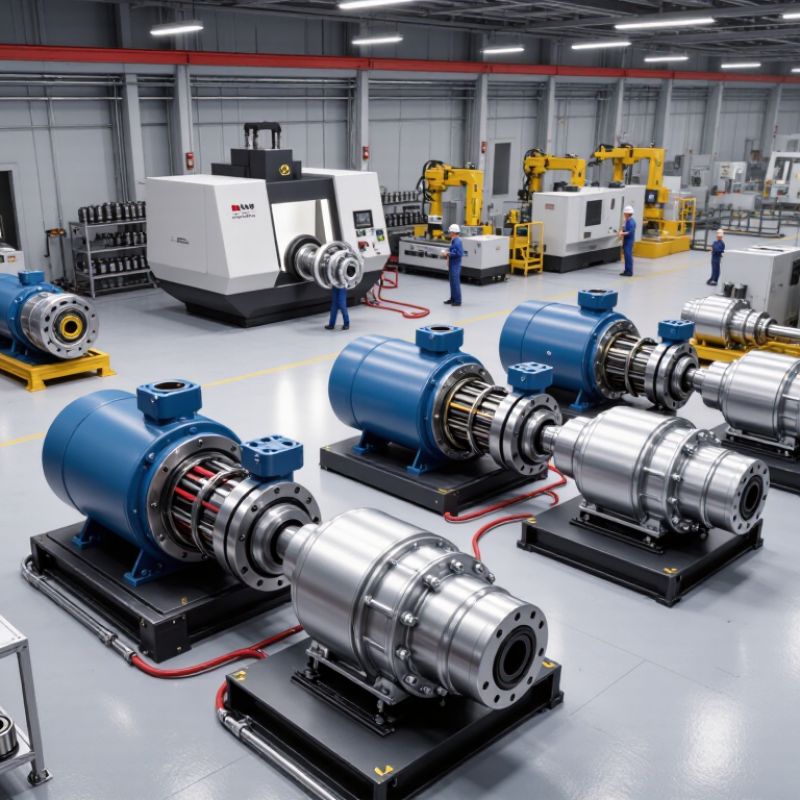
China Top Twin Screw Compressor Manufacturers?

What Is a Twin Screw Compressor?

What Is a Twin Screw Compressor?

A twin screw compressor is a positive-displacement machine that uses two interlocking helical rotors. Air enters through the inlet port, fills the rotor cavities, and moves along the housing. As the cavities become smaller, pressure rises. The compressed air then exits through the discharge port.

Most industrial models are oil-injected or oil-free. Oil-injected designs use lubricant for sealing, cooling, and bearing protection. Oil-free designs separate the compression chamber from the lubrication system. This difference affects air purity, maintenance, temperature control, and operating cost. It is not a minor detail.

The U.S. Department of Energy’s Improving Compressed Air System Performance sourcebook reports that system improvements can often reduce compressed-air energy use by 20–50%. Twin screw performance depends heavily on operating conditions, not only rated horsepower. Pressure settings, leakage, inlet temperature, filtration, and part-load control all matter. A 2023 European Commission energy-efficiency reference also emphasizes measuring system demand before selecting equipment. That advice is practical. Many buyers still compare only advertised flow and motor power.

In field inspections, a poorly controlled compressor may run unloaded for long periods, wasting electricity without producing useful air. Regular leak testing, correct oil management, and recorded pressure trends provide stronger evidence than brochures. Manufacturers should therefore be assessed through verified flow data, efficiency curves, service support, and lifecycle testing. Specifications can look impressive. Real plant conditions are less tidy.

China’s Leading Twin Screw Compressor Manufacturers

China’s Leading Twin Screw Compressor Manufacturers

China’s leading twin screw compressor manufacturers are moving beyond basic capacity. They now focus on stable pressure, lower energy use, and easier maintenance. This matters because the U.S. Department of Energy reports that compressed-air leaks can waste 20–30% of compressor output. A small leak may sound harmless, yet it can run continuously beside a production line.

Experienced Chinese manufacturers typically offer oil-injected and oil-free screw designs for factories, refrigeration systems, and process applications. Better suppliers provide performance curves, material records, noise data, and service plans before delivery. The International Energy Agency notes that electric motor systems consume nearly half of global electricity. Compressor efficiency therefore deserves more attention than purchase price alone. Some product claims still look optimistic. Buyers should verify them under real operating conditions.

Tips: Ask for tested flow at your working pressure, not only the headline rating. Check the specific power value in kW per cubic metre per minute. Inspect separator replacement intervals and controller response time. Request references from facilities with similar dust, temperature, and duty cycles. Factory visits can reveal assembly discipline, but they do not replace independent testing. A useful selection may also include local spare-parts support, remote monitoring, and a clear warranty process.

Key Technologies Used in Chinese Twin Screw Compressors

Chinese twin screw compressor manufacturers increasingly focus on efficiency, controllability, and stable operation. The IEA reports that electric motor systems consume about 50% of global electricity. This makes inverter control highly important. Variable-frequency drives adjust motor speed as demand changes. They reduce unloading losses and avoid constant full-speed operation.

Modern Chinese compressors also use optimized rotor profiles, precision machining, and improved sealing systems. Oil-injected models use temperature sensors and separator designs to support continuous industrial duty. Oil-free versions depend on advanced coatings, tighter clearances, and two-stage compression. These details matter in food processing, electronics, and pharmaceutical production. ISO 1217 provides standardized methods for compressor performance testing. However, laboratory efficiency may not match field results. Poor piping, air leaks, and oversized machines can erase expected savings. That assumption deserves testing.

Tips: Check specific power in kW per m³/min, not horsepower alone. The U.S. Department of Energy identifies compressed air as a significant industrial energy user and recommends leak surveys, pressure control, and demand analysis. Ask for ISO 1217 test conditions, noise data, service intervals, and performance at partial load. A factory trial is still wiser than trusting a brochure.

Major Applications Across Chinese Industries

China’s top twin screw compressor manufacturers serve a wide range of industrial applications. Their equipment supports refrigeration, process air, and gas compression. Selection depends on pressure, cooling demand, refrigerant type, and operating hours.

In food processing, screw compressors maintain stable temperatures in freezing tunnels, cold stores, and beverage plants. Seafood facilities often need reliable low-temperature operation near coastal distribution centers. Chemical factories use them for process gases, reactor cooling, and vapor recovery. Small efficiency losses can become expensive during continuous production.

Pharmaceutical plants require clean, carefully controlled compressed air. Oil-free designs may reduce contamination risks, but they still need proper filtration and scheduled testing. Electronics factories use dry air for sensitive assembly lines, where moisture can damage components. Textile mills depend on steady air pressure for spinning and pneumatic controls. Wastewater plants also use compressors for aeration, although energy demand varies with seasonal loading.

Field experience shows that installation quality matters as much as compressor design. Poor ventilation raises discharge temperatures. Incorrect pipe sizing creates pressure loss. These mistakes are common. Engineers should review duty cycles, local climate, maintenance access, and backup capacity before purchasing. Performance claims should be checked against measured power consumption, noise levels, and service records. A lower purchase price can hide higher lifecycle costs. Chinese industrial users increasingly expect remote monitoring, variable-speed control, and documented efficiency data, yet not every project needs every feature.

China Top Twin Screw Compressor Manufacturers? - Major Applications Across Chinese Industries

Industry Typical Application Preferred Compressor Configuration Typical Discharge Pressure Typical Air or Gas Flow Operating Profile Key Selection Requirements
Steel and Metallurgy Instrument air, pneumatic tools, furnace automation, oxygen and nitrogen plant support Oil-injected units for general plant air; oil-free units where process contamination must be minimized 0.7–1.3 MPa(g) 10–150 m³/min Continuous operation with high annual running hours High reliability, dust-resistant cooling, stable pressure control, and efficient part-load performance
Petrochemical and Chemical Processing Process gas compression, nitrogen service, instrument air, tank blanketing, and pneumatic conveying Oil-free process-gas models or oil-injected models with downstream separation and filtration 0.4–2.0 MPa(g) 5–100 m³/min Long-duration operation in hazardous or demanding process environments Gas compatibility, seal design, corrosion resistance, area classification, and emissions control
Food and Beverage Packaging, bottling, conveying, filling, cleaning, and refrigeration support Oil-free air compressors for direct-contact applications; oil-injected units for non-contact utilities 0.7–1.0 MPa(g) 3–60 m³/min Frequent load changes and strict hygiene requirements Oil-free air quality, stainless or washable surfaces, low noise, low condensate carryover, and easy sanitation
Pharmaceutical Manufacturing Tablet production, cleanroom automation, fluid-bed processing, packaging, and sterile-air systems Oil-free screw compressors with high-grade filtration and desiccant drying 0.7–1.0 MPa(g) 2–40 m³/min Stable operation with strict air-quality control Low particulate and oil contamination, validated air treatment, dew-point control, and hygienic design
Electronics and Semiconductor Precision automation, wafer handling, cleanroom tools, and nitrogen generation support Oil-free compressors with multi-stage filtration and highly stable pressure regulation 0.6–1.0 MPa(g) 2–80 m³/min Continuous service with low tolerance for contamination or pressure fluctuation Very low oil aerosol, low particles, low vibration, low noise, and dependable dew-point performance
Automotive Manufacturing Robot actuation, painting, assembly tools, body-shop equipment, and tire inflation Variable-speed oil-injected screw compressors; oil-free units for paint and sensitive finishing processes 0.7–1.3 MPa(g) 10–200 m³/min Variable demand caused by shifts, production lines, and automated equipment Energy efficiency, rapid response, low pressure fluctuation, heat recovery, and centralized control compatibility
Textile Manufacturing Air-jet looms, spinning, winding, yarn texturing, and pneumatic control systems High-volume oil-injected or oil-free screw compressors with integrated dryers 0.6–1.0 MPa(g) 20–250 m³/min High-volume, near-continuous demand with sensitivity to moisture Stable pressure, low dew point, high specific efficiency, low noise, and easy filter maintenance
Mining and Mineral Processing Drilling, flotation, pneumatic conveying, ventilation controls, and equipment cleaning Heavy-duty oil-injected screw compressors, often with mobile or skid-mounted arrangements 0.7–2.5 MPa(g) 5–120 m³/min Intermittent to continuous operation in dusty and harsh environments Rugged enclosure, high ambient-temperature capability, dust filtration, portability, and service access
Construction and Infrastructure Concrete spraying, road equipment, tunnel work, drilling, and pneumatic tools Mobile diesel-driven or electric screw compressors, depending on site power availability 0.7–3.5 MPa(g) 3–50 m³/min Highly variable duty cycles and frequent relocation Compact layout, impact resistance, simple controls, rapid start-up, and reliable operation in outdoor conditions
Power Generation Instrument air, control valves, ash handling, maintenance tools, and generator auxiliaries Oil-injected units for utility air; oil-free units for sensitive control or process systems 0.7–1.0 MPa(g) 10–150 m³/min Standby, cyclic, or continuous operation depending on plant design Redundancy, remote monitoring, low maintenance, stable pressure, and high availability
Water and Wastewater Treatment Membrane air systems, aeration support, pneumatic valves, sludge handling, and plant maintenance Oil-free low-pressure screw blowers or compressors where clean air is required 0.3–0.8 MPa(g) 10–300 m³/min Continuous operation with substantial daily variation Low energy consumption, moisture resistance, low noise, corrosion protection, and automatic capacity control
Cold Chain and Refrigeration Industrial refrigeration, cold storage, food processing, and temperature-controlled logistics Twin-screw refrigeration compressors using suitable refrigerants and oil-management systems Application-dependent; commonly 0.8–3.0 MPa(g) Refrigerant flow varies by cooling load Continuous or cyclic operation with seasonal load changes Refrigerant compatibility, oil separation, capacity modulation, low-temperature performance, and thermal efficiency

Note: The pressure and flow figures are representative engineering ranges for common industrial installations in China, not universal specifications. Actual requirements depend on gas composition, inlet conditions, altitude, temperature, duty cycle, air-quality class, and system layout.

How to Evaluate and Choose a Chinese Manufacturer

China Top Twin Screw Compressor Manufacturers?

When evaluating a Chinese twin screw compressor manufacturer, begin with evidence, not catalogue claims. Ask for ISO 1217 performance-test records, including flow rate, discharge pressure, power input, and oil carryover. The U.S. Department of Energy reports that compressed-air leaks can waste 20–30% of system output. Therefore, request factory data on leakage testing, control accuracy, and part-load efficiency. A reliable supplier should explain testing conditions clearly.

Visit the production site if possible. Check rotor machining, assembly cleanliness, vibration testing, and serial-number traceability. Review ISO 9001 procedures, inspection records, and warranty handling. Energy efficiency matters greatly. The International Energy Agency reports that electric motor systems consume about 70% of industrial electricity, making compressor selection a long-term operating decision. Ask for lifecycle calculations, not only purchase prices. Confirm local service response times, spare-parts availability, and technician training. Talk with comparable users.

Look beyond polished samples.

A weakness may appear in documentation. That is useful. Manufacturers unwilling to share test methods deserve caution. I would also compare actual field measurements against published values, because laboratory conditions can flatter performance. No checklist is perfect, but transparent data, repeatable testing, and practical after-sales support provide stronger confidence than a low quotation alone.