
contact-button

What Is a Lithium Battery Charger?

A lithium battery charger is not simply a power adapter with a matching plug. It controls voltage and current to charge a battery safely and effectively. The correct charger depends on the battery’s chemistry, nominal voltage, capacity, and manufacturer specifications. A charger made for one lithium battery may not suit another.

Battery University founder Isidor Buchmann writes, “Charging lithium-ion batteries is simpler than charging nickel-based batteries.” The process still requires care. Many lithium-ion chargers use a constant-current, constant-voltage method: current is regulated first, then voltage is held as charging tapers. The battery’s protection system may provide another safeguard, but it does not make an incompatible charger appropriate.

Details matter. A label showing the right connector is not enough; check the supported chemistry and charging voltage. For example, lithium iron phosphate batteries have different voltage requirements from many other lithium-ion batteries. Use the charger recommended by the battery or equipment manufacturer, and follow its instructions. Stop if the charger, cable, or battery becomes unusually hot, or if the battery appears damaged.

The distinction can seem technical. It is practical, too. A charger helps determine how energy enters the battery, while the battery’s design sets its limits. Small labels deserve attention. Even experienced users can overlook them. This guide explains what a lithium battery charger does, how its charging process works, and which specifications to check before choosing one.
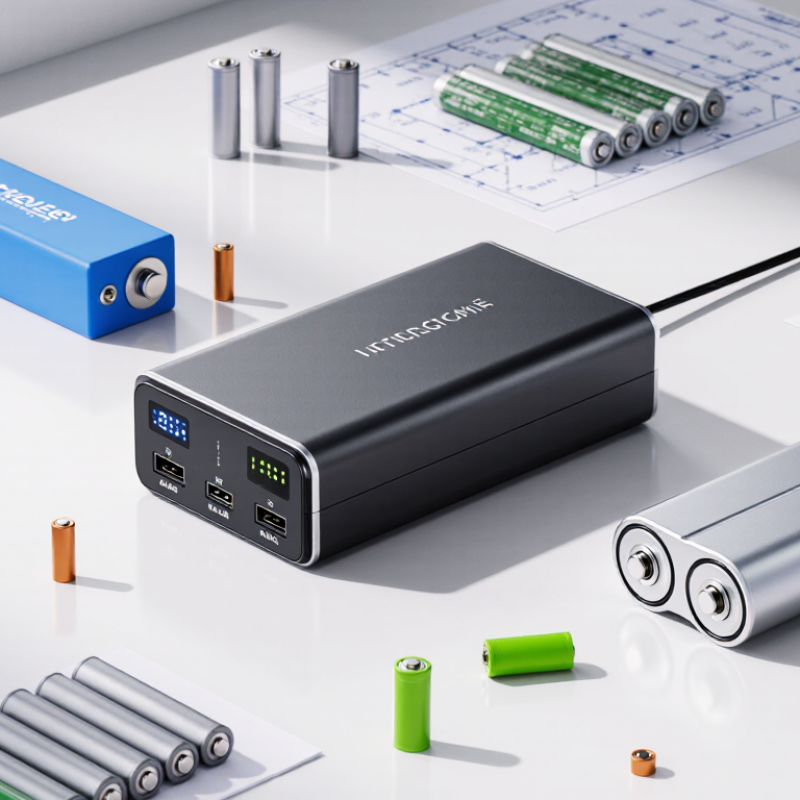
What Is a Lithium Battery Charger?

What a Lithium Battery Charger Is and How It Controls Charging

What Is a Lithium Battery Charger?

A lithium battery charger is a power device designed to charge a specific lithium battery chemistry within defined voltage and current limits. It does more than supply electricity. For many lithium-ion batteries, charging follows a constant-current, constant-voltage pattern. The charger first provides controlled current, then holds voltage steady as the battery approaches its limit. Charging current gradually falls.

Small changes matter.

This control helps reduce overcharging and excess heat, but the charger must match the battery’s chemistry, voltage, and capacity. A lithium iron phosphate battery, for example, may require different voltage settings from another lithium-ion type. The battery pack’s management system can monitor cell voltage and temperature, and may interrupt charging if readings exceed safe limits. However, it does not make an unsuitable charger suitable.

In practice, charging is not always as tidy as a diagram suggests: cold conditions, worn cells, or poor connections can affect performance.

Temperature matters. Check the battery’s specifications, use a compatible charger, and stop charging if the pack becomes unusually hot or damaged.

How CC–CV Charging Typically Limits Li-ion Cells to 4.20 V

What Is a Lithium Battery Charger?
How CC–CV Charging Typically Limits Li-ion Cells to 4.20 V

A lithium battery charger controls current and voltage rather than simply supplying power. Many conventional graphite-based Li-ion cells use a 4.20 V per-cell ceiling. This value is common, not universal; cell chemistry and manufacturer specifications can set different limits.

During constant-current charging, the charger supplies a controlled current while cell voltage rises. Near 4.20 V, it switches to constant-voltage mode and holds that voltage. Charging current then tapers as the cell fills. The small change matters. Holding a cell above its specified limit can accelerate degradation, while stopping well below it reduces usable capacity. IEC 61960-3:2017 sets performance requirements for portable lithium cells, but charging limits still depend on the cell’s own specifications. The IEA’s Global EV Outlook 2024 reports that battery pack prices fell 14% in 2023, underscoring the scale of battery deployment—not a reason to relax voltage control. In practice, a charger must also account for measurement error and temperature. A neat 4.20 V reading is not the whole story.

How LiFePO₄ Chargers Use a Typical 3.65 V Per-Cell Limit

What Is a Lithium Battery Charger?
How LiFePO₄ Chargers Use a Typical 3.65 V Per-Cell Limit

A lithium battery charger controls current and voltage as a battery fills. For LiFePO₄ cells, 3.65 volts per cell is a common upper charging limit. The charger typically supplies steady current, then holds voltage as the current tapers. That matters.

The pack voltage depends on how many cells are connected in series. A common 4S pack reaches 14.6 volts when each cell is at 3.65 volts. But 14.6 volts does not prove every cell is balanced. One cell may reach its limit before the others, so a battery’s management system and charger settings both matter. The number looks simple; relying on it alone can be misleading.

Choose a charger specified for the pack’s LiFePO₄ chemistry and configuration. Follow the battery maker’s voltage and temperature limits, since recommendations can differ. Some systems use a lower charge voltage to reduce stress or leave extra capacity unused. A charger with the wrong profile may continue applying an unsuitable voltage. It should not use lead-acid equalization or desulfation modes unless the battery maker explicitly permits them. A little margin can be useful. Check the specifications, not just the label.

What Is a Lithium Battery Charger? — How LiFePO₄ Chargers Use a Typical 3.65 V Per-Cell Limit
Charging Dimension Typical Value or Method What It Means
Cell chemistry Lithium iron phosphate (LiFePO₄) A lithium-ion chemistry with its own charging-voltage limits; a charger must be matched to the battery chemistry and series-cell count.
Typical upper charge voltage 3.65 V per cell A commonly used upper constant-voltage limit for LiFePO₄ cells. The cell manufacturer’s specifications take precedence, and 3.65 V is not a universal setting for every battery.
Charging profile Constant current, followed by constant voltage (CC/CV) The charger supplies controlled current during the first stage, then holds the set voltage while the current gradually tapers.
1-cell pack (1S) 3.65 V typical upper charge voltage One cell in series; the charger’s voltage setting should follow the cell or battery manufacturer’s stated limit.
4-cell series pack (4S) 14.6 V typical upper pack voltage Calculated as 4 × 3.65 V. This is a nominal pack-level calculation; individual cell voltages still need to remain within their specified limits.
8-cell series pack (8S) 29.2 V typical upper pack voltage Calculated as 8 × 3.65 V. Use a charger designed for the pack’s series configuration and charging specification.
16-cell series pack (16S) 58.4 V typical upper pack voltage Calculated as 16 × 3.65 V. A battery management system (BMS) may provide protection, but it does not replace a correctly configured charger.
Charge current Specified by the cell or battery manufacturer There is no single current that suits every LiFePO₄ battery. The permissible rate depends on the cell design, capacity, temperature, and pack limits.
Charge termination Based on the battery manufacturer’s instructions Some charging systems stop when current tapers below a set threshold; others use BMS or charger-specific controls. The correct termination rule is battery-dependent.
Float charging Continuous float is generally not required LiFePO₄ batteries are not usually maintained like lead-acid batteries. Follow the battery maker’s guidance if a system uses a standby or maintenance voltage.
Charging temperature Use the battery’s specified temperature range Many LiFePO₄ cells must not be charged below 0 °C unless they are specifically designed or heated for low-temperature charging. Exact limits vary by product.
Pack balancing and protection Use an appropriate BMS for multi-cell packs A BMS can monitor cell voltages and provide protection or balancing, depending on its design. The charger must still match the pack voltage and chemistry.
Important: Pack voltage figures are typical calculations based on 3.65 V per cell in series. Always use the battery manufacturer’s charging limits, temperature requirements, and charger recommendations.

How Charger Current and C-Rates Relate to Battery Capacity

What Is a Lithium Battery Charger?
How Charger Current and C-Rates Relate to Battery Capacity

A lithium battery charger controls current and voltage to charge cells safely. Many use a constant-current, constant-voltage profile: current flows steadily, then tapers as the battery approaches its voltage limit. The C-rate connects charging current with rated capacity. For a 50 Ah battery, 1C equals 50 A; 0.5C equals 25 A. At a steady 25 A, the simple calculation suggests about two hours. Real charging usually takes longer.

That estimate is a starting point, not a promise. Charging slows near full capacity, and temperature, cell condition, and the battery management system can limit current. IEC 62660-1:2018 describes controlled procedures for measuring lithium-ion cell capacity and performance. Its test conditions matter: an amp-hour rating does not describe every charging situation. A charger rated for 30 A cannot make a battery safely accept 30 A if its cells are rated for less.

Tips: Match charger voltage to the battery’s specifications, then check its permitted charge current. A 25 A setting may suit one 50 Ah battery, but not another. Read the cell or pack data sheet; guessing from capacity alone is an easy mistake.

What Is a Lithium Battery Charger?

How charger current and C-rates relate to battery capacity

Charging current (A) is calculated as C-rate × capacity (Ah). For example, 1C corresponds to 5 A for a 5 Ah battery. These values illustrate the relationship only: permitted charging current varies by battery and must follow its manufacturer's specifications.

How BMS Protection and IEC 62133-2 Safety Requirements Fit In

What Is a Lithium Battery Charger?

A lithium battery charger controls the voltage and current delivered to a battery pack. For many lithium-ion chemistries, it uses a constant-current, constant-voltage profile. The correct settings depend on cell chemistry, pack design, and manufacturer specifications. A charger that looks suitable may still use the wrong voltage. Small differences matter.

How BMS Protection and IEC 62133-2 Safety Requirements Fit In

A battery management system, or BMS, monitors conditions such as cell voltage, pack current, and temperature. It may interrupt charging if readings exceed safe limits, but it cannot make an incompatible charger appropriate. Think of the charger as controlling normal operation and the BMS as a protective layer when conditions go wrong. IEC 62133-2 addresses safety testing for portable sealed lithium cells and batteries, including foreseeable misuse. It does not mean every charger paired with a tested battery is automatically safe. The battery configuration and intended use matter. Even careful designs have limits.