
Why Choose a Memory Foam Core Pillow Filling Machine?
A Memory Foam Core Pillow Filling Machine can make a visible difference on the factory floor: steadier filling weights, fewer uneven cores, and less manual handling. The need for repeatable production is clear, but buying equipment should follow measured demand, not a trend. Grand View Research’s mattress-market analysis offers useful context on bedding demand; however, market growth alone does not prove that a specific filling line will pay for itself. Manufacturers should compare their own order volumes, labor costs, material waste, and required output before investing.
The machine’s value depends on practical details. Can it feed foam pieces consistently? Is the filling density adjustable? How quickly can operators clean the hopper and change settings? These questions matter when a pillow must feel uniform from the first unit to the last. Manufacturing-quality authority W. Edwards Deming wrote, “Quality comes not from inspection, but from improvement of the production process.” His principle applies here: automation helps only when the process is properly controlled. It is not magic.
A Memory Foam Core Pillow Filling Machine may suit producers seeking repeatability and higher throughput, especially where manual filling creates bottlenecks. Yet equipment specifications can look better on paper than they perform during a real shift. Ask for a material trial, verify output using your own foam, and check service support before committing. That small caution is worth keeping.
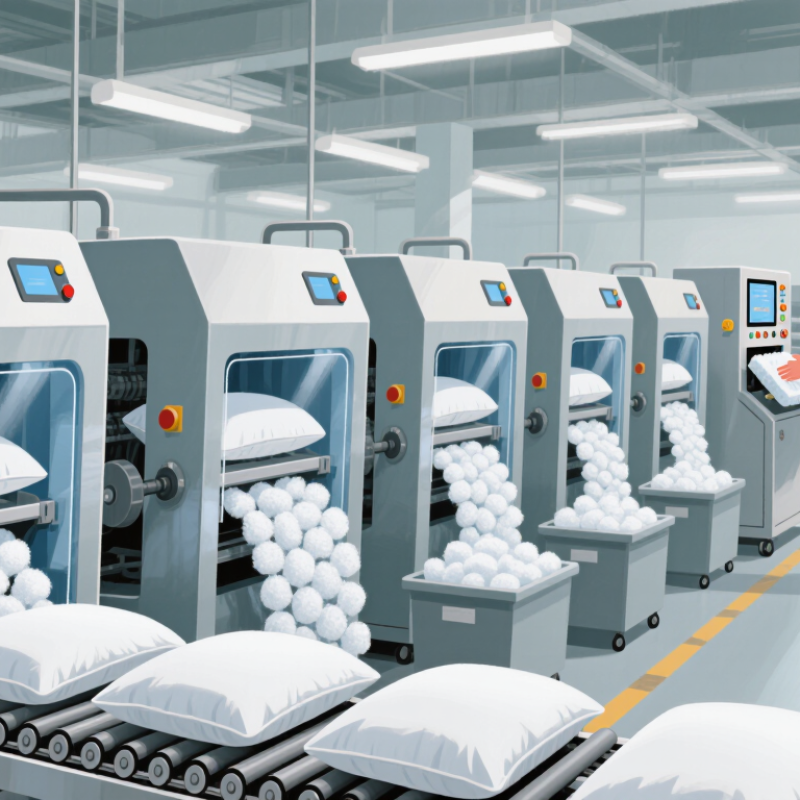
Table of Contents [Hide]
What Is a Memory Foam Core Pillow Filling Machine?
A memory foam core pillow filling machine is equipment that moves shredded or loose memory foam from a hopper into a pillow casing. Depending on the model, it may use an air stream, screw feeder, or metering system to control the fill. The operator positions the casing at a nozzle, feeds in foam, then checks the shape and weight. That is the basic process. It is not magic; tangled foam or a poorly adjusted feed can still create uneven corners.
For a production team, the main value is steadier filling and less repeated manual handling. NIOSH’s Revised Lifting Equation uses 51 pounds as a load constant only under ideal lifting conditions; recommended limits decrease when reach, twisting, or repetition is involved. This is a useful ergonomic reference, not a guarantee that any machine removes risk. Workers still need safe loading, cleaning, and handling procedures. A practical test should include different foam sizes and pillow shells, since fill behavior can change between batches.
Tips: Test a few shells before a full run. Weigh each sample, inspect the corners, and adjust feed speed gradually. Keep a record of settings; small changes can matter.
How Does the Filling Process Work?
A memory foam core pillow filling machine turns prepared foam into a measured, even pillow core. The process starts with clean, dry foam pieces loaded into a hopper. Some systems use shredded foam; others handle formed pieces. The machine design matters.
An operator sets the target fill amount and places an open pillow cover at the filling outlet. A feed mechanism moves foam toward the nozzle, while airflow or mechanical pressure guides it inside. The operator may pause to reposition the cover and help foam reach the corners. Then the filled pillow is weighed or checked by feel. Small adjustments can correct uneven spots.
Not every pillow needs the same density. A firm design may require more foam, while a softer one needs room for the pieces to shift. Good metering helps reduce waste, but it does not guarantee a perfect shape. Foam size, static, and nozzle placement can affect the result. Dust control and routine cleaning also matter; even a minor buildup may slow feeding. It is worth checking samples during a run. That takes time, but skipping the check can leave pillows lumpy or inconsistent.
Which Components Support Accurate, Consistent Filling?
Why Choose a Memory Foam Core Pillow Filling Machine?
Which Components Support Accurate, Consistent Filling?
A memory foam core pillow filling machine relies on several components working together. The hopper holds prepared foam pieces, while an agitator helps keep material moving toward the feed system. Without steady flow, pieces may bridge above the outlet and leave the operator adjusting production by guesswork. Small details matter.
A metering screw or controlled feed mechanism regulates how much foam enters each pillow shell. Load cells can check the filled weight, and sensors may flag a shell that is missing or poorly positioned. A programmable controller coordinates these steps and stores settings for repeatable runs. Still, settings need to match the foam’s size and density; one recipe may not suit every batch.
The filling nozzle also affects results. A well-sized outlet guides foam into the shell with less snagging, while adjustable speed can help prevent uneven distribution. Operators should verify weights across several pillows, inspect seams, and recalibrate after material or setup changes. That takes testing. Even reliable equipment can drift, and dusty foam or worn parts may disrupt feeding. Keeping a simple record of adjustments makes troubleshooting more practical.
What Benefits Does the Machine Offer Pillow Manufacturers?
A memory foam core pillow filling machine can help manufacturers turn foam pieces into consistently filled pillows with less repetitive handwork. Depending on its configuration, it may shred, convey, meter, or feed foam into pillow shells. Operators can adjust feed rates and filling amounts to suit different pillow sizes and firmness targets. That matters.
More consistent filling can reduce noticeable lumps and limit overfilling, which may otherwise waste material or strain seams. A steady process also helps production teams plan output and keep records of settings between batches. But foam types vary. Density, piece size, and elasticity can affect how smoothly material moves, so settings need testing rather than guesswork.
The machine does not replace quality checks. Staff should inspect filled pillows, weigh samples, and check that foam is distributed evenly across each shell. Dust control and accessible cleaning points are practical features to consider, especially when the line handles loose foam. There is a catch: poorly matched equipment may cause blockages or uneven feeding. A trial using the manufacturer’s actual foam and pillow covers can reveal those issues before routine production begins.
Why Choose a Memory Foam Core Pillow Filling Machine? - What Benefits Does the Machine Offer Pillow Manufacturers?
A practical overview of production benefits, the indicators manufacturers can track, and factors that affect results.
| Production Dimension | How the Machine Helps | Useful KPI | Benefit to the Manufacturer | Key Consideration |
|---|---|---|---|---|
| Filling consistency | Controlled feeding and distribution help place shredded or chipped memory foam more evenly inside the pillow casing. | Fill-weight variation (g or %); pillow-to-pillow firmness variation | More consistent product feel and fewer pillows requiring manual adjustment. | Results depend on foam-piece size, material condition, machine settings, and pillow design. |
| Filling quantity control | Configured weighing or timed-dosing systems can help operators deliver a repeatable amount of filling. | Target fill weight (g); average deviation from target (g) | Supports product specifications and helps limit overfilling or underfilling. | Weighing systems require suitable calibration and a consistent filling procedure. |
| Production throughput | Mechanized conveying and filling can reduce the manual handling involved in loading pillow casings. | Pillows filled per hour; cycle time per pillow (seconds) | Helps manufacturers plan output and identify bottlenecks on the production line. | Actual output varies with pillow size, fill amount, operator workflow, and changeover time. |
| Labor and ergonomics | Automated material delivery can reduce repetitive scooping, lifting, and hand-feeding tasks. | Operator-hours per production batch; manual handling steps | Operators can spend less time on repetitive filling work and more time on inspection or packing. | Staff are still needed for machine operation, material replenishment, cleaning, and quality checks. |
| Material handling | Hoppers, conveyors, and controlled feeders can move loose foam pieces from the supply point to the filling station. | Material replenishment frequency; material loss per batch (kg) | Creates a more organized material flow and can reduce unnecessary handling between workstations. | Foam shape, bulk density, static, and moisture can affect feeding behavior. |
| Product flexibility | Adjustable feed settings and filling connections can support different pillow sizes and fill recipes. | Number of validated product recipes; changeover time (minutes) | Allows a production line to handle multiple pillow specifications with documented settings. | Each product format should be tested to confirm fit, fill distribution, and finished firmness. |
| Quality control | Repeatable machine settings make it easier to record and review filling parameters by product or batch. | Batch records completed; rejected or reworked pillows (%) | Provides useful production data for troubleshooting and process improvement. | Machine records support quality checks but do not replace inspection of finished pillows. |
| Work-area cleanliness | Enclosed feed paths or compatible dust-extraction connections can help manage loose foam particles during filling. | Cleaning time per shift (minutes); collected waste (kg) | Can make material handling and routine cleanup more manageable. | Dust control depends on machine enclosure, extraction setup, maintenance, and workplace procedures. |
Note: KPIs are suggested measurement dimensions, not guaranteed performance figures. Confirm machine suitability with trials using the intended foam material, pillow casing, and production settings.
What Factors Matter When Choosing a Filling Machine?
Why Choose a Memory Foam Core Pillow Filling Machine?
What Factors Matter When Choosing a Filling Machine?
Choosing a machine starts with the foam, not the brochure. Foam pieces can vary in size, density, and springiness, affecting how they move through a hopper and fill a pillow. Look for adjustable feed and dosing controls, so operators can manage fill weight without frequent manual corrections. Consistency matters. Ask for a trial using your actual foam and pillow covers.
Match capacity to your real production schedule, including pauses for loading and changeovers. A high-speed machine may not help if operators struggle to position covers. Check how accessible the contact surfaces are for cleaning, and ask how routine wear parts are replaced. Clear controls and practical guarding also matter on a busy production floor. It is easy to focus on output alone, but noise, dust handling, and maintenance time can change the daily experience. Consider these details before choosing.