7 Tips to Choose an LED Mood Light Manufacturer
Choosing an LED Mood Light Manufacturer is not just a price comparison. It is a decision about color quality, product safety, consistency, and support after delivery. A sample may glow beautifully on a showroom shelf, then look uneven in a bedroom corner. Small details matter: smooth dimming, stable color, quiet electronics, and controls that feel simple at night.
Lighting engineer Maya Chen offers this practical reminder: “A mood light should create the same calm experience in the customer’s home as it did in the product sample.” That is a useful test, though a quote alone cannot prove a supplier’s capabilities. Ask how samples are evaluated, how color consistency is checked, and what happens when a batch does not match expectations. Request clear specifications and recent quality records. Then compare the answers, not just the glossy photos.
This guide outlines seven practical tips for choosing a partner. It covers product expertise, customization, materials, testing, communication, production capacity, and after-sales support. Look closely at the details. A soft amber glow, a smooth transition from blue to warm white, and a sturdy touch control can reveal more than a polished catalog. Still, no checklist removes every risk. I would want to see the actual product in use before making a final decision. Shortcuts can feel tempting. They can also leave buyers with inconsistent lighting and avoidable delays.
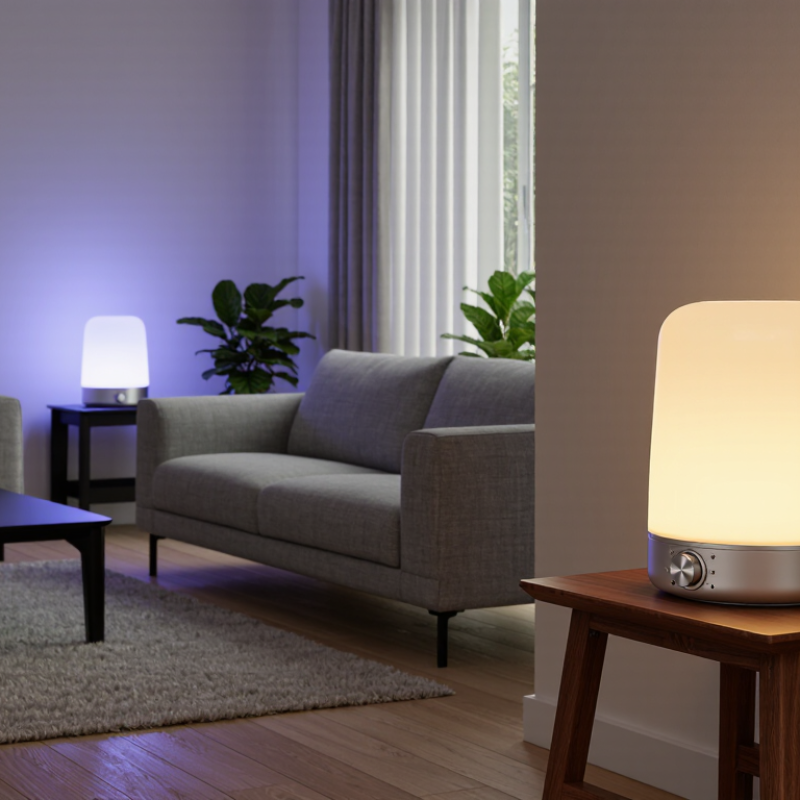
Define Mood-Light Needs: CCT Options Commonly Span 2,700–6,500 K
Choosing a mood-light manufacturer starts with the room and the feeling you want to create. Common correlated color temperature options span roughly 2,700–6,500 K. Around 2,700 K gives a warm, amber-like glow for bedrooms or lounges. Mid-range settings can feel more neutral, while 6,500 K appears cooler and closer to daylight. These are practical references, not guarantees of how a room will look. Wall color, lampshades, and nearby daylight all affect perception.
That matters. Ask how the manufacturer specifies CCT tolerance and whether output stays consistent across production batches. A stated range alone may hide noticeable variation between units. Request a sample, then view it at the intended dimming levels and beside the materials in your space.
Test it in person. Also check whether changing brightness shifts the perceived color; some products can look warmer as they dim. CCT does not describe color rendering or brightness, so request those specifications separately.
A common oversight is choosing a number from a screen and assuming it will feel the same at home. It may not. Clear test data and candid answers are more useful than a broad promise of “adjustable white.”
Compare White-Light Color Quality: Use CRI 80+ as a Practical Baseline
When comparing LED mood light manufacturers, treat CRI 80+ as a practical starting point for white-light quality, not a guarantee of pleasing color. CRI measures how accurately a light renders selected colors compared with a reference source. Ask for the test report for the exact LED configuration you plan to order, rather than a general product sheet. Small changes in LED components can affect the result.
Check how familiar objects look under the sample: a cream fabric, a red book cover, and natural skin tones are useful references. Does the cream appear grayish? Does the red look dull? These details can reveal issues that a number alone may miss.
If possible, compare samples side by side in the same room, at the same brightness and color temperature. Ask whether the stated CRI applies across dimming levels, since low settings may change the appearance of light.
That matters. CRI 80+ can work well for relaxed ambient lighting, while color-critical spaces may need closer evaluation.
You might also ask about R9, which relates to saturated reds. I would not judge a manufacturer from one spec alone; sample testing takes time, and even then, personal preference can complicate the decision.
Benchmark Efficiency: LEDs Use at Least 75% Less Energy Than Incandescent Lamps
An LED mood light can create a soft amber pool on a bedside table without drawing much power. Compared with an incandescent lamp producing similar light output, LEDs use at least 75% less energy. That benchmark is useful, but it does not tell the whole story. A manufacturer should provide clear lumen and wattage figures, so buyers can compare brightness fairly. Numbers matter.
Ask for measured power consumption at common brightness settings, not just the maximum rating. Look for test reports that identify the product model and measurement conditions. A dimmer may reduce energy use, but poor control can cause flicker or uneven color. Check the light at low and high settings. Warmth matters, too.
Efficiency is also affected by heat management and driver quality. A poorly designed unit may lose brightness or shift color as it warms up. I can be tempted by an attractive sample and overlook those details; that is an easy mistake. Ask how the manufacturer checks consistency across production batches, and whether its published figures apply to the finished mood light. Real room use varies, so treat laboratory numbers as a comparison point, not a promise of identical savings.
Verify Lifetime Claims with LM-80 Test Data and TM-21 Projections
A long lifetime claim can make an LED mood light look dependable, but the number needs evidence. Ask the manufacturer for the actual LM-80 test report, not just a product brochure. LM-80 measures lumen maintenance for LED packages, arrays, or modules under controlled conditions. It does not test the complete light fixture. Check that the report identifies the same LED component used in the product, along with its operating current, test temperatures, and test duration. Small details matter.
TM-21 uses LM-80 data to project lumen maintenance over time. It is a projection, not a direct test of how long a finished mood light will work. Ask for the calculation and the reported L70 value, which estimates when light output may fall to 70 percent of its initial level. Also check the projection period and the method’s applicable limits. A tidy chart can still hide a mismatch between the tested LED and the one inside the fixture.
I would not treat any projection as a promise. Heat, enclosure design, and the power supply can affect real-world performance. Ask how the manufacturer manages heat around the LED board, especially if the light has a compact plastic housing. Look for test conditions that resemble the intended use, such as extended operation in a warm room. Numbers need context. If a supplier cannot explain the difference between LM-80 testing and TM-21 projection, keep asking before relying on its lifetime claim.
Assess Supplier Quality Through IEC 62717 Reports and Production Samples
A dependable LED mood light begins with evidence, not polished sales photos. Ask for the IEC 62717 report for the LED module used in your proposed product. Check the model code, test date, operating conditions, and measured performance. The report should match the actual module, not a similar item from an older design. A standard helps structure testing; it does not guarantee every finished light will perform well.
Tip: Match the model code.
Tip: Review the test conditions.
Tip: Ask who performed the tests.
Then compare the report with a production sample. Run it for several hours in a dim room, and note brightness stability, color consistency, heat near the housing, and any buzzing. Small differences matter. One sample cannot prove that an entire batch is consistent.
Request samples drawn from regular production, not specially prepared display units. Ask the supplier to explain any gap between report data and what you observe. A slight color shift may come from settings or components, but do not assume; ask for a repeat check. Keep the sample, report, and written specifications together. That gives your team a practical reference when reviewing later deliveries.



 Customer Support
 Request Sample
 Contact