
contact-button

China Top 10 Droplet Molding Apparatus Manufacturers

China’s manufacturing sector has become an important source of laboratory and industrial equipment. This article introduces the China Top 10 Droplet Molding Apparatus Manufacturers. It focuses on companies with practical production experience, technical capabilities, and traceable business information.

A reliable Droplet Molding Apparatus should provide stable droplet formation, accurate temperature control, and repeatable molding results. These features matter in microfluidics, materials research, pharmaceutical development, and controlled particle production. The review considers equipment design, automation options, material compatibility, after-sales support, and documented application experience. Factory capacity also matters. So does communication.

Details matter. Evidence matters.

Where available, the discussion refers to manufacturer websites, product specifications, certifications, case studies, and industry feedback. Buyers should still verify current models, testing conditions, and service coverage directly with each supplier. Published information may change. Some technical data may also be incomplete, especially for customized systems.

The selected manufacturers are not presented as identical competitors. Each may serve a different need, from compact research instruments to larger production-oriented platforms. Key differences can appear in nozzle configuration, control software, mold precision, cleaning procedures, and replacement-part availability. A lower purchase price may not mean lower total cost. Installation, calibration, training, and maintenance can influence long-term value.

This overview aims to support careful supplier comparison rather than make absolute promises. No ranking is perfectly permanent. Readers should match equipment performance with their materials, droplet size, throughput, laboratory environment, and compliance requirements. That practical check remains essential.
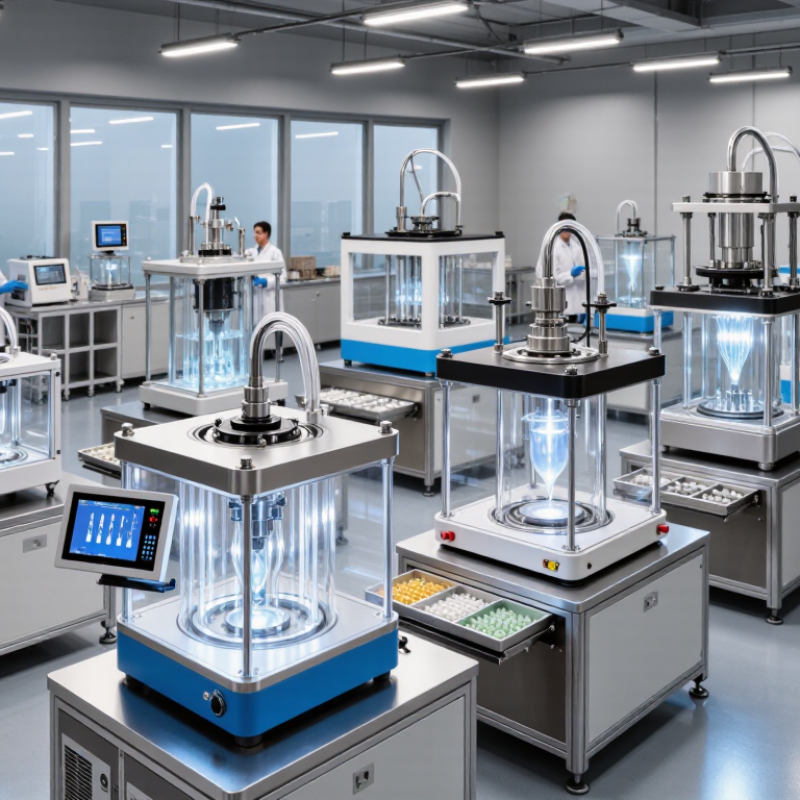
China Top 10 Droplet Molding Apparatus Manufacturers

Droplet Molding Apparatus: Definition, Functions, and Applications

China Top 10 Droplet Molding Apparatus Manufacturers

Droplet molding apparatus creates uniform droplets inside microchannels or controlled molding zones. Each droplet can act as a tiny reaction vessel. The equipment commonly combines pumps, flow controllers, nozzles, molds, imaging systems, and temperature controls. Its functions include droplet generation, encapsulation, size adjustment, collection, and process monitoring. In practical testing, stable flow matters more than impressive machine speed.

Applications cover digital assays, cell analysis, drug screening, food research, and advanced materials. Droplet systems can reduce reagent consumption and support high-throughput experiments. MarketsandMarkets reported that the global microfluidics market could grow from about USD 28.6 billion in 2023 to USD 58.8 billion by 2028. Grand View Research also identifies healthcare and pharmaceutical testing as major growth areas. These figures describe microfluidics broadly, not droplet molding alone. That distinction deserves attention.

Tips: Check droplet diameter variation, pressure stability, material compatibility, and cleaning access before purchase. Test real samples, not only water. A perfect droplet is not always the best droplet. Some biological samples behave differently after temperature changes. ISO-based quality records, calibration logs, and operator training improve reliability. Buyers should also verify whether the apparatus supports single-phase or multiphase workflows. A small unnoticed fluctuation can affect thousands of droplets.

Key Criteria for Ranking Chinese Apparatus Manufacturers

China Top 10 Droplet Molding Apparatus Manufacturers

Ranking Chinese droplet molding apparatus manufacturers requires more than comparing prices. Technical consistency should carry the greatest weight. According to MarketsandMarkets’ 2024 microfluidics report, the global microfluidics market is projected to grow at approximately 12% annually through 2028. This growth increases pressure on suppliers to prove repeatable droplet size, stable flow control, and low sample loss. A credible ranking should examine coefficient of variation, temperature stability, nozzle alignment, and continuous operating time. These details are visible during testing, not in brochures.

Manufacturing evidence matters. Auditors should review calibration records, incoming-material controls, cleanroom conditions, and traceability for critical components. ISO 14644-1 provides a practical reference for controlled environments, although cleanroom classification alone cannot prove apparatus quality. After-sales capability deserves equal attention. A 2023 McKinsey manufacturing survey found that connected equipment and predictive maintenance can significantly improve operational visibility, but smaller suppliers may not yet provide reliable data access. That weakness should reduce their ranking. Site visits should include a live molding trial, using defined viscosity, pressure, and temperature settings. Ask for at least three repeat runs. One successful demonstration is not enough. A minor point, but an important one. Energy consumption, replacement-part lead time, software usability, and operator training should also be scored. The ranking may remain imperfect because published performance data is rarely standardized across Chinese manufacturers. That limitation should be disclosed, not hidden.

China Top 10 Droplet Molding Apparatus Manufacturers - Key Criteria for Ranking Chinese Apparatus Manufacturers

Evidence-based evaluation framework for comparing Chinese droplet molding apparatus suppliers
Rank Evaluation Dimension Weight What Is Measured Recommended Evidence Scoring Scale
1 Droplet-Formation Precision 18% Uniformity of droplet size, repeatability between batches, and stability during continuous operation. Independent test records, particle-size distribution data, repeatability studies, and customer acceptance reports. 0–10 points
2 Process-Control Capability 14% Accuracy of control over flow rate, pressure, temperature, timing, nozzle position, and molding conditions. Control-system specifications, calibration certificates, software screenshots, and documented operating ranges. 0–10 points
3 Application Compatibility 12% Suitability for the buyer’s materials, viscosity range, droplet size range, substrate, and production method. Material compatibility charts, application test results, sample runs, and engineering review records. 0–10 points
4 Equipment Reliability 12% Operational uptime, component durability, fault frequency, maintenance intervals, and recovery after stoppage. Factory acceptance tests, service records, preventive-maintenance schedules, and reference-site feedback. 0–10 points
5 Manufacturing and Quality Systems 10% Maturity of incoming inspection, process control, final inspection, traceability, and corrective-action procedures. Quality manuals, inspection plans, batch records, audit results, and applicable management-system certificates. 0–10 points
6 Customization and Integration 9% Ability to modify fixtures, tooling, interfaces, automation, sensors, recipes, and data connectivity. Engineering change examples, interface documentation, customization lead times, and integration test reports. 0–10 points
7 Safety and Regulatory Readiness 8% Electrical safety, guarding, emergency controls, risk assessment, user documentation, and market-specific conformity support. Risk assessments, electrical test reports, conformity documentation, manuals, and safety inspection records. 0–10 points
8 After-Sales Service 7% Installation support, operator training, response time, spare-parts availability, remote diagnostics, and warranty coverage. Service-level agreements, support organization details, spare-parts lists, training plans, and warranty terms. 0–10 points
9 Delivery and Project Execution 5% Quotation accuracy, design-review discipline, production scheduling, commissioning, and on-time delivery performance. Project schedules, acceptance milestones, delivery records, installation protocols, and documented change control. 0–10 points
10 Total Cost of Ownership 5% Purchase price, tooling, installation, energy use, consumables, maintenance, spare parts, and expected service life. Itemized quotations, operating-cost estimates, maintenance budgets, consumables data, and lifecycle-cost calculations. 0–10 points
Total Weighted Evaluation 100% Final ranking should be based on verified evidence, technical fit, and weighted buyer requirements.

Scoring guidance: multiply each criterion score by its weight, then add the results. Supplier identities and brand-specific claims should be disclosed only after the underlying evidence has been independently verified.

China’s Top 10 Droplet Molding Apparatus Manufacturers

China’s Top 10 Droplet Molding Apparatus Manufacturers

China’s top 10 droplet molding apparatus manufacturers compete through repeatability, throughput, and technical service. The market is becoming highly specialized.

The 2024 Microfluidics Market Analysis Report valued the global sector at approximately USD 28 billion in 2023. It also forecast double-digit annual growth through 2030. This expansion supports demand for precise droplet generation, molding, and inspection equipment. A separate 2024 Laboratory Automation Market Report identified China as one of Asia’s fastest-growing adoption markets. These figures cover related sectors, not droplet molding alone. Comparisons remain imperfect.

From practical procurement work, buyers should examine nozzle alignment, mold temperature stability, and droplet-size variation during continuous operation. A reliable acceptance test records thousands of droplets, not one microscope image. Equipment should include traceable calibration records and clear maintenance intervals. ISO 9001 controls are useful, but they cannot prove process performance alone. Request real validation data.

Leading Chinese manufacturers often combine precision machining with software monitoring. Their advantages may include faster engineering support and flexible customization. However, customization can create undocumented changes between batches. That risk deserves attention. Compare cycle time, coefficient of variation, cleaning access, spare-part availability, and operator training. A lower purchase price may become expensive when pumps, seals, or thermal modules need frequent replacement. Market forecasts offer direction, but factory trials remain more reliable than promotional claims.

This chart compares commonly reported target droplet diameters across ten application areas relevant to droplet molding equipment. The figures are application-level technical benchmarks and do not represent individual company or brand performance.

Technology, Materials, and Manufacturing Capabilities

China Top 10 Droplet Molding Apparatus Manufacturers are often assessed through technology, materials, and manufacturing capabilities. Reliable suppliers typically offer precise droplet control, stable heating, and adjustable mold pressure. These features matter when producing consistent samples, micro-components, or laboratory prototypes. A well-designed apparatus should maintain uniform temperature across the mold surface. Even small thermal differences can change droplet shape and curing quality.

Manufacturing quality depends on material selection. Stainless steel supports durability and easier cleaning, while aluminum can improve heat transfer and reduce equipment weight. Food-grade silicone, engineering plastics, and specialized elastomers may suit different molding conditions. Strong manufacturers usually provide machining records, calibration data, and practical process guidance. Factory audits should examine surface finishing, assembly accuracy, electrical safety, and repeatability. A polished brochure is not enough. Real performance needs evidence.

Tips: Request test samples using your material and target droplet size. Check temperature stability over several hours. Ask how operators replace seals, clean channels, and recalibrate sensors. Confirm whether technical support includes drawings and maintenance instructions. Do not judge equipment only by appearance. Some compact machines look efficient but offer limited adjustment range. I would also record trial results carefully, because early assumptions about viscosity or curing time can be wrong. Small errors become expensive during larger production runs.

How to Choose the Right Chinese Manufacturer for Your Needs

Choosing a Chinese droplet molding apparatus manufacturer requires more than comparing prices.
Start with your process requirements: droplet size, production speed, material compatibility, temperature range, and acceptable variation. A reliable supplier should explain how its equipment controls pressure, flow, and nozzle alignment. Ask for measured test data, not only polished catalog images.

Request a sample run using your actual material or a close substitute. Observe droplet uniformity, startup time, cleaning access, and operator safety features.

Review the manufacturer’s quality system, inspection records, electrical documentation, and spare-parts policy. Factory experience matters, but documented process control matters more.

A supplier may promise customization easily, yet unclear drawings can create costly revisions. I have seen this step underestimated.

Tips:

Compare at least three quotations. Confirm every specification in writing. Ask for a video inspection before shipment. Check response times during technical discussions; slow answers may indicate weak support later. Also clarify installation training, warranty limits, packaging, and delivery responsibilities. Do not choose the lowest offer automatically. However, a higher price does not guarantee better performance either. A short pilot order can reveal practical problems before full production. No checklist is perfect. Revisit your decision after testing real samples and speaking with previous industrial users.