Top 10 Types of Maize Mill Machines for Global Buyers
Maize feeds people, livestock, and food industries across many regions. FAOSTAT’s Crops and Livestock Products database reports global maize production of about 1.16 billion tonnes in 2022. That figure shows the crop’s scale, but it does not mean all maize enters a mill. Much is used for feed, consumed directly, or processed in other ways. Buyers should read production statistics as context, not as a forecast of equipment demand.
A suitable Maize Mill Machine depends on the grain, the desired product, and the plant’s daily capacity. A small community mill may need dependable cleaning and grinding equipment. A commercial plant may also require de-stoners, degerminators, roller mills, sifters, and systems for handling finished flour. Each step affects the next. Poor cleaning can wear grinding parts; uneven sifting can leave flour inconsistent. Details matter.
This guide introduces ten common machine types and explains what each does in a milling line. It also considers practical buying questions, including power use, maintenance access, spare-part availability, and operator skills. Specifications deserve careful checking. A high-capacity rating alone says little about flour quality or real output with local maize. No machine is perfect. Buyers should compare test results and ask suppliers how performance was measured. FAOSTAT provides useful crop context; equipment claims still need independent verification and clear operating conditions.
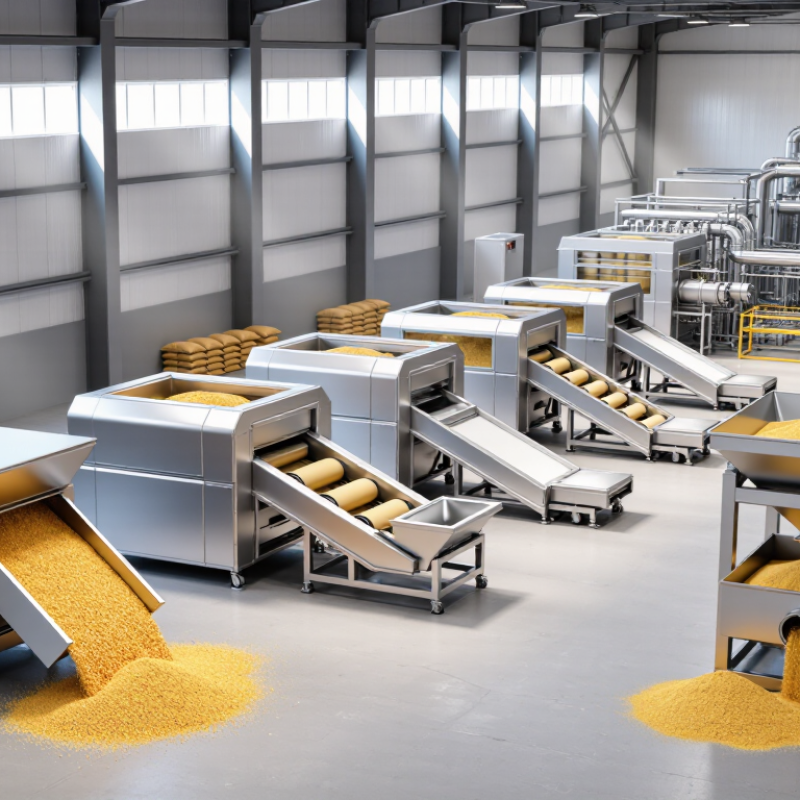
Maize Mill Machines and Their Role in Grain Processing
Maize mill machines turn cleaned kernels into meal, flour, grits, and other products through separation and size reduction. Their settings shape the final texture and influence how much usable product a mill recovers. A line may include a cleaner, destoner, degerminator, mill, and sifter. The exact combination depends on the grain and the product specification.
Each machine has a distinct job. Screens remove stalk pieces and dust, while a destoner separates dense stones that could damage downstream equipment. A degerminator loosens the germ and bran; roller or hammer mills then reduce the kernels to the required size. Sifters grade the output, sending coarse particles back for another pass. Moisture matters. Grain that is too damp may clog screens, while overly dry kernels can create excess fines.
In practice, the sequence is not always perfect. Kernel size varies between harvests, and a setting that worked last week may produce uneven grits today. Operators should check sieve samples, motor load, and product temperature during a run, then adjust gradually. Maintenance also affects results: worn screens or blunt impact parts can change particle size without an obvious warning. A quieter line is not automatically a better one. Careful records help buyers compare machine capacity with real operating conditions, rather than relying only on rated output.
How Maize Moves Through a Milling System
Maize begins its journey at the receiving point, where operators check grain for moisture, damaged kernels, and visible debris. A screen removes stalk pieces and dust, while an aspirator draws away lighter material. Then the grain passes through a destoner.
Small details matter. A few stones can damage working parts or interrupt production.
Clean maize may be conditioned with a measured amount of water and left to rest. This softens the outer layer and helps separate the bran and germ during milling. The grain then enters equipment such as a degerminator, hammer mill, or roller mill, depending on the desired flour and meal. Each machine changes the material in a different way. A sifter separates fine flour from larger particles, which may return for another pass. Air systems can also remove loosened bran.
From there, conveyors move each fraction to storage or packing. Operators monitor particle size, flow, and moisture at several points, not only at the mill outlet. A screen that looks clean can still pass uneven meal if its mesh is worn.
No setting works for every harvest; kernel size and moisture vary.
That variation is easy to underestimate. Careful sampling helps teams adjust the process without treating every batch as identical.
Ten Main Types of Maize Mill Machines
A maize mill’s ten main machine types serve different stages, from raw grain to packaged meal. The intake cleaner removes husks, dust, and light debris before processing. A destoner separates stones by weight, while a dampener adds measured water to help loosen the bran. The degerminator then separates germ and outer layers. Small settings matter. Excess moisture can affect grinding and storage.
For size reduction, roller mills produce more even particles for grits and flour. Hammer mills handle versatile, coarser grinding, while pin mills can make finer products. A plansifter sorts ground maize through stacked screens, directing each fraction to the right next step. Screen condition can change the result; operators should check it often.
The purifier uses airflow and sieving to separate bran from edible particles. A packing scale weighs finished meal into bags. FAOSTAT reports global maize production of roughly 1.16 billion tonnes in 2022, a reminder of the crop’s scale, not a measure of equipment demand. USDA’s Grain: World Markets and Trade reports also track global grain supply and trade. Buyers should match machine capacity to local grain moisture, target particle size, and available power. A line may appear efficient on paper, yet cleaning losses and frequent screen changes can reduce its real output.
How Machine Types Differ by Capacity and Final Product
Maize mill machines differ in both hourly capacity and the texture or grade of flour they produce. A cleaner and destoner remove dust, stalks, and stones before milling; their throughput should match the rest of the line. A conditioner adjusts kernel moisture, while a degerminator separates germ and bran for refined meal. Roller mills suit steady production of uniform flour. Hammer mills can handle varied feed rates and produce coarser meal, while stone mills typically work at more modest speeds. Plansifters and purifiers then separate particles by size and quality.
Tips: Ask suppliers to test your maize sample. Check moisture, expected daily output, screen sizes, and power needs. A short trial can reveal whether the flour is too coarse or the line’s actual capacity falls below the quoted figure.
Final-product goals guide the configuration. Whole-meal flour needs more of the kernel retained; refined flour requires effective separation and additional sifting. A small mill serving local shops may prioritize flexible batch sizes and easy cleaning. A larger operation may need continuous feeding, reliable elevators, and spare screening capacity. More machines do not automatically mean better output. A neat capacity figure can mislead if it assumes ideal grain, nonstop operation, or a product specification your buyers do not want. Recheck those assumptions before comparing equipment.
Top 10 Types of Maize Mill Machines for Global Buyers
Indicative throughput and typical outputs by machine type
Cleaner: cleaned maize
Destoner: stone-free maize
Magnetic separator: maize with ferrous metal removed
Degerminator: degermed maize and bran
Roller mill: maize flour or meal
Hammer mill: maize meal or flour
Pin mill: fine maize flour
Plansifter: graded flour and grits
Grits polisher: polished maize grits
Weighing and packing machine: bagged maize products
Bars show representative nominal throughput in tonnes per hour, not guaranteed operating capacity. Actual rates vary with machine configuration, maize condition, product specification, and—in packing equipment—the bag size and packing rate.
How Global Buyers Can Compare Maize Mill Options
Global buyers comparing maize mill options should begin with the grain, not the machine label. A hammer mill can handle varied kernels and produce meal quickly, while a roller mill offers more control over particle size. Ask for samples made from maize with similar moisture and hardness to your own. Small differences matter.
Next, compare capacity under real operating conditions. A stated hourly output may assume clean, dry grain and steady power. Request figures for your expected working hours, and check how much maize reaches the target fineness. A compact mill may suit a village processor, but a larger line can reduce labor when daily demand is high. Bigger is not always better.
Look beyond purchase price. Check screen replacement, bearing access, dust collection, and the availability of trained technicians near the installation site. If the machine needs frequent adjustments, even a good flour sample can hide costly downtime. Ask how cleaning works between batches, especially when producing different meal textures. One practical test is to watch an operator remove a screen and clear residue. The answer may be less polished than a brochure, and that is useful. Compare power requirements with the supply available at your site, then confirm transport dimensions and installation needs before ordering.



 Customer Support
 Request Sample
 Contact