
contact-button

Top 10 Prefabricated Workshop Suppliers Worldwide?

Choosing the right Prefabricated Workshop supplier involves more than comparing prices or browsing attractive factory photographs. A reliable supplier should demonstrate structural engineering competence, tested materials, transparent production standards, and experience with different climates. Roof loading, wind resistance, drainage, insulation, fire safety, ventilation, and corrosion protection can determine whether a workshop remains dependable after years of use. Small details matter.

Professor Ryan E. Smith, a respected researcher and author in prefabricated construction, describes prefabrication as “a process, not a product.” This idea shapes the selection behind this global review. The strongest suppliers coordinate design, manufacturing, shipping, assembly, and after-sales support as one connected system. They also explain limitations clearly. That builds trust.

This guide examines ten notable Prefabricated Workshop suppliers worldwide, considering product range, engineering capability, customization, documented projects, delivery coverage, and customer support. Some companies excel in modular steel buildings. Others focus on rapid assembly, sustainable materials, or specialized industrial spaces. No supplier is perfect. Even an experienced manufacturer may face transport delays, regional code differences, or communication gaps.

That deserves attention.

A low quotation may hide installation costs, foundation requirements, or unclear warranty terms. Buyers should request drawings, material specifications, load calculations, certifications, and recent project references before signing an agreement. Site conditions also matter. A snowy northern location needs different roof planning than a humid coastal site. This ranking is therefore a practical starting point, not a universal verdict. Careful verification remains essential.
Top 10 Prefabricated Workshop Suppliers Worldwide?

What Are Prefabricated Workshops and How Do They Work?

Top 10 Prefabricated Workshop Suppliers Worldwide?

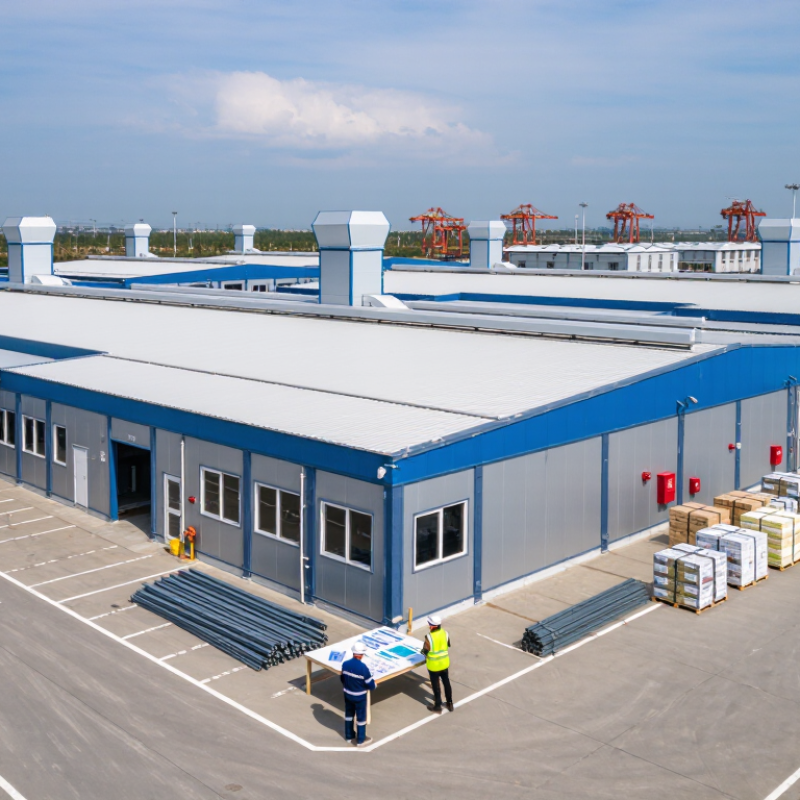
Prefabricated workshops are buildings designed and partly manufactured before reaching the construction site. Their main parts may include steel frames, insulated wall panels, roofing sheets, doors, and service openings. Factory workers cut and assemble components under controlled conditions. This can improve consistency and reduce weather-related delays. They are not magic. Poor measurements still create expensive problems.

The process usually begins with a site survey and a clear workshop layout. Engineers check soil conditions, wind exposure, equipment loads, and ventilation needs. The supplier then prepares drawings, fabricates the structure, and labels each component for transport. At the site, crews install the foundation, position the frame, and secure the panels with bolts and approved fasteners. Electrical, drainage, lighting, and fire protection systems follow. A reliable supplier should provide inspection records, material specifications, installation guidance, and realistic delivery details. Some projects still need adjustments on site, especially when ground conditions differ from the original survey.

Tips:

Ask for structural calculations and a detailed scope of supply. Confirm insulation performance, corrosion protection, drainage design, and maintenance access. Measure twice. Check drainage. Also review the supplier’s completed projects and technical support. The lowest quotation may exclude foundations, transport, lifting equipment, or internal services. That omission can change the real cost considerably.

How to Compare the Top 10 Global Workshop Suppliers

Comparing the top 10 prefabricated workshop suppliers requires more than checking catalog prices. Grand View Research valued the global modular construction market at approximately $91.37 billion in 2023. Its forecast also indicates strong growth through 2030. That growth creates more choices, but not always better choices. Buyers should compare structural design, steel grades, insulation systems, fire resistance, and regional building-code support. A workshop designed for coastal humidity needs different protection from one built for dry inland conditions.

Look beyond the quoted factory price. Compare engineering fees, foundation requirements, transport distance, assembly labor, warranty terms, and replacement-part access. McKinsey reports that industrialized construction can reduce project timelines by up to 50 percent in suitable projects. However, savings depend on accurate site measurements and early coordination. Ask each supplier for verified load calculations, factory quality records, production photos, and references from similar climates. Small details matter. Check door clearances, roof drainage, ventilation, crane access, and future expansion joints.

The lowest offer may be incomplete. I learned that the hard way. A credible comparison should use total installed cost, expected service life, delivery reliability, and after-sales response time. The International Energy Agency continues to emphasize building efficiency as a major route for reducing operational energy demand. Therefore, compare insulation performance and daylight planning, not only steel weight. The ranking will never be perfectly objective. Still, a written scoring sheet can expose weak assumptions and make the final decision more defensible.

Top 10 Prefabricated Workshop Suppliers Worldwide: How to Compare Global Suppliers

This chart presents a practical, brand-neutral evaluation framework for comparing leading prefabricated workshop suppliers. The suggested weighting reflects common procurement priorities: structural compliance, engineering quality, total cost, delivery capability, customization, installation support, durability, energy performance, warranty coverage, and international service. These are comparison criteria rather than supplier rankings.

What Products and Services Do Leading Suppliers Offer?

Leading prefabricated workshop suppliers now sell complete building systems, not simply steel frames. Their catalogs commonly include portal frames, insulated wall panels, roofing, doors, cranes, ventilation, lighting, and fire-safety equipment. Many also provide structural calculations, foundation drawings, production, delivery, and on-site installation. This integrated service can reduce coordination gaps between contractors and equipment specialists.

The McKinsey Global Institute has reported that modular construction may cut project schedules by 20% to 50% under suitable conditions. Suppliers support this advantage through factory-controlled cutting, welding, coating, and quality inspections. Digital 3D modeling is also common. It helps confirm column positions, machine clearances, cable routes, and vehicle access before fabrication. Small details matter. A poorly placed door can disrupt daily workshop movement.

Leading providers increasingly offer customization for manufacturing, logistics, agriculture, and maintenance operations. Services may include energy assessments, insulation upgrades, solar-ready roofing, ventilation design, and future expansion planning. The World Green Building Council identifies embodied carbon as a major construction concern, so material traceability and recyclable steel are becoming important purchasing criteria. However, supplier claims still require verification. Factory production does not automatically guarantee lower emissions or better durability. Buyers should review certified load calculations, coating specifications, warranty terms, and regional building compliance. The process is efficient, but not flawless. Weather, transport limits, and unclear site surveys can still create expensive delays.

Which Factors Affect Quality, Cost, and Construction Speed?

Top 10 Prefabricated Workshop Suppliers Worldwide: Which Factors Affect Quality, Cost, and Construction Speed?

Choosing a prefabricated workshop requires more than comparing factory prices. The frame must match local wind, snow, seismic, and fire requirements. Material grade, weld inspection, coating thickness, and connection design directly affect service life. A 2023 report from the International Energy Agency notes that efficient construction depends heavily on better planning and reduced material waste. Quality begins before production.

Construction speed depends on design repetition, factory capacity, transport distance, and site readiness. The McKinsey Global Institute reported that modular methods can reduce project schedules by 20–50% in suitable conditions. However, that range is not guaranteed. Delayed foundations, missing permits, or poor delivery planning can erase the advantage quickly. A workshop arriving early is still useless if cranes cannot access the site.

Cost comparisons should include foundations, insulation, fire protection, transport, assembly, and future maintenance. The 2024 Dodge Construction Network SmartMarket research highlights better schedule control and lower waste as major benefits of prefabrication. Yet cheaper steel may increase repair costs later. Buyers should request mill certificates, tolerance records, load calculations, and independent inspection results. Small details matter. One weak joint can affect the entire structure. In practice, supplier rankings may look impressive, but site conditions often reveal weaknesses that brochures cannot show.

Top 10 Prefabricated Workshop Suppliers Worldwide? - Which Factors Affect Quality, Cost, and Construction Speed?

Reference Position Anonymous Supplier Profile Typical Supply Region Primary Workshop System Indicative Factory Capacity Typical Building Cost
(USD/m²)
Fabrication Lead Time On-Site Erection Time Quality-Control Indicators Design and Engineering Scope Estimated Quality Score
(10-point benchmark)
Main Cost or Speed Driver
1 Profile A Western Europe Hot-rolled structural steel workshop 8,000–30,000 m²/month US$350–650 8–14 weeks 4–8 weeks Traceable steel certificates, documented welding procedures, dimensional inspection, factory coating records Full structural design, fabrication drawings, connection engineering, and local code coordination 9.0 Higher labor and compliance costs; strong engineering reduces rework and approval delays
2 Profile B North America Pre-engineered metal building system 10,000–45,000 m²/month US$280–520 8–16 weeks 4–7 weeks Certified material testing, bolt-tension verification, coating inspection, documented shop inspections Standardized engineering packages with optional insulation, doors, cranes, and mezzanines 8.8 Standardized components accelerate production; freight and regional code requirements affect total cost
3 Profile C East Asia Light-gauge steel and portal-frame hybrid 15,000–60,000 m²/month US$180–360 5–10 weeks 3–6 weeks Mill certificates, weld visual inspection, production checklists, coating-thickness records, pre-shipment inspection Basic structural engineering with optional seismic, wind, thermal, and equipment-load calculations 8.1 Large production volume lowers unit cost; inspection scope and specification clarity strongly affect quality
4 Profile D Central Europe Insulated steel-frame workshop package 6,000–25,000 m²/month US$300–560 8–13 weeks 4–8 weeks Panel fire-performance documentation, steel traceability, weld inspection, thermal-bridge detailing Detailed envelope design, condensation analysis, fire strategy, and energy-performance documentation 8.7 Higher-performance panels and fire compliance increase upfront cost but improve operational efficiency
5 Profile E South Asia Bolted steel portal-frame workshop 7,000–35,000 m²/month US$160–330 6–12 weeks 4–8 weeks Steel-grade certificates, weld inspection, bolt testing, coating checks, third-party inspection options Standard design package with project-specific wind, seismic, and foundation reactions available 7.8 Competitive fabrication cost; port distance, site supervision, and documentation quality influence schedule
6 Profile F Middle East Heavy-duty steel workshop with high-temperature envelope options 5,000–28,000 m²/month US$240–480 7–14 weeks 4–9 weeks Corrosion-protection specifications, coating-system records, weld inspection, wind-load and temperature checks High-temperature insulation, dust-control detailing, ventilation coordination, and equipment-load design 8.2 Corrosion protection, insulation, ventilation, and crane requirements can significantly increase project cost
7 Profile G Oceania Cold-formed steel and structural steel combination 4,000–18,000 m²/month US$320–620 9–16 weeks 5–9 weeks Local code compliance, cyclone or seismic calculations, material traceability, installation quality records Detailed local engineering, site-specific hazard design, and authority submission support 8.9 Remote logistics and strict site-specific design requirements raise cost but reduce weather-related risk
8 Profile H Latin America Economical portal-frame steel building 5,000–22,000 m²/month US$190–390 7–13 weeks 4–8 weeks Basic steel certificates, weld inspection, bolt checks, paint or galvanizing records, delivery inspection Standard engineering with optional local wind, seismic, and industrial-equipment design 7.7 Material availability, import duties, and local erection capability are major cost and schedule variables
9 Profile I Eastern Europe Pre-engineered steel workshop with modular accessories 7,000–32,000 m²/month US$230–450 7–12 weeks 4–7 weeks Welding procedure records, steel traceability, CNC cutting reports, coating inspection, packing lists Parametric design, modular office blocks, crane-support options, and construction drawing packages 8.3 Modular detailing improves construction speed; customization and transport distance increase cost
10 Profile J Africa Standard steel frame with locally assembled cladding 3,000–15,000 m²/month US$210–430 8–16 weeks 5–10 weeks Material certificates, basic weld inspection, corrosion-protection checks, site acceptance inspection Standard structural package with optional local sourcing and site-adaptation support 7.5 Local labor and materials may lower cost, while shipping, infrastructure, and site access may extend the schedule
Benchmark scope: Prices are indicative ranges for the building shell and typical workshop envelope, generally excluding land, foundations, taxes, permits, internal process equipment, utilities, shipping, and unusual ground conditions. Lead times depend on approved drawings, material availability, inspection requirements, shipping routes, and site readiness. The profiles are anonymized industry benchmarks rather than named-company rankings.

How to Choose the Right Prefabricated Workshop Supplier Worldwide

Choosing among the top 10 prefabricated workshop suppliers worldwide requires more than comparing prices. Evaluate engineering experience, factory capacity, material traceability, and completed projects in similar climates. McKinsey Global Institute reported that modular construction can reduce project schedules by 20–50% and lower costs by 20% in suitable conditions. These figures are not guaranteed. Site access, design changes, and transport distances can reduce the benefit.

Request structural calculations, fire-safety documents, welding procedures, coating specifications, and inspection records. A dependable supplier should explain wind, snow, seismic, and corrosion assumptions clearly. Factory quality systems, such as ISO 9001-based procedures, also matter. Ask how the supplier handles nonconforming parts, replacement panels, and technical support after installation.

The 2024 Global Status Report for Buildings and Construction highlights the sector’s major energy and emissions impact, so review insulation performance, recycled steel content, and the workshop’s operational energy demand.

Tips: Compare at least three detailed quotations. Check what each price excludes. Visit a factory or request a live production inspection. Confirm local code compatibility with an independent engineer. A cheap workshop may become expensive when foundations, customs, or crane work are added. I would also test communication during bidding; slow or vague replies often predict installation problems. This is not a perfect rule, but it is a useful warning sign. Ask for references that can confirm delivery accuracy, defect rates, and long-term performance.