
contact-button

Top 10 Stator Testers for Global Buyers

Choosing a Stator tester is not a cosmetic purchasing decision. It affects winding quality, production yield, maintenance timing, and worker safety. A weak tester may pass a damaged coil, while an overly sensitive system can create costly false failures. The difference often appears on the factory floor: unstable readings, short test cycles, or operators repeating the same test.

The International Energy Agency reports that electric motor systems consume roughly half of global electricity. The U.S. Department of Energy similarly identifies motor-driven equipment as a major share of industrial electricity use. These figures explain why reliable stator testing matters beyond the test bench. It supports energy efficiency, fewer unexpected failures, and more consistent motor performance. IEC 60034-27-1 also provides technical guidance for partial-discharge measurements in rotating-machine windings, although not every application requires the same instrument or test method.

Motor researcher Thomas A. Lipo has described the induction motor as “the workhorse of industry.” That practical description still matters. Every workhorse needs inspection.

This Top 10 Stator Testers for Global Buyers overview considers surge testing, insulation resistance, hipot capability, resistance measurement, automation, software, calibration support, and regional service. It also examines usability, because a technically advanced tester can still fail when its interface confuses operators. No ranking is perfect. Test voltage, winding design, production volume, and local standards can change the best choice. Buyers should verify specifications with manufacturers, request sample test records, and confirm calibration traceability before purchasing. A polished brochure is not enough. The real question is simple: can the tester deliver repeatable evidence when the winding is hot, rushed, and difficult to diagnose?
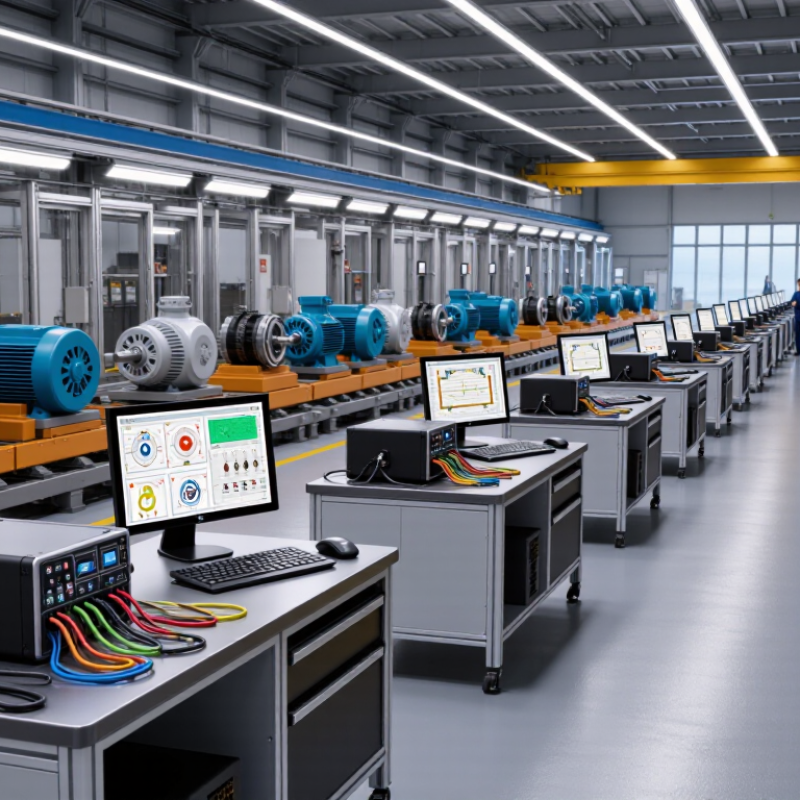
Top 10 Stator Testers for Global Buyers

What Is a Stator Tester and Why Does It Matter?

Top 10 Stator Testers for Global Buyers

What Is a Stator Tester and Why Does It Matter?

A stator tester checks the electrical and physical condition of motor windings. It can measure winding resistance, insulation strength, phase balance, and short circuits. Some advanced models also detect turn-to-turn faults that ordinary meters may miss. These tests matter because a small winding defect can create heat, vibration, or sudden motor failure.

On a repair bench, technicians usually test a stator before rewinding or replacing it. The process begins with a clean, dry, disconnected motor. Loose terminals can distort results. So can moisture, dirt, and damaged test leads. A reliable tester should offer stable readings, clear controls, and records that support quality checks across different production sites.

Safety remains essential. Some stator testers apply high voltage during insulation testing. Only trained personnel should operate them, with suitable protective procedures in place. A tester is not a magic answer. A perfect reading may still hide mechanical damage, bearing problems, or intermittent faults. That limitation deserves attention. Buyers should compare test ranges, accuracy, calibration support, language options, and after-sales service. A low purchase price may become expensive when results are unclear or spare parts are unavailable. For global buyers, practical documentation and consistent operator training often matter as much as technical specifications.

How Stator Testers Work: Core Functions and Testing Methods

Stator testers evaluate the electrical health of motor windings through controlled, repeatable measurements.

They check resistance, insulation strength, inductance, and phase balance. Each function reveals a different fault pattern.

A resistance test sends a low current through each winding. The tester compares readings between phases. Large differences may indicate loose connections, broken conductors, or partial winding damage.

Insulation resistance testing applies a controlled DC voltage between windings and the core. It measures leakage current and calculates insulation resistance.

A hipot test uses higher voltage for a short period. This can expose weak insulation, but it requires strict grounding and safety procedures.

Surge testing sends brief high-voltage pulses into the winding. Reflected wave differences can reveal turn-to-turn faults that ordinary resistance tests may miss.

The method is sensitive and needs suitable voltage settings.

In repair workshops, technicians usually combine several tests instead of trusting one reading.

Temperature affects copper resistance, so measurements should be corrected or compared under similar conditions. Clean terminals matter. Dust and moisture can distort insulation results.

A perfect display does not always prove a healthy stator; mechanical damage may remain invisible. I have found that test records are often less complete than the equipment itself.

Recording phase values, ambient temperature, test voltage, and operator notes improves traceability.

Some testers also support automatic sequences, waveform analysis, and data export, but automation can hide poor setup. Experienced users still inspect leads, confirm connections, and question unusual results.

Key Specifications for Comparing the Top 10 Stator Testers

Top 10 Stator Testers for Global Buyers

Key Specifications for Comparing the Top 10 Stator Testers

When comparing the top ten stator testers, start with the test functions. A dependable unit should measure winding resistance, insulation resistance, hipot strength, and surge response. These tests reveal open circuits, weak insulation, phase imbalance, and turn-to-turn faults. Check the resistance range carefully. Fine resolution matters when testing small motor windings. Higher voltage capability may suit industrial stators, but it requires stronger safety controls.

Accuracy and repeatability deserve equal attention. A tester that gives different readings on the same winding can slow production and hide defects. Look for stated accuracy, stable current output, automatic temperature compensation, and clear calibration records.

Test speed also matters. A busy repair bench may need results within seconds. However, faster testing is not always better. Poor contact pressure can create false failures.

The fixture should hold different stator sizes without damaging enamel-coated wires. Ask whether the tester supports custom fixtures, barcode input, data export, and remote connection. Touchscreen controls help, but simple menus are often more reliable. Safety features should include guarded terminals, discharge control, emergency stopping, and door interlocks. Verify compliance documentation for the target market.

It is easy to overvalue a long feature list. In practical evaluations, weak cables or confusing software can matter more than advanced functions. I would also inspect calibration intervals and service access before purchase. A beautiful display cannot repair unstable measurements.

Top 10 Stator Testers for Different Global Buyer Needs

Top 10 Stator Testers for Different Global Buyer Needs

Global buyers rarely need the same stator tester. In repair workshops, a handheld winding resistance tester offers quick checks. A portable insulation resistance tester suits field maintenance. For small motors, a compact surge tester can reveal turn-to-turn weakness. High-voltage production lines may require a hipot tester with controlled output. These instruments need guarded connections, clear readings, and documented calibration. Safety must remain central.

Large factories often choose an automated end-of-line stator tester. It can combine resistance, surge, insulation, and hipot testing. A programmable winding analyzer helps engineers compare phase balance and waveform behavior. For heavy equipment, a low-resistance micro-ohmmeter measures joints with greater sensitivity. A portable growler supports repair technicians checking suspected magnetic faults. Laboratory teams may prefer a precision impedance analyzer for deeper motor research. Production managers usually need a traceable data-logging tester.

Buyer needs differ across regions. A budget-friendly manual tester may serve a small repair shop well. It may frustrate a high-volume plant. Field teams value batteries, rugged cases, and simple interfaces. Export buyers should confirm voltage compatibility, probe types, software language, and calibration support. Independent verification is wise. Marketing claims can sound stronger than actual test repeatability.

I have seen good results weakened by poor clamping. Clean contacts matter. Operator training matters too. No tester replaces sound procedures. Some measurements remain difficult to interpret when moisture, heat, or varnish affects the winding. Buyers should compare accuracy, test speed, safety controls, service access, and long-term records before choosing.

Top 10 Stator Testers for Different Global Buyer Needs

Comparison by the number of core stator test functions typically covered by each tester configuration.

The benchmark covers commonly used motor-stator checks, including winding resistance, insulation resistance, dielectric withstand, surge comparison, inductance, phase balance, continuity, temperature compensation, partial-discharge screening, and automated reporting. Actual test coverage depends on the selected configuration and applicable requirements such as IEC 60034-1 and IEC 60034-27-1.

How to Select, Operate, and Maintain a Stator Tester

Top 10 Stator Testers for Global Buyers

How to Select, Operate, and Maintain a Stator Tester

Selecting a stator tester begins with the motor’s risk profile. Small repair shops may need resistance, insulation, and surge testing. Large plants often require automated records and partial-discharge analysis. The International Energy Agency estimates that electric motor systems consume about 46% of global electricity. Even a small testing error can therefore create expensive energy losses. Choose a tester with suitable voltage ranges, stable measurement accuracy, guarded terminals, and clear fault reporting. Verify compliance with relevant IEC and IEEE methods, especially insulation resistance and partial-discharge procedures.

Operate the instrument in a controlled sequence. Isolate the winding completely. Confirm zero voltage with an approved meter. Clean moisture, oil, and carbon dust from the terminals. Record winding temperature before testing, because resistance changes with temperature. Compare phase readings, not only the final pass or fail result. A balanced resistance reading does not prove healthy insulation. Surge testing can reveal turn-to-turn weakness that basic resistance checks miss.

Maintain the tester like production equipment. Inspect leads weekly for cuts, loosened plugs, and damaged insulation. Check calibration against traceable references at the interval recommended by the manufacturer or quality system. Keep test logs with motor serial numbers, temperatures, limits, and operator names. The U.S. Department of Energy reports that motor-driven systems represent a major share of industrial electricity use. Yet perfect records cannot replace judgment. A clean result can still mislead when the fixture is dirty or the winding is damp. Recheck unusual readings. That extra step is often worth the delay.