Top 10 Titanium Bar Manufacturers for Global Buyers
Choosing a Titanium Bar manufacturer is not only a price decision. For global buyers, dependable supply also means matching alloy grade, diameter, length, and finish to the intended application. A quoted bar may look right, yet tolerances, traceability, and test documents need closer review. Details matter.
This guide presents ten manufacturers for buyers comparing production capability, product range, quality systems, and export support. It is a practical starting point, not a substitute for technical review. Ask suppliers for current specifications, mill test reports, heat or lot identification, and clear details about inspection procedures. For projects with strict requirements, confirm them in writing before placing an order.
Lead times, minimum order quantities, and available sizes can change by region and production schedule. A large catalog does not automatically make a supplier the right fit. Nor does a low quote show how material may perform after cutting, forming, or machining. Compare equivalent grades and conditions, then discuss packaging and shipping protection for long-distance transport. Some details are difficult to judge from public information alone; that uncertainty deserves attention. Use the profiles below to build a shortlist, ask sharper questions, and verify requirements against the latest documents. Careful comparison can reduce surprises, though it cannot remove every risk in a complex supply chain.
What Titanium Bars Are and How They Are Used
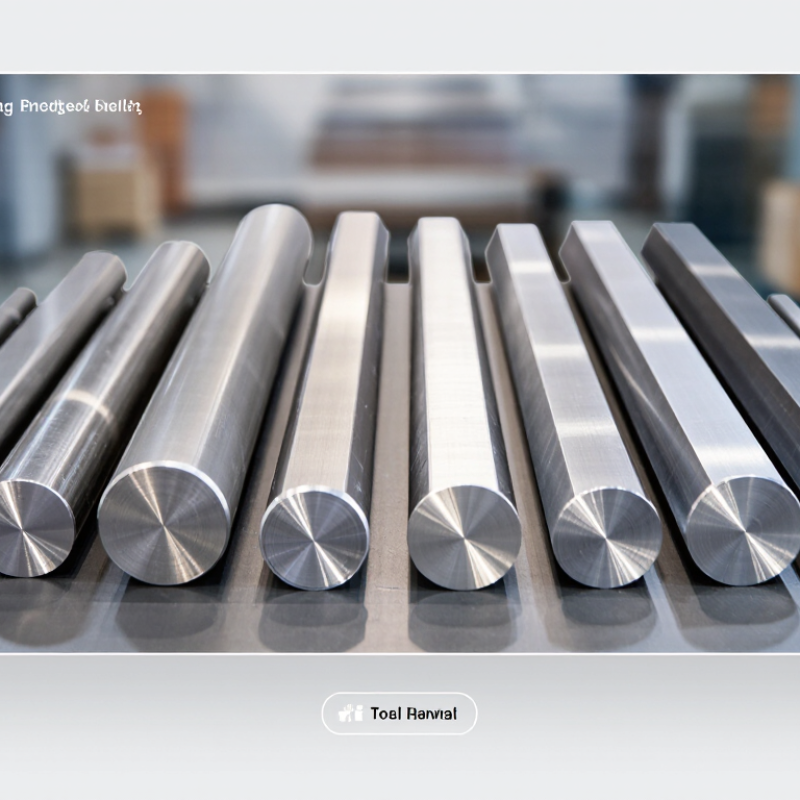
Titanium bars are solid, semi-finished products supplied in round, square, or other cross-sections. They are cut and machined into parts, rather than used as finished components. Their appeal comes from a useful mix of low density, corrosion resistance, and strength. Grade matters: commercially pure titanium suits some chemical-processing equipment, while stronger alloys are used for aircraft fittings and high-performance machinery. Some grades also serve in medical devices, subject to strict material and manufacturing requirements. Not every titanium bar performs the same way.
The supply chain helps explain why buyers should check documentation. The USGS Mineral Commodity Summaries 2024 estimated world titanium sponge production at about 330,000 metric tons in 2023. Sponge is a raw material, not bar stock, but its production reflects the industrial base behind titanium products. For a purchase, confirm the alloy designation, dimensions, heat-treatment condition, test certificates, and traceability. A bright surface alone proves little. A bar can look flawless and still be unsuitable for its intended load or environment.
Tips: Match the grade to the service conditions, then verify the certificate against the order. Ask how straightness, surface defects, and dimensional tolerances are inspected. For machined parts, allow for material removal and test a sample when the application is critical. Small details matter.
Criteria for Evaluating Global Titanium Bar Manufacturers
Choosing a titanium bar manufacturer starts with service conditions, not a polished catalog. Compare alloy grade, diameter tolerance, straightness, surface finish, and permitted chemistry against the drawing. Ask how each lot is identified and whether test reports link directly to the bar bundle. Traceability matters when a component must be assessed years later. Small paperwork gaps can become costly.
Review quality controls with concrete questions: which tests are performed, how often, and by whom? Request sample certificates and clarify whether tensile, ultrasonic, or dimensional checks are included for your order. Check calibration records, inspection methods, and procedures for nonconforming material. A certificate is useful, but it is not the whole story. Ask for evidence.
Production capability should match realistic volumes and delivery windows. Compare lead times, minimum order quantities, packaging, and export documents, then confirm how schedule changes are communicated. If possible, review a trial batch for consistent dimensions and clean, protected surfaces. Price still counts. Yet the cheapest quote may exclude testing or careful packing. Response quality also matters: clear answers are reassuring, though one smooth sales call cannot prove dependable performance. Keep a record of unresolved questions before approval.
Profiles of Ten Leading Titanium Bar Manufacturers
A useful comparison of titanium bar manufacturers looks beyond polished catalogs. The ten profiles below represent different production strengths, not a verified ranking. An integrated mill controls several steps, from melting to bar finishing. An aerospace-focused producer emphasizes alloy traceability and consistent mechanical properties. A medical-material supplier may offer tighter documentation and surface controls. Details matter.
A precision-drawing specialist can deliver close dimensional tolerances for machining. A forging-focused manufacturer is suited to larger sections and demanding applications. A small-diameter producer may serve components that need straight, clean bars. A large-section specialist handles heavier stock, where internal soundness deserves close review. These differences are not always obvious in a brochure.
An alloy-focused manufacturer offers buyers more grade options, but availability should be confirmed. An export-oriented producer may have experience preparing inspection records and shipping documents. A service-center-linked manufacturer can sometimes support smaller orders or cut-to-length supply. Useful distinction. Buyers should request recent test reports, confirm standards and heat numbers, and check whether quoted tolerances match the finished application. I would not assume that a broad grade list means every size is routinely stocked.
Top 10 Titanium Bar Manufacturers for Global Buyers - Profiles of Ten Leading Titanium Bar Manufacturers
Note: These anonymized profiles are grade-based sourcing categories, not a verified company ranking or claims about specific manufacturers. ASTM B348 is a commonly referenced specification for titanium and titanium-alloy bars and billets. Confirm the applicable standard, grade, dimensions, certification, and availability directly with each supplier.
| Profile | Grade and material type | Common bar specification reference | Typical buyer consideration |
| 01 — Commercially pure titanium | Grade 1; commercially pure titanium | ASTM B348, Grade 1 | Check required strength, corrosion environment, product condition, and dimensional tolerances. |
| 02 — General-purpose commercially pure titanium | Grade 2; commercially pure titanium | ASTM B348, Grade 2 | Confirm chemical analysis and mechanical-property requirements for the intended application. |
| 03 — Higher-strength commercially pure titanium | Grade 3; commercially pure titanium | ASTM B348, Grade 3 | Ask for material test reports and verify the specified strength and elongation requirements. |
| 04 — High-strength commercially pure titanium | Grade 4; commercially pure titanium | ASTM B348, Grade 4 | Check machinability, supplied condition, and the mechanical properties required by the design. |
| 05 — Alpha-beta alloy bar | Grade 5; Ti-6Al-4V | ASTM B348, Grade 5 | Specify the required heat-treatment condition, inspection level, traceability, and certification. |
| 06 — Palladium-alloyed corrosion-resistant titanium | Grade 7; commercially pure titanium with palladium addition | ASTM B348, Grade 7 | Verify grade identity and suitability for the specific corrosive service environment. |
| 07 — Formable alpha-beta alloy bar | Grade 9; Ti-3Al-2.5V | ASTM B348, Grade 9 | Confirm product form, condition, and suitability for the planned forming or fabrication process. |
| 08 — Palladium-alloyed commercially pure titanium | Grade 11; commercially pure titanium with palladium addition | ASTM B348, Grade 11 | Distinguish Grade 11 from Grade 7 in purchase documentation and confirm the required test results. |
| 09 — Corrosion-resistant titanium alloy bar | Grade 12; Ti-0.3Mo-0.8Ni | ASTM B348, Grade 12 | Confirm the alloy designation, chemistry, and application-specific corrosion requirements. |
| 10 — Extra-low-interstitial alloy bar | Grade 23; Ti-6Al-4V ELI | ASTM B348, Grade 23 | Check ELI designation, chemistry limits, certification, and any end-use regulatory requirements. |
Comparing Product Grades, Standards, and Supply Capabilities
Comparing titanium bar manufacturers starts with the grade, not the catalogue photograph. Grade 2 offers commercially pure titanium for applications where corrosion resistance and formability matter. Grade 5, or Ti-6Al-4V, provides higher strength but requires closer attention to machining and service conditions. These grades are not interchangeable. Small details count. Ask whether the quoted bar is hot-worked, annealed, or supplied in another condition, and check that its dimensions and tolerances match the drawing.
Standards help make offers comparable. ASTM B348 covers titanium and titanium alloy bars and billets; confirm the exact edition and requirements stated in your purchase specification. A material test certificate should identify the heat, chemistry, mechanical results, and product condition. For global orders, also compare available diameters, cut lengths, minimum quantities, packaging, and realistic lead times. Stock claims can be vague. Request confirmation for the actual size and quantity, plus a sample certificate if needed. A polished document is useful, but it does not replace traceability or independent verification when the application demands it. One imperfect point: buyers sometimes focus on unit price and overlook testing scope, which can change both delivery timing and total cost.
Titanium Bar Grades: Minimum Tensile Strength
A grade-level comparison for global buyers evaluating titanium bar specifications. The chart shows representative minimum tensile-strength requirements for selected grades under ASTM B348/B348M—not supplier performance or a manufacturer ranking.
Values shown in MPa. Requirements may vary by product form, dimensions, condition, and edition of the standard; confirm the applicable specification and mill test certificate when purchasing.



 Customer Support
 Request Sample
 Contact