2026 Top Air Heat Exchanger Types for Global Buyers?
Choosing the right Air Heat Exchanger in 2026 requires more than comparing catalog prices. Global buyers must examine thermal performance, airflow resistance, materials, maintenance access, and operating conditions.
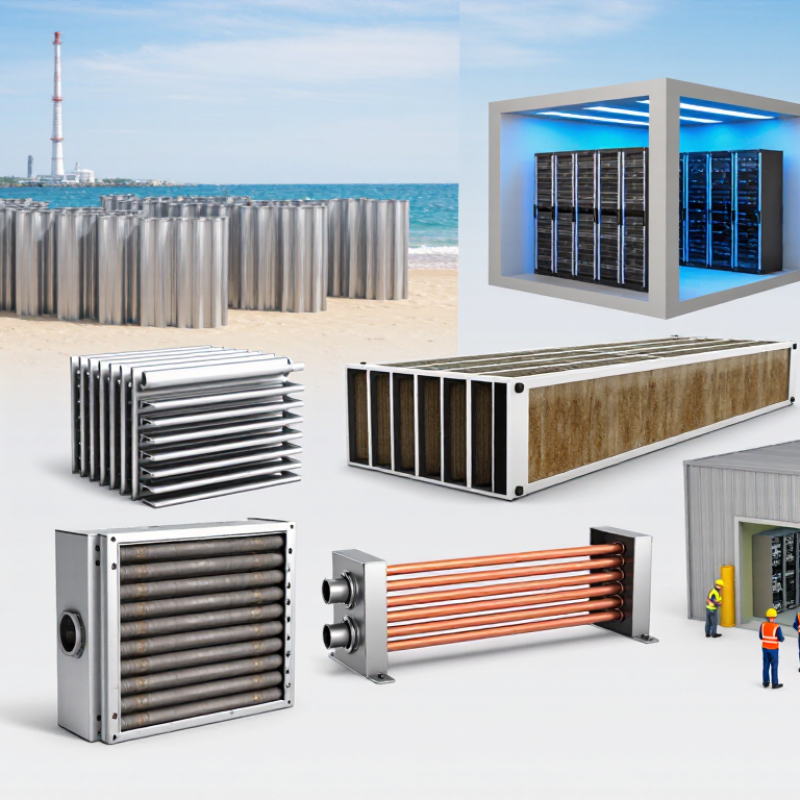
A coastal food-processing plant may need corrosion-resistant aluminum or coated fins. A data center may prioritize predictable cooling, low pressure drop, and fan energy savings. A compact plate-fin unit can fit a restricted plant room, while a larger finned-tube design may offer easier cleaning. The choice is rarely universal.
Yunus A. Çengel, a respected heat-transfer educator, states, “Energy can be neither created nor destroyed; it can only be transformed from one form to another.” This principle remains practical when evaluating every Air Heat Exchanger. Heat does not disappear. It moves through surfaces, air streams, fans, and imperfect seals.
Small details matter.
Dust buildup can reduce capacity. Incorrect airflow assumptions can distort payback calculations. A supplier’s impressive laboratory rating may not match a humid, dusty installation. Buyers should request performance data under actual inlet temperatures, air volume, altitude, and fouling conditions.
This 2026 guide compares major Air Heat Exchanger types for international purchasers. It considers finned-tube, plate-fin, crossflow, counterflow, heat-pipe, and rotary designs. It also reviews material selection, inspection records, efficiency claims, and after-sales support.
No design is flawless. A highly efficient model may create cleaning challenges. A cheaper unit may consume more fan power over ten years. Careful buyers should question both extremes, verify test methods, and involve experienced engineers before signing a global purchase contract.
Table of Contents [Hide]
What Is an Air Heat Exchanger and How Does It Work?
An air heat exchanger transfers heat between two air streams without mixing them. Warm exhaust air crosses a core beside incoming outdoor air. Heat moves through plates, membranes, or a rotating wheel. In winter, outgoing indoor air preheats fresh air. In summer, it can reduce the incoming cooling load.
This equipment is not an air conditioner. It does not create heat. It recovers energy that would otherwise leave through the exhaust duct. Plate exchangers suit applications needing strict air separation. Rotary exchangers can transfer sensible heat and, with suitable materials, moisture. Heat-pipe units offer simple operation, but their orientation and temperature range require careful checking. The U.S. Department of Energy reports that energy recovery ventilators can recover approximately 70% to 80% of outgoing energy under suitable conditions.
The buyer’s real concern is performance at the installation site. Filter blockage increases pressure drop. Frost can stop airflow in cold climates. Poor sealing causes leakage between supply and exhaust air. The International Energy Agency’s Buildings 2023 report states that buildings consume about 30% of global final energy. That figure explains the growing interest in recovery systems, but it does not guarantee savings for every project. A catalogue efficiency number may look impressive. Actual results depend on airflow balance, operating hours, humidity, maintenance, and controls. I would request tested data, sound levels, pressure-drop curves, and low-temperature protection details before comparing 2026 models.
2026 Top Air Heat Exchanger Types for Global Buyers
What is an air heat exchanger? An air heat exchanger transfers heat between two air streams without mixing them, or between air and a working fluid such as water or refrigerant. Heat moves through conductive surfaces, while fans or natural airflow move the air across the heat-transfer area.
The chart shows typical sensible heat-recovery effectiveness ranges used in engineering applications. Counterflow and rotary designs generally provide higher recovery efficiency, while heat-pipe and run-around coil systems can be selected when separated air paths, contamination control, or installation flexibility are priorities. Actual performance varies with airflow, temperature difference, leakage, surface area, frost control, and operating conditions.
Which Air Heat Exchanger Types Are Available in 2026?
In 2026, global buyers can choose several air heat exchanger types. Plate-fin units use thin aluminum plates and provide compact, efficient air-to-air transfer. Rotary wheel exchangers recover sensible and latent heat in large ventilation systems. Fixed-plate crossflow and counterflow models have no moving parts, which simplifies maintenance. Heat-pipe exchangers suit separated air streams where cross-contamination is a concern. Run-around coil systems work well when supply and exhaust ducts are far apart.
The Global Status Report for Buildings and Construction 2023 states that buildings consume about 30% of global final energy. It also links buildings to roughly 26% of energy-related emissions. These figures make heat recovery more than a comfort feature. They support lower heating and cooling loads. ASHRAE Handbook—HVAC Systems and Equipment 2024 emphasizes airflow balance, leakage control, frost protection, and maintainability when selecting recovery equipment. A highly efficient core can still perform poorly with dirty filters or weak controls. This is often overlooked.
For humid climates, rotary systems may recover moisture, but carryover risk needs careful engineering. In hospitals and laboratories, fixed-plate or heat-pipe designs may offer better separation. Industrial buyers should compare pressure drop, face velocity, corrosion resistance, cleaning access, and certified efficiency. The best type depends on climate and contamination limits. There is no universal winner. Even published efficiency data can change under real operating conditions, so testing the selected unit at design airflow remains essential.
| Air Heat Exchanger Type | Core Construction | Heat Transfer Mode | Typical Applications | Typical Thermal Effectiveness or Duty | Pressure Drop | Key Advantages | Main Limitations |
|---|---|---|---|---|---|---|---|
| Plate-Fin Air-to-Air Exchanger | Alternating layers of air passages separated by flat plates and corrugated fins; streams remain physically separated. | Sensible heat transfer through metal plates. | Ventilation heat recovery, data centers, industrial air systems, cleanrooms and building energy recovery. | Approximately 50–80% sensible effectiveness, depending on airflow arrangement, size and operating conditions. | Medium to high; the compact fin passages can increase resistance as airflow rises. | Compact design, no moving parts, no cross-contamination when properly sealed, and relatively low maintenance. | Usually transfers sensible heat only; frost, dust buildup and leakage control must be considered. |
| Crossflow Plate Heat Exchanger | Flat or profiled plates form perpendicular air channels, normally using aluminum, stainless steel or coated materials. | Sensible heat transfer across a stationary separating wall. | Commercial HVAC, residential ventilation, process exhaust recovery and air-handling units. | Commonly about 40–75% sensible effectiveness, subject to face velocity and exchanger geometry. | Low to medium, but increases with face velocity and filter loading. | Simple construction, low service requirements, and no rotating components. | Lower effectiveness than many counterflow designs; condensate drainage and freeze protection may be required. |
| Counterflow Plate Heat Exchanger | Two air streams travel in opposite directions through narrow, separated channels. | Sensible heat transfer through plates; some designs can transfer moisture when using a permeable membrane. | High-efficiency building ventilation, energy recovery ventilators and low-energy commercial facilities. | Approximately 60–90% sensible effectiveness for well-designed systems; actual values vary with airflow balance and temperature. | Medium to high because of the longer air path and compact passages. | High heat recovery potential, compact footprint and no moving parts. | More sensitive to fouling, frost and sealing quality; cleaning access may be limited. |
| Rotary Thermal Wheel | A rotating matrix wheel transfers heat between exhaust and supply air streams. | Regenerative heat transfer; hygroscopic media can transfer both sensible heat and moisture. | Large air-handling systems, commercial buildings, hospitals, airports and industrial ventilation. | Typically about 65–85% sensible effectiveness; total effectiveness depends on wheel coating, speed and humidity conditions. | Low to medium, with additional fan power from the wheel assembly. | High recovery efficiency, compact installation and optional latent heat recovery. | Contains moving parts; purge sections and proper sealing are important to reduce exhaust-air carryover. |
| Heat Pipe Heat Exchanger | Sealed tubes containing a working fluid, divided into evaporator and condenser sections by the air streams. | Passive two-phase heat transfer through evaporation and condensation. | Air preheating, air precooling, humidity-control systems, electronics cooling and heat recovery where the streams must remain separate. | Often about 45–75% sensible effectiveness, depending on tube arrangement, tilt and airflow conditions. | Low to medium. | No compressor or pump, no cross-contamination, and limited routine maintenance. | Sensible heat only in standard designs; performance can depend on orientation, refrigerant selection and operating temperature. |
| Run-Around Coil System | Two finned coils connected by a closed liquid loop containing water or a water-glycol solution. | Indirect sensible heat transfer through a circulating fluid. | Separated supply and exhaust systems, hospitals, laboratories, industrial ventilation and applications with strict contamination control. | Commonly about 40–70% system effectiveness; pump power and coil sizing influence the result. | Low to medium on the air side, plus hydraulic resistance in the fluid loop. | Air streams are physically isolated; coils can be located far apart and layout flexibility is high. | Requires pumps, controls, expansion provisions and freeze protection; additional power consumption is expected. |
| Finned-Tube Air Cooler | Process fluid flows inside tubes while ambient air passes over external fins, usually moved by axial fans. | Liquid-to-air or gas-to-air sensible heat transfer. | Petrochemical and chemical processing, power generation, refrigeration condensers, compressors and industrial cooling. | Performance is normally specified as heat-rejection duty rather than air-to-air effectiveness; capacity depends on fluid flow, ambient temperature and finned surface area. | Low to medium on the air side; process-side pressure drop depends on tube circuiting. | Uses ambient air instead of cooling water, reduces water consumption and supports large industrial duties. | Capacity falls at high ambient temperatures; fan noise, dust fouling and large footprint may be significant. |
| Forced-Draft Air-Cooled Heat Exchanger | Finned tube bundles positioned above or downstream of fans that force ambient air across the tubes. | Indirect sensible heat transfer from a process fluid to ambient air. | Industrial plants, refineries, gas processing, power stations and high-temperature process cooling. | Specified by process heat duty, outlet temperature and design ambient conditions rather than a single standard effectiveness value. | Medium, depending on fan selection, bundle geometry and airflow rate. | Reliable process cooling, accessible fan equipment and reduced risk of hot-air recirculation around the bundle. | Fan equipment is exposed to the environment; electrical consumption, noise and winter freeze protection require attention. |
| Induced-Draft Air-Cooled Heat Exchanger | Finned tube bundle with fans installed above the bundle to draw air through the heat-transfer surface. | Indirect sensible heat transfer from process fluid to ambient air. | Large process facilities, hydrocarbon cooling, condensers and applications requiring controlled airflow distribution. | Specified by process duty, approach temperature and ambient design conditions. | Medium to high because air passes through the bundle and fan system. | More uniform airflow, reduced hot-air recirculation risk and improved protection of fan motors from hot process air. | Higher structural elevation, more difficult maintenance access and potentially greater installation cost. |
| Direct-Contact Air Washer | Air contacts a water spray or wetted medium directly inside a chamber. | Combined sensible and latent heat and mass transfer. | Evaporative cooling, industrial humidification, air cleaning and selected HVAC processes. | Performance is described using cooling effectiveness, humidity change and water evaporation rate rather than dry heat-exchanger effectiveness. | Low to medium; pressure drop depends on eliminators, spray arrangement and wetted media. | Can cool and humidify air simultaneously, with potentially low electrical energy use. | Requires water treatment, drainage and hygiene management; direct contact may be unsuitable where air contamination must be avoided. |
| Selection note: Actual performance depends on airflow rate, inlet temperatures and humidity, allowable pressure drop, fouling level, materials, leakage requirements, climate and applicable safety standards. The ranges shown are indicative design values, not guaranteed ratings. | |||||||

How Do Plate, Rotary, Coil, and Heat Pipe Exchangers Compare?
In 2026, global buyers are comparing more than purchase prices. Plate, rotary, coil, and heat pipe exchangers suit different operating realities. Plate exchangers transfer heat through thin, corrugated surfaces. They offer strong efficiency in compact air-handling systems. However, narrow channels can collect dust and increase pressure loss. Cleaning access must be checked before installation.
Rotary exchangers use a slowly turning wheel to transfer sensible heat, and sometimes moisture. They recover energy effectively in balanced ventilation systems. Moving parts require inspection, sealing checks, and careful frost control. Coil exchangers use separate fluid circuits, making them practical for heating, cooling, and harsh air streams. Yet, pumps, valves, and pipework add system complexity. Heat pipe exchangers have no mechanical drive and transfer heat through sealed tubes. They are reliable in dusty spaces, but their performance depends on correct orientation and temperature difference. No type wins every project. That is the part buyers often underestimate.
Tips: Compare seasonal efficiency, not laboratory efficiency alone. Measure airflow, humidity, contaminants, available space, and acceptable pressure drop. Ask for cleaning procedures and maintenance intervals. A simple site survey can prevent an expensive mismatch. In one design review, a smaller exchanger looked cheaper, but its higher fan energy changed the decision. Also, specify frost protection early. It is easy to overlook.
What Factors Should Global Buyers Consider Before Choosing?
Global buyers choosing air heat exchangers in 2026 should examine operating conditions, not only catalog efficiency.
Finned-tube units suit high-temperature industrial air, while plate-fin designs offer compact recovery in ventilation systems. Rotary wheels can recover both heat and moisture, but they require careful sealing and cleaning. Heat pipes provide passive transfer, although their performance may fall in poorly balanced airflow systems.
Energy performance deserves close attention. The International Energy Agency reported that buildings used about 30% of global final energy in 2022.
The 2024 Global Status Report for Buildings and Construction placed building operations and construction at roughly 32% of global energy use in 2023.
These figures make pressure drop important. A highly efficient core can still increase fan electricity if airflow resistance is excessive. Ask suppliers for tested capacity, pressure loss, leakage, frost-control performance, and fan-energy assumptions under the same conditions.
Climate and maintenance often decide real-world results.
Coastal projects need corrosion-resistant materials. Dusty factories need accessible filters and washable surfaces. Cold regions require verified defrost control.
Confirm testing against recognized standards, including relevant ASHRAE, EN, or ISO methods, and request independent laboratory data.
Do not trust one impressive efficiency percentage. It may exclude moisture transfer, frosting, fouling, or seasonal variation.
Lifecycle cost remains imperfect, because local labor, electricity prices, and spare-part access can change the calculation. Reserve space for inspection. Tiny service clearances become expensive problems.
Which Applications and Industries Use Each Air Heat Exchanger Type?
In 2026, finned-tube air heat exchangers remain common in commercial HVAC, power generation, and process cooling. Their expanded metal fins increase surface area around refrigerant or water tubes. They suit rooftop units, data centers, warehouses, and factory ventilation systems. Engineers often choose them when maintenance access and flexible coil sizes matter.
Plate-fin exchangers serve aerospace, transport refrigeration, and compact industrial equipment. Their layered passages transfer heat efficiently where installation space is limited. Air-to-air plate exchangers are widely used in offices, hospitals, schools, and clean manufacturing areas. They recover heat from exhaust air before fresh air enters the building. Rotary air exchangers fit large ventilation systems, including airports, shopping centers, and food-processing plants. However, carryover between air streams may require careful hygiene controls.
Heat pipe exchangers work well in laboratories, electronics rooms, and energy recovery systems. They transfer heat without a compressor or circulating pump, which can simplify operation. Direct air-cooled exchangers support petrochemical plants, steel mills, and utility facilities. Their performance depends heavily on airflow, dust levels, and outdoor temperature. A dusty factory may need wider fin spacing, even when compact designs appear more attractive. This is where theoretical efficiency can disappoint. Site measurements, filter plans, corrosion exposure, and seasonal load data should guide the final selection. A smaller exchanger may save space, but it can increase fan power and cleaning frequency. Practical results are not always perfect.