
Top Laser Equipment Suppliers for Global Buyers?
Choosing a laser supplier is not just a price comparison. Buyers must match the source, optics, controls, and service plan to the work on the factory floor. Grand View Research valued the global laser technology market at USD 20.3 billion in 2023 and forecast growth through 2030. Its estimate signals expanding demand, but market size alone cannot show which supplier will fit a specific production line.
Automation adds context. The International Federation of Robotics reported 541,302 industrial robot installations worldwide in 2023 in World Robotics 2024. Laser systems often operate alongside automation, where uptime, process consistency, and integration support matter. Small details count. A sample weld, a marked component, or a cutting test can reveal more than a polished brochure. Buyers should compare application expertise, documented performance, spare-parts access, training, and response times—not only headline power or purchase price.
This guide examines Laser Equipment suppliers for global buyers through those practical criteria. It also considers regional support, customization, and how suppliers explain technical limits. Published market forecasts use different definitions and methods; they should be treated as indicators, not guarantees. A supplier may look strong on paper and still be a poor fit for one workshop. That is worth remembering. No ranking can replace a clear specification, a verified trial, and careful questions about long-term service.
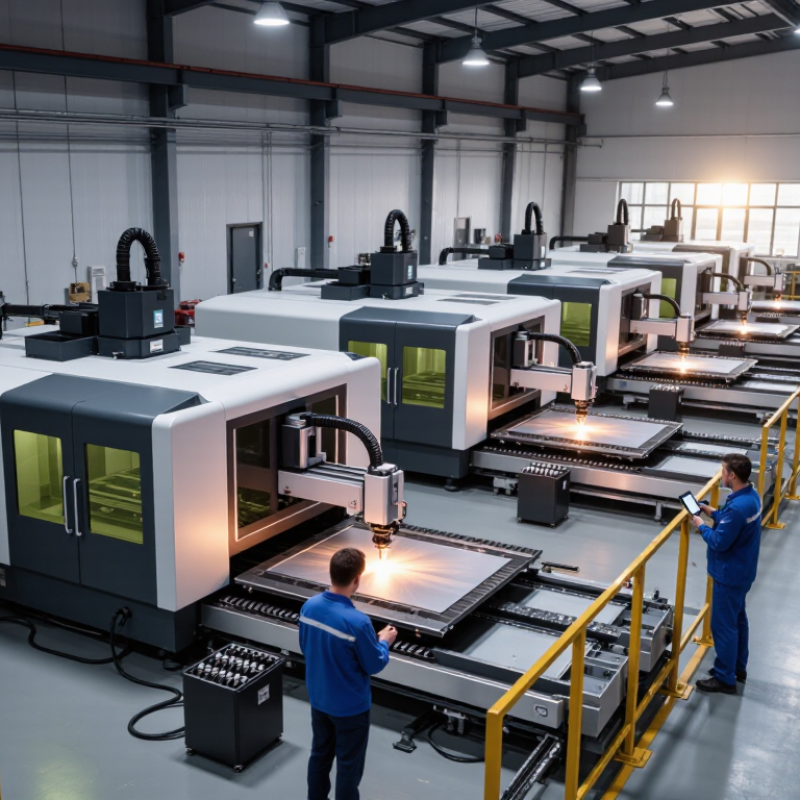
Table of Contents [Hide]
How Laser Equipment Suppliers Serve Global Buyers
Global buyers need more than a laser source. They need application testing, stable delivery, clear documentation, and support after installation. MarketsandMarkets estimated the global laser technology market at $20.5 billion in 2023 and forecast $35.1 billion by 2028. That growth points to expanding demand, but it does not guarantee a machine will suit a buyer’s materials or production line. A practical supplier should test sample parts, record cutting or marking settings, and explain expected maintenance before purchase. Small details matter: lens availability, voltage compatibility, and manuals written for operators, not only engineers.
Service must continue across borders. The International Federation of Robotics reported 541,302 industrial robots installed worldwide in 2023, reflecting wider factory automation that laser systems may need to integrate with. Buyers should ask how suppliers handle commissioning, operator training, spare-part shipments, and remote fault checks across time zones. Ask for realistic response times. A video call cannot replace every hands-on repair. Documentation should also specify machine configuration and consumables, so local technicians can identify the right parts. Forecasts and service promises deserve scrutiny; sometimes the weakest point is not the laser, but the handoff between installation and daily production.
Main Types of Laser Equipment and Their Applications
Laser equipment is not one tool with a single purpose. Fiber lasers deliver concentrated energy for cutting and welding metals, such as stainless-steel sheet. CO2 systems work well on many non-metal materials, including acrylic, wood, and fabric. Solid-state and diode lasers serve applications ranging from precision marking to heat treatment. Excimer lasers are used for fine processing, including selected semiconductor and medical-manufacturing tasks.
MarketsandMarkets estimated the global laser technology market at USD 20.8 billion in 2023 and projected USD 34.5 billion by 2028. That matters. Growth reflects broader use across manufacturing, communications, healthcare, and other sectors, but market size alone cannot identify the right machine. A workshop cutting thin sheet needs different power, beam quality, and motion control from a factory welding thick components. Not magic.
Application details should guide equipment selection. For marking serial codes on metal parts, buyers should compare pulse control, marking speed, and readable results on the actual surface. For cutting, test the intended material and thickness, then inspect edge quality and heat effects. Laser safety enclosures, extraction, and operator training also matter. A sample test is useful, though it cannot replace checking long-term service support and consumable costs. The awkward truth: specifications can look excellent on paper, while real production conditions expose gaps.
| Laser Equipment Type | Common Laser Source | Typical Applications | Commonly Processed Materials | Key Buyer Considerations |
|---|---|---|---|---|
| Laser Cutting Machine | Fiber laser; CO₂ laser | Sheet and tube cutting, part profiling, signage production, and fabrication of components. | Fiber systems are widely used for metals such as steel, stainless steel, and aluminum. CO₂ systems are often used for wood, acrylic, textiles, and other non-metals. | Check material type and thickness, required cutting area, power, cut quality, automation needs, extraction, and local service availability. |
| Laser Marking and Engraving Machine | Fiber, CO₂, or UV laser | Serial numbers, barcodes, logos, traceability codes, decorative engraving, and product identification. | Fiber lasers commonly mark metals and some engineered plastics; CO₂ lasers are suited to many organic materials; UV lasers can mark some heat-sensitive materials. | Assess the substrate, mark contrast and permanence, marking speed, field size, required code quality, and integration with production lines. |
| Laser Welding Machine | Usually fiber laser; other sources are available for specific processes | Joining sheet metal, enclosures, battery components, precision parts, and selected medical or electronic assemblies. | Commonly used with compatible metals, including stainless steel and aluminum alloys; suitability depends on alloy, joint design, and process setup. | Review joint geometry, material compatibility, weld strength, heat input, shielding requirements, safety enclosure, and operator training. |
| Laser Cleaning Machine | Pulsed or continuous-wave fiber laser | Removal of rust, paint, oxide layers, oil, and surface contaminants; surface preparation before welding or coating. | Used on selected metals and other substrates when the laser settings and process are appropriate for the surface and contaminant. | Confirm the contaminant and base material, cleaning rate, surface finish requirements, fume extraction, and risk of substrate damage. |
| Laser Cladding and Surface Treatment System | Typically a high-power diode or fiber laser | Applying wear- or corrosion-resistant layers, repairing components, and modifying surface properties. | Primarily metal components and compatible metallic powders or wire, selected according to the application. | Consider coating material, component geometry, deposition rate, dilution, heat management, powder or wire handling, and post-processing. |
| Ultrafast Laser Micromachining System | Femtosecond or picosecond laser | Fine drilling, micro-patterning, precision cutting, and processing of delicate or heat-sensitive parts. | Can process a broad range of materials, including metals, glass, ceramics, and polymers, depending on wavelength and process design. | Compare pulse duration, wavelength, precision, throughput, work area, motion system, and the application’s allowable heat-affected zone. |
| Excimer Laser Processing System | Ultraviolet excimer laser | Photolithography, selected microelectronics processes, ophthalmic procedures, and precision surface processing. | Application-specific materials that respond to ultraviolet wavelengths; process suitability must be validated for each material. | Evaluate wavelength, pulse energy, beam uniformity, cleanroom or facility requirements, consumables, and applicable safety controls. |
| Laser Additive Manufacturing System | Fiber or other high-power laser, depending on the process | Metal powder-bed fusion, directed energy deposition, prototyping, and production of complex parts. | Qualified metal powders or feedstock specified for the machine and process, such as selected stainless steel, titanium, or nickel alloys. | Check build volume, qualified materials, process repeatability, powder management, inspection needs, and total workflow cost. |
Criteria for Evaluating International Suppliers
International buyers should evaluate a laser equipment supplier beyond its catalog and quoted price. Start with application fit: request sample cuts or welds using your material, thickness, and target speed. A useful test report identifies the lens, power settings, assist gas, and measured edge quality. Ask about installation records, operator training, and fault-response times across your time zone. Ask for proof. Check whether spare parts are stocked nearby or shipped internationally, and clarify who pays freight during warranty repairs. Contracts should define acceptance testing, software updates, and what happens if production results differ from demonstrations.
Review technical documents in a language your maintenance team can use. Clear wiring diagrams and maintenance intervals may matter more than polished sales presentations. Confirm electrical requirements, cooling capacity, extraction needs, and floor space before signing. For international shipping, request packaging specifications, transit insurance details, and a realistic delivery schedule. Speak with customers in similar industries, not only references chosen for easy success. No supplier is flawless. A slow answer about service coverage may reveal more than a low quote. Still, no checklist replaces an on-site review; some buyers discover that only after installation.
Criteria for Evaluating International Laser Equipment Suppliers
Suggested evaluation weights for comparing suppliers as a global buyer
Technical capability and quality/compliance receive the highest suggested weights. These are buyer-defined planning weights, not market statistics; adjust them to fit your application, destination market, and procurement priorities.
Leading Suppliers and Their Areas of Specialization
Laser equipment suppliers usually specialize by process, material, or production scale. A metal-cutting supplier may focus on fiber systems, sheet handling, and nesting software. These machines suit many steel and aluminum applications, but thickness, edge quality, and gas use still affect results.
For wood, acrylic, and some plastics, suppliers may offer CO2 equipment with suitable extraction and work-area options. UV systems are often chosen for fine marking on heat-sensitive parts. Welding specialists, meanwhile, may provide handheld or automated systems for repeatable joints. Fit matters. A machine’s stated capability is not proof that it suits your actual parts.
Look beyond the equipment list. Ask suppliers to process your own material and show the finished edge, mark, or weld under recorded settings. Check installation requirements, operator training, spare-part access, and response times for service. A compact workshop may value simple setup more than maximum speed; a high-volume line may need automation and consistent uptime. No brochure can settle every trade-off. I would also question any recommendation that arrives before the supplier understands your material, tolerances, and daily workload. The answer may be less tidy than expected. That is useful information.
How to Select a Supplier for Your Market and Requirements
Top Laser Equipment Suppliers for Global Buyers?
How to Select a Supplier for Your Market and Requirements
Choosing a laser equipment supplier starts with the work the machine must perform. Define the material, thickness, part size, expected output, and available floor space. Your market matters. A machine suited to small batches may struggle with continuous production, while excess capacity can add cost without improving results. Ask suppliers to test representative samples, not just ideal ones.
Compare practical details alongside technical specifications. Check cutting or marking tolerances, repeatability, software compatibility, installation needs, and operator training. Ask how quickly service staff respond in your region and which spare parts are stocked nearby. Request a written maintenance schedule and a clear warranty scope. Small details count: a delayed lens or unclear setup instruction can interrupt a production shift.
A specification sheet can look convincing and still miss your actual workflow. Review sample parts under realistic operating conditions, and speak with customers using similar materials and production volumes. Consider shipping, local technical support, and training language before placing an order. No supplier is perfect; one may offer stronger service but fewer configuration options. I would also document unanswered questions, because vague answers before purchase rarely become clearer afterward.