
contact-button

Top 10 TNC Cable Assembly Suppliers for Global Buyers?

Choosing a Tnc Cable Assembly supplier involves more than comparing unit prices. Cable performance depends on connector quality, impedance control, shielding, and consistent assembly. A small mismatch can affect signal integrity or create costly delays during installation. Details matter. Global buyers also need clear lead times, responsive technical support, and packaging that protects assemblies in transit.

This guide introduces ten suppliers for buyers evaluating products, capabilities, and service. It is a starting point, not a universal ranking: the best fit depends on application, order volume, required customization, and delivery destination. Some companies may excel at standard cable assemblies, while others offer more flexibility for specialized designs. Ask for current specifications, sample availability, quality documentation, and details about testing procedures. Where possible, compare the same cable length, connector type, and performance requirements across quotations. That takes work. It can prevent an attractive price from hiding differences in materials, inspection, or support.

Supplier information and product ranges can change, so verify important claims directly before making a purchasing decision. Request written confirmation of tolerances, production schedules, and packaging requirements. For demanding installations, review sample assemblies with your engineering team rather than relying on catalog descriptions alone. No shortlist can answer every technical question, and that limitation is worth acknowledging. The profiles that follow are intended to help buyers ask sharper questions and identify suppliers suited to their real operating needs.
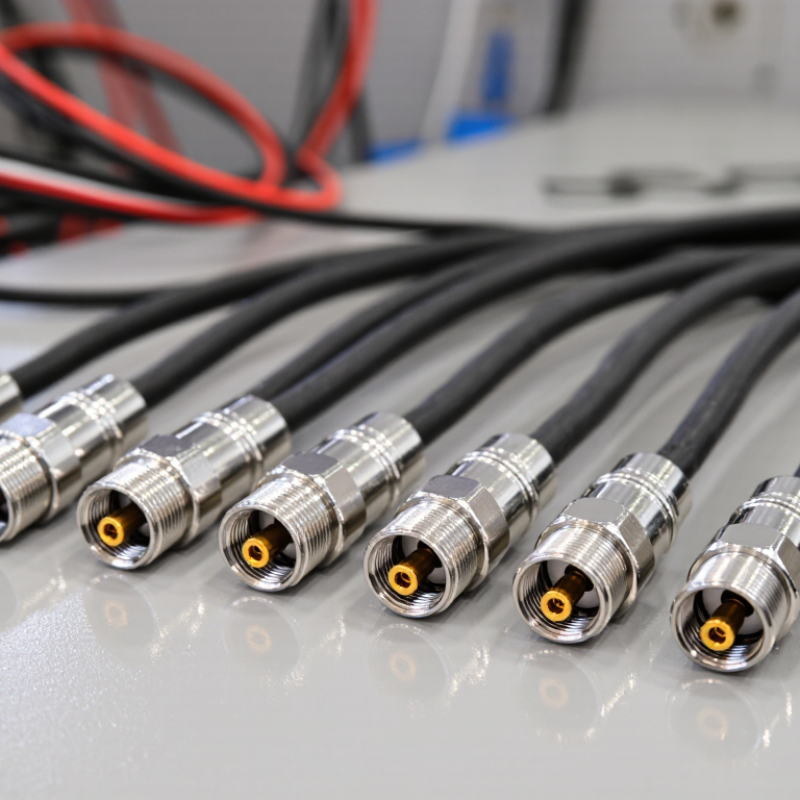
Top 10 TNC Cable Assembly Suppliers for Global Buyers?

Understanding TNC Cable Assemblies and Their Global Applications

TNC cable assemblies join coaxial cable to threaded TNC connectors, creating a secure path for radio-frequency signals. Their threaded coupling resists loosening from vibration better than many push-on connections. That helps in vehicles, field equipment, and installations where cables may be handled often. Small details matter. TNC interfaces are commonly designed for 50-ohm systems, but the connector alone does not guarantee good performance. The cable, terminations, and operating frequency must also suit the application. Assemblies appear in antenna feeds, communications equipment, measurement setups, and industrial monitoring systems. A rooftop antenna run, for example, needs different cable considerations from a short test lead on a workbench.

Global buyers comparing suppliers should check impedance, supported frequency range, insertion loss, shielding, and connector fit. Cable length affects signal loss, especially at higher frequencies. Confirm the stated frequency range for the complete assembly, not just the connector. Also inspect the cable’s minimum bend radius and jacket rating when routing it through cabinets or outdoors. A tight bend can damage performance. For exposed installations, verify resistance to moisture, temperature changes, and ultraviolet exposure; threaded does not automatically mean waterproof. Still, a polished datasheet cannot predict every installation problem. Ask for test results and sample assemblies when the application is sensitive, then verify fit and routing in the actual equipment. Some specifications look reassuring on paper, but practical checks are worth the extra time.

Key Criteria for Evaluating TNC Cable Assembly Suppliers

A capable TNC cable assembly supplier should be judged by fit, not by a polished catalog. Check the connector interface, cable impedance, operating frequency, and required length against your equipment. Small mismatches matter. A cable that fits mechanically may still perform poorly at higher frequencies.

Ask how assemblies are tested before shipment. Useful records may include continuity results, insertion loss, and return loss across the specified frequency range. Confirm that test methods match your application. For outdoor or mobile use, ask about jacket materials, temperature limits, strain relief, and resistance to vibration. Request a sample and inspect the connector finish, cable markings, and bend behavior yourself.

Manufacturing consistency deserves equal attention. Ask whether the supplier tracks cable and connector batches, controls crimp or solder processes, and can provide inspection records. Check realistic lead times, minimum order quantities, and how design changes are handled. Clear answers are a good sign. Vague claims are not. Price still matters, of course, but a cheaper assembly can cost more if it causes rework or intermittent faults. No supplier is perfect; I would compare documented performance with a practical sample, rather than trusting either alone.

Profiles of Ten TNC Cable Assembly Suppliers for Global Buyers

Global buyers comparing TNC cable assembly suppliers need more than a product list. These ten capability-based profiles offer a practical way to compare vendors; they are not ranked endorsements. Verify specifications and production claims directly.

A precision RF supplier emphasizes impedance control and repeatable termination. Custom-length makers cut, label, and package assemblies to match installation plans. Outdoor-focused builders may offer sealed boots and abrasion-resistant jackets for exposed runs. Low-loss specialists help buyers assess cable choice against frequency and cable length. Prototype-oriented suppliers handle small batches and design changes. Details matter.

High-volume manufacturers focus on repeatable output and consistent inspection records. Test-led vendors can provide continuity, insertion-loss, or VSWR results when requested. Connector-focused assemblers pay close attention to TNC fit, torque guidance, and mating consistency. Harness integrators combine coaxial assemblies with other cable types for larger equipment builds. Regional production partners may shorten shipping routes, though capacity and lead times still need checking. A polished datasheet is useful, but it cannot replace a sample review. Ask for evidence, and compare the same test conditions across suppliers.

Comparing Suppliers by Products, Capabilities, and Market Reach

A useful comparison of TNC cable assembly suppliers looks beyond catalog size. Some offer standard 50-ohm assemblies in common lengths, while others support custom cable types, connector angles, and protective jackets. Buyers should check operating frequency, impedance, and environmental requirements against the actual equipment. Fit is not a small detail. A right-angle connector can ease installation in a crowded panel, but it may not suit every routing path.

Manufacturing capabilities also vary. Ask whether assemblies receive continuity and return-loss testing, and whether test records can be supplied with each order. Clear drawings, traceable materials, and consistent labeling make incoming inspection easier. Market reach matters too: confirm typical lead times, export packaging, and regional technical support before comparing prices. A supplier with broad distribution may ship quickly, yet custom builds can still take longer. That is easy to overlook. Compare like-for-like specifications and order quantities, not just headline costs. One limitation in many supplier comparisons is thin public detail about testing conditions, so request evidence before treating similar product descriptions as equivalent.

Top 10 TNC Cable Assembly Suppliers for Global Buyers? - Comparing Suppliers by Products, Capabilities, and Market Reach

Comparison guide: The entries below are anonymous supplier archetypes, not named companies or a verified ranking. Product examples describe common market offerings; supplier-specific capabilities, certifications, stock, and geographic coverage should be confirmed directly.

Anonymous Supplier Profile Typical Product Scope Common Cable / Configuration Options Capabilities to Compare Potential Market Reach Buyer Verification Points
Profile 1 — RF coaxial assembly specialist TNC plug-to-plug, plug-to-jack, and jack-to-jack cable assemblies Common coaxial cable families such as RG-58 and RG-142; straight or right-angle connectors; custom lengths Impedance options, connector termination, continuity testing, and RF test availability May serve domestic and export customers; confirm shipping regions and lead times Request the exact cable and connector part specifications, test limits, and sample inspection report
Profile 2 — Custom cable harness manufacturer TNC-ended coaxial leads integrated into larger cable harnesses Cut-to-length coax, labeled leads, protective sleeving, and mixed connector terminations Harness drawings, wire processing, labeling, and production traceability Often suited to OEM programs; confirm support for overseas production and delivery Confirm drawing control, revision management, minimum order quantity, and change-notification process
Profile 3 — Connector-focused assembly provider Assemblies using TNC plugs, jacks, bulkhead connectors, and adapters Standard and right-angle terminations; cable choice depends on the connector interface Connector sourcing, interface compatibility checks, and assembly workmanship controls Reach depends on inventory and distribution partners; verify availability by destination Ask whether connectors are original, traceable components and request interface drawings
Profile 4 — Low-loss RF cable assembler TNC assemblies for RF links where cable attenuation is a selection factor Low-loss coaxial cable families, specified cable lengths, and matched connector options Insertion-loss measurement, frequency-specific test capability, and cable data documentation Can support international projects when testing and export documentation are available Compare loss data at the actual operating frequencies and cable length—not by cable name alone
Profile 5 — Ruggedized cable assembly provider TNC assemblies intended for equipment exposed to vibration or environmental stress Jacketed coax, strain relief, protective boots, and suitable straight or right-angle connectors Environmental design options and validation testing, if required by the application May supply industrial and field-service markets; confirm environmental test locations and scope Specify temperature, vibration, moisture, and bending requirements; request evidence for each claim
Profile 6 — Prototyping and short-run assembler Prototype TNC cables, engineering samples, and small production batches Custom lengths and connector combinations, subject to component availability Rapid quoting, engineering review, sample builds, and design-for-assembly feedback Typically project-dependent; confirm sample shipment options and repeat-order support Check prototype charges, production pricing, sample lead time, and whether the approved build is documented
Profile 7 — High-volume cable assembly manufacturer Repeat-production TNC cable assemblies for OEM and equipment programs Standardized cable lengths and connector combinations; custom variants may require setup Process control, production testing, capacity planning, and lot traceability May serve multiple regions through direct or channel sales; confirm regional fulfillment arrangements Request capacity assumptions, forecast requirements, lot records, and a defined change-control process
Profile 8 — Test-and-measurement cable provider TNC assemblies used in RF test setups and instrument connections Specified lengths and connector orientations; cable selection should match the test frequency and handling needs Documented electrical test results, connector inspection, and repeatability controls International supply is possible; confirm calibration-related documentation where applicable Define the measurement frequency range, return-loss or insertion-loss limits, and test method in the purchase specification
Profile 9 — Multi-region sourcing and assembly provider TNC cable assemblies alongside broader RF interconnect and cable products Multiple cable families and connector configurations, subject to the provider’s approved supply chain Supplier qualification, sourcing continuity, export paperwork, and regional customer support Potentially broad geographic coverage; confirm the actual ship-from locations and supported countries Check country of origin, component traceability, trade documentation, and regional warranty handling
Profile 10 — Application-engineering-led supplier Custom TNC assemblies selected for a defined RF, instrumentation, or communications application Cable and connector selection based on impedance, frequency, routing, and environmental needs Application review, drawing support, component selection, and validation planning Coverage varies with engineering and sales locations; confirm support in the buyer’s time zone Provide operating conditions and acceptance criteria; obtain written confirmation of the proposed configuration

Technical note: TNC is a threaded coaxial connector interface. Impedance, frequency capability, and electrical performance vary by connector design, cable, assembly, and test conditions; verify the complete assembly specification rather than relying on the interface name alone.

How to Select a Supplier for Your Project Needs

Selecting a TNC cable assembly supplier starts with the project’s actual operating conditions. Specify impedance, frequency range, power, cable length, bend radius, and exposure to moisture or vibration. Fit comes first. Ask for test data covering insertion loss, return loss or VSWR, and shielding performance across your required band—not just a single favorable measurement. Confirm that samples use the same connector, cable, and termination process planned for production. A threaded coupling may hold securely, but poor assembly can still cause intermittent faults.

Demand is also shaped by expanding wireless infrastructure. GSMA’s The Mobile Economy 2024 reports 1.6 billion global 5G connections at the end of 2023, with 5.5 billion projected by 2030. That growth makes reliable RF interconnects important, but it does not make every supplier suitable. Compare documented quality controls, lot traceability, change notification, sample lead time, and production capacity. Check whether workmanship criteria align with IPC/WHMA-A-620, and request recent inspection records. One caveat: a polished datasheet cannot prove consistent production. A pilot order can reveal cable-routing issues or connector fit problems that specifications miss. I would still leave room for a second review; supplier claims deserve verification.

Choosing a TNC Cable Assembly Supplier: Typical Connector Frequency Limits

Typical maximum frequency ratings for common RF connector interfaces

TNC interfaces are commonly rated to 11 GHz, making them a threaded option for many RF applications. These are representative interface-level figures, not guaranteed assembly limits: the cable, connectors, and assembly design can affect performance. Ask suppliers to confirm frequency capability and test requirements for your exact configuration.