


Design and development by Raincastle Communications.

Choosing a reliable Wire Cutters manufacturer in China takes more than comparing catalogue photos or unit prices. Buyers need to look at cutting performance, material consistency, production capacity, and quality controls. A clean-looking sample is useful, but it cannot show how a cutter performs after repeated use. That matters.
China’s hand-tool sector includes large export-oriented factories and smaller specialists. Their products may look similar, yet differences in steel selection, heat treatment, joint alignment, and edge finishing can affect durability. Ask how the factory checks blade hardness and opening smoothness. Request product specifications, recent test records, and samples from regular production—not only a specially prepared display piece. Details count.
This guide explores manufacturers often considered by international buyers and explains how to assess them against practical needs. The word “top” can mean different things: one company may excel at broad product ranges, while another may offer flexible customization or dependable lead times. Rankings should therefore be treated as a starting point, not a guarantee. Not always.
Before placing an order, confirm minimum quantities, packaging options, inspection procedures, and communication arrangements. Where available, review independent audit or certification documents and verify that they apply to the relevant facility and product scope. A short factory profile cannot answer every question; direct sampling and clear written specifications remain important. Even careful research has limits. Supplier capabilities can change, and public information may be incomplete. This overview aims to help readers compare options thoughtfully, identify useful questions, and make a decision based on evidence rather than bold marketing claims.
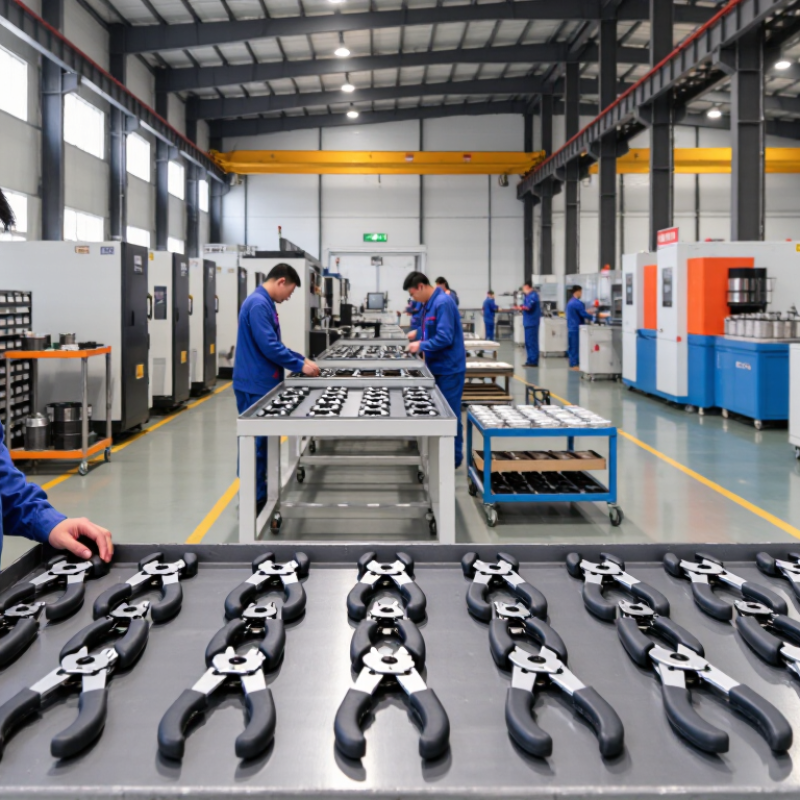
China’s wire cutter industry is a network of specialists, not just finished-tool factories. Steel suppliers provide alloy stock, while forging shops shape cutter blanks. Other workshops handle grinding, heat treatment, polishing, and handle molding. Some manufacturers coordinate these stages in-house; others rely on nearby subcontractors. The distinction affects lead times and traceability. Small details matter.
A typical production line begins with forged or stamped jaws, followed by machining to create the cutting edge. Heat treatment must balance hardness with resistance to chipping. Too soft, and the edge deforms; too hard, and it may fail under stress. Assembly teams fit the pivot and handles, then inspectors check alignment and cutting performance on sample wire. A neat finish is useful, but it cannot replace a consistent cut.
Suppliers range from high-volume contract factories to smaller workshops serving specialized specifications. Buyers can ask which processes are performed on-site, how batches are identified, and what wire sizes are used for routine testing. These questions reveal more than a catalog photo. Still, factory claims need verification, and inspection records can vary in detail. That gap deserves attention.
| Industry Segment | Typical Products | Common Manufacturing Activities | Typical Customers and Channels | What Buyers Commonly Evaluate |
|---|---|---|---|---|
| Hand-tool manufacturers | Diagonal cutters, end-cutting pliers, flush cutters, and general-purpose wire cutters | Metal forming, heat treatment, grinding, joint assembly, handle fitting, and final inspection | Tool distributors, hardware retailers, industrial suppliers, and private-label buyers | Cutting performance, jaw alignment, edge durability, handle comfort, and consistency between production batches |
| Precision and electronics-tool producers | Small cutters for electronics assembly, model making, fine wire, and delicate component work | Precision machining and grinding, close control of cutting edges, assembly, and inspection of small components | Electronics assembly operations, repair shops, specialist tool retailers, and equipment suppliers | Cutting-edge geometry, access to confined spaces, clean cutting, dimensional consistency, and suitability for the specified wire |
| Industrial and heavy-duty tool producers | High-leverage cutters, cable cutters, and cutters designed for larger or tougher conductors | Manufacturing and assembly of reinforced tool structures, cutting mechanisms, and application-specific components | Electrical contractors, maintenance teams, utilities, and industrial supply channels | Rated material and capacity, leverage, durability, safe operation, and compliance with the intended application |
| OEM and private-label manufacturers | Customer-specified wire cutters sold under a buyer’s own label or product range | Product customization, specification review, sampling, production, packaging, and export documentation | Overseas brands, importers, wholesalers, and retailers | Specification control, sample-to-production consistency, traceability, packaging requirements, and communication during production |
| Component and process specialists | Cutting jaws, handles, springs, joints, and other parts or process services used in tool production | Component fabrication, heat treatment, surface finishing, and subcontracted production processes | Tool factories and product assemblers | Material and process control, dimensional accuracy, delivery reliability, and compatibility with the finished tool design |
| Quality and compliance considerations across the industry | Not a product category; requirements depend on tool type, destination market, and intended use | Incoming-material checks, in-process inspection, final testing, and maintenance of quality records | Manufacturers, distributors, importers, and end users | Clear product specifications, documented inspection methods, applicable market requirements, and verifiable test information |
This table describes common segments and practices in China’s wire-cutter supply chain, not a ranked list of individual manufacturers. Product capabilities, production processes, and compliance requirements vary by supplier and product specification.
Design and development by Raincastle Communications.
 Customer Support
 Request Sample
 Contact