
contact-button

10 Tunnel Kiln Buying Tips for Global Buyers

A Tunnel Kiln is a major production investment, not just a heated passage. Its design can shape product quality, output, fuel use, and maintenance demands for years. Global buyers often compare prices first. That is understandable, but purchase price alone rarely shows the full operating cost. Details matter. Before requesting quotations, define the products, dimensions, firing curve, target capacity, available utilities, and local operating conditions. A supplier needs these facts to propose a useful configuration. If they are missing, even a polished offer may be difficult to compare fairly.

The buying process should examine more than headline capacity. Ask how temperature uniformity is measured, what controls are included, and which refractory materials suit your products. Request drawings, utility estimates, installation requirements, and service terms in writing. Ask for evidence. References from comparable installations can help, especially when buyers can discuss real production results with operators. Clarify what the quoted scope excludes, such as foundations, ducting, commissioning, or operator training. These details often change the final budget. A checklist cannot replace engineering review, and supplier claims still need verification. Some figures may look precise while relying on assumptions that do not match your plant. That deserves a second look. The ten tips ahead offer a practical framework for evaluating suppliers, comparing proposals, and identifying questions to resolve before placing an order. They cannot guarantee a perfect kiln. They can help buyers make a better-informed decision.
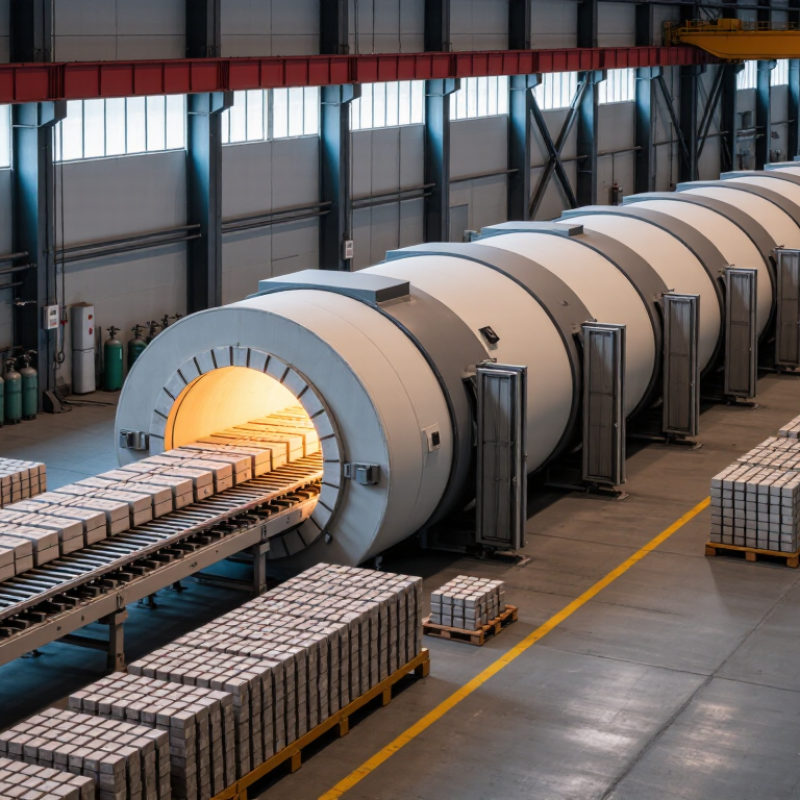
10 Tunnel Kiln Buying Tips for Global Buyers

Define Production Needs and Material Requirements

Before requesting a tunnel kiln quotation, define the product mix and real output target. Record tonnes per day, operating hours, product dimensions, firing temperature, and acceptable breakage. A kiln sized only around peak output may waste fuel during quieter shifts. Small details matter. Include the planned loading pattern, too: spacing between bricks or tiles changes airflow and heat transfer.

Material data should go beyond a clay name. Provide representative samples and test moisture, particle size, mineral composition, drying shrinkage, and firing shrinkage. Note additives, recycled content, and seasonal variation. The USGS Mineral Commodity Summaries 2024 identifies clay and shale as important inputs for brick and structural clay products; their properties can vary significantly by source. A laboratory firing trial can reveal color changes, warping, or cracking before equipment dimensions are fixed. One sample is rarely enough.

Also specify the required temperature uniformity, firing curve, and fuel type, then ask suppliers to state how these conditions affect capacity and consumption. The IEA reports that industry uses about 37% of global final energy, making kiln efficiency a practical purchasing concern, not a brochure detail. Compare energy estimates using the same product, moisture level, and throughput assumptions. A tidy spreadsheet can still hide a poor assumption: confirm figures against measured production data where possible.

Match Kiln Capacity, Temperature Range, and Firing Cycle

A tunnel kiln should match the factory’s real production rhythm, not just its best-case output. Estimate daily demand, operating hours, and planned maintenance before comparing rated capacity. Then account for how products are spaced on kiln cars. A narrow gap may restrict airflow; a crowded load can create uneven results. For example, compare the required number of finished tiles per hour with the kiln’s usable firing width and car loading pattern. Ask suppliers to state capacity under clearly defined product and firing conditions. That detail matters. A spreadsheet can make a generous estimate look convincing, while actual loading may tell a less comfortable story.

Temperature range is only useful when it suits the material and the complete firing cycle. Check the required peak temperature, but also review preheating, soaking time, cooling, and kiln-car speed. A product needing a short peak hold may still require slow cooling to reduce cracking. Request temperature-uniformity data across the usable kiln zone, along with control tolerances and measurement locations. Confirm that the stated range reflects continuous operation, not a brief test. If possible, run representative samples and inspect their color, dimensions, and breakage rate. One trial will not answer everything, but it can expose assumptions before they become costly production habits. Keep written records of load arrangement, temperature readings, and cycle time when evaluating options.

Compare Fuel Options, Energy Efficiency, and Automation

10 Tunnel Kiln Buying Tips for Global Buyers
Compare Fuel Options, Energy Efficiency, and Automation

Fuel choice affects operating cost, temperature stability, and maintenance planning. A gas-fired kiln may respond quickly, while electric heating can offer precise zone control. Solid fuels may suit some sites, but feed consistency and ash handling need careful review. Compare local energy prices, supply reliability, and ventilation costs before choosing. Ask suppliers for consumption data at your intended firing curve, not just a best-case figure. Small details matter.

Tip: Request a heat-balance estimate and review insulation thickness, door seals, and exhaust losses. Ask for measured energy use per finished tonne. Then check whether the figure assumes a full kiln. It often does. Compare production rates, product moisture, and firing temperatures; otherwise, efficiency claims can mislead.

Automation should match the kiln’s actual workload. Temperature sensors, programmable zones, and alarm history help operators spot drift before a batch is lost. Conveyor speed control can keep residence time consistent, but only when loading is steady. Review which settings operators can adjust and how faults are recorded. A polished control screen is not a substitute for accessible service support. During a factory or site trial, inspect temperature uniformity and compare logged data with independent measurements. One successful test does not prove long-term performance. Request operating references for similar products, and verify assumptions against your own firing schedule.

Verify Construction Quality, Safety Standards, and Supplier Support

A tunnel kiln is a major production investment, so inspect its construction rather than relying on rated output alone. Ask for sectional drawings, material specifications, and inspection records for the frame, refractory lining, and kiln cars. Look closely at refractory joints and door seals; uneven gaps can cause heat loss and inconsistent firing. Small details matter. If possible, inspect a running kiln and note vibration, access for cleaning, and how easily worn components can be reached.

Safety checks should cover guarded moving parts, emergency stops, hot-surface protection, ventilation, and safe access for maintenance. Request risk assessments and test records, then confirm that the equipment can meet the standards applicable at your installation site. Watch a stop-and-restart demonstration. It can reveal confusing controls or hard-to-reach isolation points. Documents may be complete while routine maintenance still feels awkward, so ask operators what they would change.

Supplier support matters after delivery, too. Clarify who supervises installation and commissioning, how operator training is provided, and which spare parts are recommended for the first year. Get response times and warranty exclusions in writing, and ask how technical issues are handled across time zones. A detailed parts list helps, but it is not a substitute for timely support. Where practical, speak with a comparable kiln operator about service experience, not only initial performance.

Assess Total Ownership Costs and Confirm Purchase Terms

A tunnel kiln’s quoted price is only the entrance to its real cost. Include fuel, electricity, operators, maintenance, refractory replacement, downtime, and rejected product in a 10-year ownership estimate. The IEA’s Energy Efficiency 2023 report estimates that industry used about 37% of global energy in 2022. That makes energy consumption a major comparison point, though actual kiln costs depend on product, firing curve, and local energy prices. Ask suppliers to state expected consumption per tonne at your planned throughput, and request the assumptions behind the figure.

Tip: Compare like with like. Check usable output, not just maximum capacity. Add freight, insurance, import charges, foundations, installation, commissioning, training, and recommended spare parts. A spreadsheet helps, but it can miss the cost of a delayed start-up.

Confirm purchase terms before paying a deposit. Specify delivery location and Incoterms, payment milestones, warranty start date, response times, and who pays for on-site work. Put acceptance tests in writing: temperature uniformity, fuel use, production rate, and product quality under agreed operating conditions. Request a parts list with lead times, especially for burners, sensors, and kiln-car components. Check whether the quoted warranty excludes wear parts or requires scheduled maintenance. Those details matter. One awkward point: projected savings may rely on perfect loading and steady production, which a real plant rarely achieves every day.

10 Tunnel Kiln Buying Tips for Global Buyers - Assess Total Ownership Costs and Confirm Purchase Terms
# Buying Tip What to Assess Evidence or Purchase-Term Check
1 Define the product and capacity requirements Specify product dimensions, material, firing temperature, target output, loading pattern, and required firing cycle. Capacity depends on product mix, kiln layout, and operating schedule. Provide representative product samples and written production assumptions. Require the quotation to state rated output and the conditions under which it is achieved.
2 Compare total energy costs Estimate fuel or electricity use over the expected operating schedule. Include local energy prices, fuel availability, burner or heating-system efficiency, and likely operating hours. Request consumption figures with units, test conditions, and the specified product and firing cycle. Compare estimates using the same energy prices and operating assumptions.
3 Include the full delivered and installed cost Budget for the kiln, controls, loading equipment, packing, freight, insurance, import duties, taxes, site preparation, utilities, installation, and commissioning. Ask for an itemized quotation that identifies inclusions and exclusions. Confirm the delivery point and responsibility for shipping, customs clearance, unloading, and installation.
4 Check the facility and utility requirements Verify available floor area, foundations, building height, access routes, electrical supply, fuel connections, ventilation, and emissions-control needs. Obtain layout drawings, connection requirements, equipment weights, and foundation loads before placing the order. Confirm who is responsible for site surveys and civil work.
5 Evaluate throughput and firing quality Consider temperature uniformity, atmosphere control, heating and cooling zones, kiln speed, product spacing, and the effect of firing variation on yield. Define measurable acceptance criteria, such as output rate, temperature uniformity, and product quality, along with the test method, product sample, and operating conditions.
6 Estimate maintenance and consumables Review expected service needs for insulation, kiln furniture, rollers or other conveying parts, burners, sensors, seals, and control components. Request a recommended maintenance schedule, expected consumables list, spare-parts pricing, and availability information. Treat service-life figures as estimates unless contractually guaranteed.
7 Confirm automation and operator training Check what is controlled automatically, what requires manual intervention, how alarms and data are recorded, and what operator skills are needed. List included software, control functions, language options, training hours, training location, and handover documents in the purchase specification.
8 Review delivery and commissioning milestones Allow for design approval, manufacturing, inspection, transport, installation, commissioning, and performance testing. International shipments may also require customs processing. Put milestone dates, buyer approvals, required site-readiness conditions, and procedures for delays or changes in writing. Identify the party coordinating each stage.
9 Make payment terms milestone-based Assess deposit size, progress payments, currency, bank charges, and the balance due at delivery or acceptance. Match payment exposure to verifiable progress where possible. State the payment schedule, required documents for each installment, inspection rights, and conditions for final payment. Have an adviser review applicable cross-border terms.
10 Clarify warranty, service, and remedies Check warranty duration and start date, covered parts and labor, exclusions, response arrangements, technical support, and availability of replacement parts. Define acceptance testing, warranty claims procedures, remedies for unmet specifications, and responsibility for travel, freight, and replacement costs in the signed contract.