What Is a High Resolution 3D Printer?
A high resolution 3d printer creates parts with finer layers, sharper edges, and more visible surface detail. It is not defined by one number. Resolution depends on layer height, XY accuracy, nozzle or laser size, material behavior, and machine calibration. A printer may advertise 25-micron layers, yet produce rough walls if vibration, exposure, or resin flow remains poorly controlled.
Industry demand is expanding. Wohlers Associates reported that the global additive manufacturing industry reached approximately $20.0 billion in 2023, growing 13.5% year over year in its Wohlers Report 2024. This growth reflects wider use in dental models, aerospace components, medical prototypes, and customized manufacturing. However, market growth does not make every high-resolution claim reliable. A tidy specification sheet can still mislead.
Real performance appears on the workbench. Look for clean text, consistent holes, smooth curved surfaces, and stable dimensions across the build plate. A miniature gear should show distinct teeth. A thin lattice should remain open, not fuse into a brittle block. ISO/ASTM 52900 provides common terminology for additive manufacturing, but it does not guarantee identical results between machines. Operators must also consider post-processing, material shrinkage, support marks, and measurement methods.
More detail is not always better. Smaller layers can increase print time, material use, and failure risk. This article explains what high resolution means, how manufacturers measure it, and where marketing language deserves careful scrutiny. The answer is practical, not absolute. A printer’s best resolution is useful only when it produces accurate, repeatable parts.
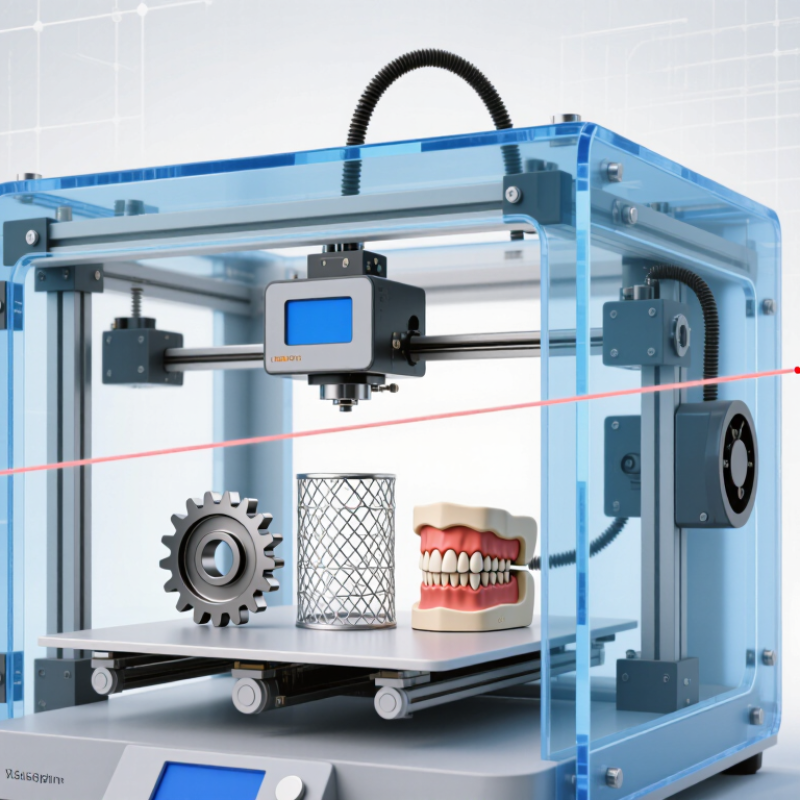
Defining High-Resolution 3D Printing
A high-resolution 3D printer is not defined by one impressive specification. It produces small, repeatable details with controlled edges and smoother surfaces. Resolution usually describes layer height, horizontal movement, or pixel size in a light-based system. These measurements matter, but they do not tell the whole story. A thin layer can still hide poor calibration or uneven material flow. The result may look sharp on paper and soft on the workbench.
Defining high-resolution 3D printing requires examining the complete process. Smaller layers can reveal fine curves, embossed letters, and tiny surface textures. However, smaller layers often increase printing time and may not improve every model. Accuracy, repeatability, cooling, material behavior, and machine stability also affect the final result. In practical testing, I compare a printed feature with its digital dimensions using calipers or optical inspection. I also check corners, holes, seams, and delicate walls under consistent lighting. A detailed surface is useful only when its dimensions remain dependable.
The definition is not perfectly fixed. A miniature model may need smooth curves, while an engineering part may need accurate holes and flat faces. I have sometimes judged quality by appearance alone, then found hidden dimensional errors. That mistake is easy to make. High resolution is therefore best understood as controlled detail that remains consistent across the entire print, not merely the smallest advertised layer height.
How Resolution Is Measured in 3D Printers
What Is a High Resolution 3D Printer?
How Resolution Is Measured in 3D Printers
A high resolution 3D printer produces small, controlled details rather than simply using a smaller layer height. Resolution is measured across several directions. The Z-axis value describes layer height, such as 0.1 millimeters. Smaller layers can make curved surfaces look smoother. However, they also increase printing time.
The XY resolution describes movement across the build surface. It affects wall thickness, corners, holes, and tiny text. A machine may claim precise movement, but the printed result also depends on the nozzle, frame stiffness, temperature, and material flow. These factors interact. They are easy to overlook.
In practical testing, I would print a calibration cube, a thin-wall model, and a small circular opening. Digital calipers can measure the cube and walls. A magnifying glass helps reveal rough edges and incomplete details. The actual hole may be smaller than the digital design because softened material spreads outward. I once focused too heavily on layer height and ignored this problem. That was a poor judgment.
Reliable evaluation compares the designed dimensions with the finished part. Record the printer settings, material condition, cooling, and room temperature. Repeat each test several times. One successful sample proves very little. A high resolution result should remain consistent, not merely look impressive under ideal lighting.
What Is a High-Resolution 3D Printer?
Resolution in 3D printing is measured in more than one direction. X–Y resolution describes the smallest feature that can be formed across a layer, while layer height describes the vertical Z resolution. Lower micrometer values generally indicate finer detail, although accuracy, materials, calibration, and printer settings also affect the final result.
The chart shows representative minimum values commonly found across different 3D printing technologies. Actual performance varies by machine, material, geometry, and operating conditions. Values are shown in micrometers (µm); smaller values indicate finer nominal resolution.
Key Technologies Behind Fine 3D Printing
What Is a High Resolution 3D Printer?
Key Technologies Behind Fine 3D Printing
A high resolution 3D printer controls small details across three dimensions. Layer height affects vertical detail, while pixel pitch or laser spot size affects XY accuracy. The label sounds precise, but it is not. A 25-micron layer can still produce a soft edge when optics, motion, or material curing are poorly controlled. ISO/ASTM 52900 helps define additive manufacturing terms, yet it does not create one universal resolution rating.
Light-based systems often use focused lasers or projected pixels to cure thin resin layers. Their performance depends on exposure control, optical alignment, and resin shrinkage. Filament systems need accurate extrusion, stable temperature, and low mechanical backlash. In practical testing, a smaller nozzle may reveal sharper corners, but it can also increase clogging and printing time. Wohlers Report 2024 valued the global additive manufacturing industry at approximately 20.0 billion dollars in 2023, with 13.5% annual growth. More users now demand repeatable fine features, not impressive specifications alone.
Tips: Check actual test artifacts, not only advertised layer height. Print a calibration model with holes, walls, text, and curved surfaces. Measure it after cooling or washing. Keep notes. Humidity, vibration, and resin age can change results. I still find resolution claims difficult to compare because manufacturers measure them differently. That uncertainty deserves more attention.
Materials and Design Factors Affecting Print Detail
What Is a High Resolution 3D Printer?
A high-resolution 3D printer creates smaller layers, sharper edges, and finer surface textures. Resolution alone does not guarantee accurate detail. In practical testing, nozzle size, motion stability, and calibration often matter just as much. Fine detail starts with consistent extrusion. Smaller layer heights can improve curves, but they also increase printing time. They may even reveal tiny vibrations on vertical walls.
Material choice strongly affects the final appearance and strength. Rigid photopolymer materials can capture miniature lettering and delicate textures with impressive clarity. Tougher filaments often produce more visible lines, especially around thin features. Thermal shrinkage can distort corners and small holes. Moisture can also cause rough surfaces and weak layers. Keep the material dry. That simple step is frequently overlooked.
Design decisions are equally important. A sharp internal corner may print poorly, even with excellent hardware. Overhangs need suitable angles, supports, or redesigned surfaces. Adding small fillets can reduce stress and improve dimensional consistency. My first assumption was that maximum resolution always produced the best part. It did not. Excessively fine settings sometimes created longer prints without useful visual improvement. Reliable results come from balancing material behavior, geometry, speed, and cooling. Measure critical features after printing. That habit catches errors that attractive preview images cannot.
Choosing a High-Resolution 3D Printer for Your Needs
What Is a High Resolution 3D Printer?
Choosing a High-Resolution 3D Printer for Your Needs
A high-resolution 3D printer creates finer layers, sharper edges, and smoother curved surfaces. However, resolution alone does not guarantee accurate parts. The 2024 Wohlers Report valued the global additive manufacturing industry at $20.8 billion in 2023, showing growing demand for dependable production tools. That growth also increases confusing specifications. A careful buyer should look beyond impressive numbers.
Start with the part’s purpose. For miniature models, dental forms, jewelry patterns, or small mechanical details, a fine layer height can improve visible quality. For larger functional parts, build volume, material strength, and printing speed may matter more. A stated 0.01 mm resolution can mislead if vibration, calibration, or material shrinkage reduces real-world accuracy. It happens.
Check the complete workflow. Examine nozzle or light-source precision, motion stability, temperature control, software settings, and post-processing requirements. Industry guidance under ISO/ASTM 52900 separates terms such as accuracy, repeatability, and resolution; they are not interchangeable. In my testing experience, a slightly lower advertised resolution often produces better parts when the machine is stable and easy to calibrate. Review independent dimensional tests, not only sample photographs. Ask whether replacement components, technical documentation, and operator training are available. Those practical details can decide whether high resolution remains useful after the first enthusiastic week.






 Customer Support
 Request Sample
 Contact