Why Choose a Gas Generator Set for Your Business?
A business can lose more than electricity when the grid fails. A refrigerated warehouse may watch temperatures rise, while a workshop’s production line sits silent. A Gas Generator Set can provide on-site power during outages and support operations where grid capacity is limited. The real value is continuity, not simply the equipment’s rated output.
Energy analyst Daniel Yergin’s work highlights the importance of reliable, flexible energy supplies. A concise paraphrase of that perspective is: “Energy choices must balance reliability with flexibility.” For a business, that means weighing fuel availability, expected load, operating hours, and maintenance support before selecting a generator. Natural gas may suit a site with a stable pipeline connection. Where supply interruptions are possible, the fuel plan deserves closer scrutiny. No setup is perfect.
A properly sized Gas Generator Set can help manage essential loads, from pumps and servers to lighting and production equipment. It may also reduce local emissions compared with some diesel alternatives, depending on engine design, fuel quality, and operating conditions. That matters. Yet the purchase price alone tells an incomplete story. Installation, ventilation, noise control, scheduled servicing, and backup fuel arrangements all affect long-term value. Real sites differ. A careful assessment by qualified power professionals helps match the unit to actual demand, rather than an optimistic estimate. This guide explores those practical considerations, including efficiency, reliability, costs, and the questions businesses should ask before investing.
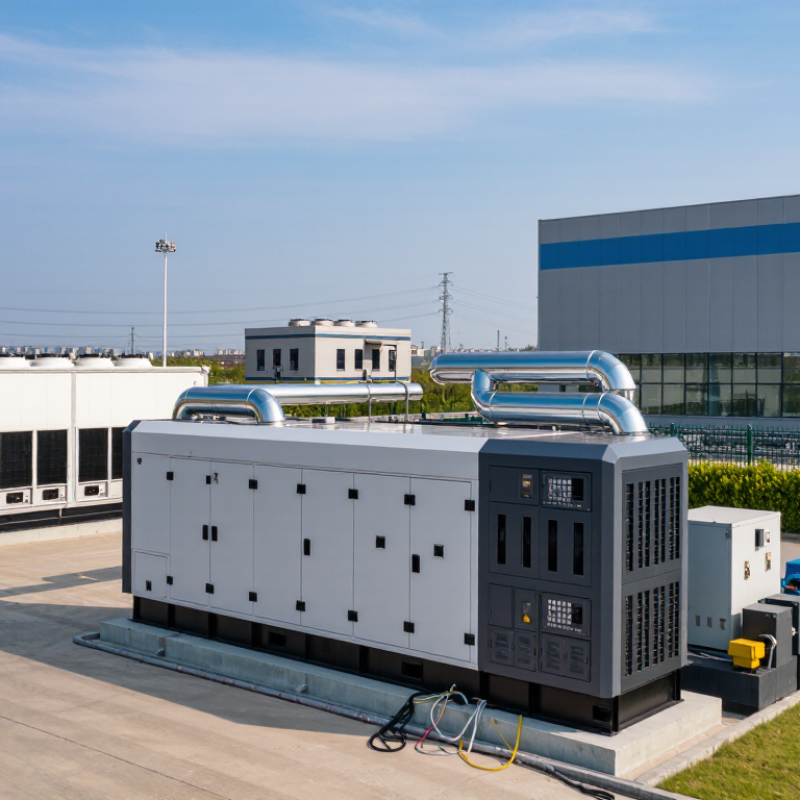
Understanding Gas Generator Sets and Their Operating Principles
A gas generator set converts fuel energy into electricity through a controlled sequence. Natural gas mixes with air in an engine cylinder, where a spark ignites the mixture. Expanding gases push a piston, turning a crankshaft connected to an alternator. Inside the alternator, a rotating magnetic field induces electrical current. A governor adjusts fuel flow as demand changes, while cooling and lubrication systems help manage heat and friction. That is the neat version. Real sites are messier: changing loads, ventilation, fuel pressure, and maintenance all affect performance.
Efficiency figures need context. The U.S. Environmental Protection Agency’s Catalog of CHP Technologies reports total efficiencies of roughly 60–80% for combined heat and power systems, when useful heat is captured alongside electricity. That figure does not describe a standalone generator’s electrical efficiency. For wider context, the U.S. Energy Information Administration reported that natural gas supplied about 43% of U.S. utility-scale electricity generation in 2023. A national share is not a site-level performance guarantee. Before choosing a set, businesses should compare expected load, fuel availability, exhaust routing, and service needs. A neglected detail can matter: recovered heat has little value if the facility cannot use it.
Matching Generator Capacity to Business Power Needs
Matching a gas generator set to business needs starts with a real load list, not a guess based on the utility bill. Record the running power of essential equipment, such as refrigeration, pumps, lighting, and server racks. Then identify which motors start together; their brief startup demand can be several times higher than normal operation. That matters. A unit sized only for steady loads may struggle when a compressor kicks in.
Separate critical loads from equipment that can wait. Add the critical loads’ running demand, then account for startup peaks and the generator’s rated power factor. Check the manufacturer’s continuous rating, not only its short-term maximum. Temperature, altitude, ventilation, and gas pressure can also reduce available output. Small details count. Leave a practical margin, but avoid oversizing without a reason: a lightly loaded set may run inefficiently and can require different maintenance attention.
A measured load profile gives a better answer than assumptions. For a week, note when major equipment operates and whether demand rises during production shifts or hot afternoons. One imperfect estimate can miss a rarely used backup pump or a seasonal cooling load. Recheck the figures with a qualified electrical professional, especially if sensitive controls or future expansion are involved. The right capacity should support essential operations, handle realistic starting loads, and fit the business’s actual operating pattern.
Comparing Fuel Availability, Costs, and Operating Efficiency
Why Choose a Gas Generator Set for Your Business?
Fuel availability can decide whether a generator is practical. A pipeline-connected site avoids routine fuel deliveries and on-site tank storage, but service interruptions and local gas pressure still need review. A remote facility may find diesel easier to secure. Not everywhere. Compare delivered fuel prices, utility charges, connection costs, and expected run hours; the cheapest fuel price alone can mislead.
Efficiency depends on how the set will operate. The U.S. Department of Energy’s Catalog of CHP Technologies reports gas-engine electrical efficiency of roughly 30–45%. With useful heat recovery, total CHP efficiency can reach 70–80%. That higher figure applies to combined heat and power, not electricity-only operation. For a warehouse needing just backup power, recovered heat may have little value. A load profile and a site-specific fuel quote make the comparison more credible than a generic payback estimate.
Tips: Ask the utility about firm service, pressure, and demand charges. Model fuel costs at several price levels, then include maintenance and connection expenses. Keep one assumption visible: actual efficiency falls when the generator runs lightly loaded.
Why Choose a Gas Generator Set for Your Business?
Comparing fuel availability, costs, and operating efficiency
Indicative electrical-efficiency ranges for reciprocating generator sets; actual results vary with equipment size, model, and load. Natural gas can be a convenient option where a reliable pipeline connection is available, while diesel can be stored on site. Compare local fuel prices, connection or storage requirements, maintenance, and the manufacturer’s heat-rate data to estimate your operating costs.
Evaluating Reliability, Emissions, and Maintenance Requirements
A gas generator set can provide steady backup power, but reliability depends on the whole installation. Check pipeline pressure, ventilation, starting batteries, and transfer controls—not just the engine. During a load test, watch for voltage dips when pumps or compressors start. Pipeline supply can be dependable, yet a local service interruption may still leave the generator without fuel. That detail matters.
For emissions, the U.S. Energy Information Administration’s Carbon Dioxide Emissions Coefficients report lists about 52.91 kg of CO₂ per million Btu for natural gas, versus 73.96 kg for distillate fuel oil. These are fuel-combustion figures, not emissions per unit of electricity; engine efficiency and load change the comparison. The U.S. EPA’s AP-42 guidance also distinguishes engine types and operating conditions, so check the specific configuration. Cleaner on paper is not the whole story.
Tips: Keep a log of run hours, oil changes, coolant checks, and alarm events. Follow the equipment manual for service intervals, then test under realistic loads. A skipped test can make a well-maintained set look more reliable than it is.
Planning Installation, Safety, and Regulatory Compliance
Planning a gas generator set starts with the site, not the nameplate. The U.S. Energy Information Administration reported that natural gas supplied about 43% of U.S. utility-scale electricity in 2023. That shows the fuel’s broad role, but it does not guarantee adequate gas pressure at your property during an emergency. Ask a qualified engineer to check demand, pipe capacity, utility service, and load-starting requirements. Measure twice.
Place the set where exhaust cannot drift toward doors, windows, or fresh-air intakes. Keep required clearances around hot surfaces and leave room for maintenance access. OSHA’s general-industry limit for carbon monoxide is 50 parts per million over an eight-hour workday (29 CFR 1910.1000). It is an exposure limit, not a safe siting target. Use the equipment maker’s instructions and have exhaust routing reviewed by a qualified professional.
Before installation, confirm which editions of NFPA 37 and NFPA 110 apply locally, along with electrical, fire, noise, and fuel-piping requirements. Permits and inspections vary by jurisdiction. Keep approval records, commissioning results, and maintenance logs together. Test the transfer switch and generator under a realistic load. One detail is easy to miss: a successful startup test may not reveal a weak gas supply under sustained demand.



 Customer Support
 Request Sample
 Contact