


Design and development by Raincastle Communications.

Why do global buyers choose Cell Assembly Machines? The answer begins with scale, precision, and the pressure to deliver consistent battery cells. The International Energy Agency’s Global EV Outlook 2024 reported that battery demand in the energy sector rose to about 750 GWh in 2023. It also estimated global manufacturing capacity at roughly 2.5 TWh. Capacity alone, however, does not guarantee reliable output.
For manufacturers, cell assembly equipment turns delicate materials into repeatable production steps. Buyers assess alignment accuracy, handling speed, automation, and how quickly a line can change formats. A cell that looks nearly perfect can still fail if a seal is weak or a tab is misplaced. Small errors matter. Equipment choice also affects operator training, maintenance schedules, and production downtime.
IEA Executive Director Fatih Birol has described the broader transition this way: “The clean energy transition is happening worldwide, and it’s unstoppable.” That statement is not a machine specification, but it helps explain why investment decisions are accelerating. Buyers increasingly compare suppliers on measurable performance, service access, and integration with existing lines—not headline speed alone. A fast machine is useful only when it runs steadily. The picture is not perfectly tidy: published capacity figures do not reveal every factory’s actual utilization or yield. Careful buyers therefore ask for trial data, inspect finished cells, and check support arrangements before committing. In this market, dependable production may matter more than impressive brochures.
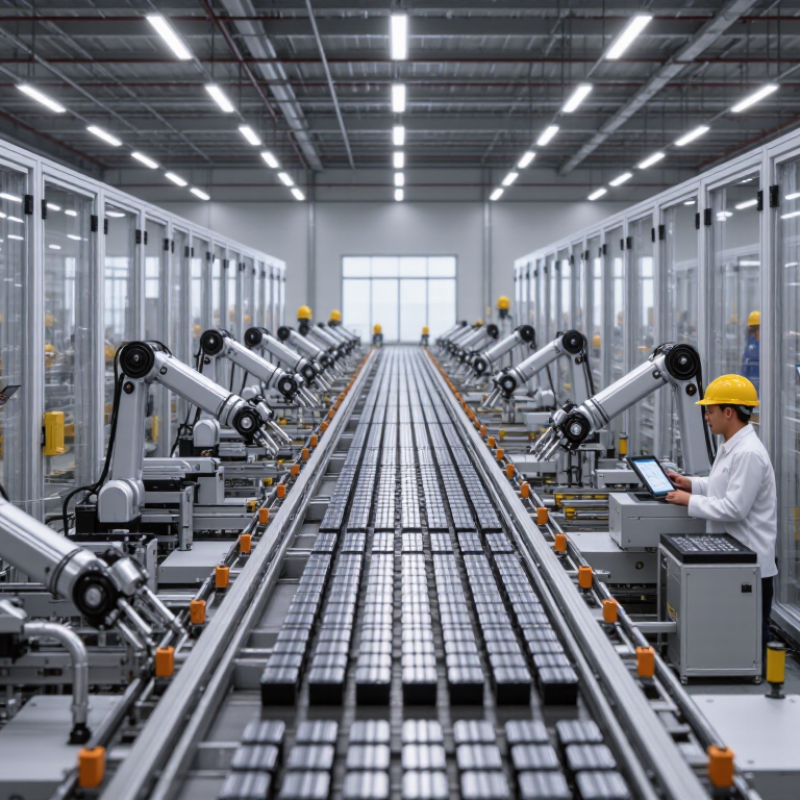
A cell assembly machine is equipment used to join and prepare battery components during cell production. It may position electrodes and separators, stack or wind layers, attach tabs, and form a cell enclosure. The exact sequence depends on the cell design. A pouch cell, for example, needs different handling from a cylindrical cell. Small errors matter.
In operation, feeders present materials to fixtures, while cameras and sensors check position, alignment, and selected process conditions. Actuators then perform tasks such as stacking, tab welding, or sealing. Controls record machine settings and inspection results, helping production teams trace issues to a station or batch. Operators still verify samples and adjust recipes when materials or formats change. That work is easy to underestimate. Automation can improve repeatability, but it cannot make poor incoming materials consistent. Nor does a sensor catch every defect. A well-designed line needs clear changeover procedures, regular maintenance, and realistic checks against finished-cell quality. The process can be efficient, yet its weakest station may still set the pace.
| Machine or Station | What It Does | How It Works | Typical Quality Checks | Why Buyers Value It |
|---|---|---|---|---|
| Electrode Notching and Cutting | Prepares electrode sheets or rolls to the dimensions required for a cell design. | Mechanical cutting or laser processing forms the specified outline and, where required, tab features. | Cut dimensions, edge condition, burrs, and material alignment. | Consistent electrode geometry supports reliable downstream stacking or winding. The appropriate method depends on the material, design, and production requirements. |
| Stacking Machine | Places alternating anode, separator, and cathode layers into a stack, commonly for pouch and some prismatic cells. | Automated feeders and positioning systems arrange the layers in a programmed sequence while controlling alignment. | Layer position, stack dimensions, separator coverage, and tab alignment. | Automation can improve repeatability and reduce manual handling. Buyers assess the machine against the cell format, layer count, and required production rate. |
| Winding Machine | Forms a jelly roll by winding electrode and separator webs together; commonly used for cylindrical and some prismatic cells. | Webs are guided under controlled tension and wound around a core or into a specified shape. | Winding tension, alignment, roll dimensions, and visible material defects. | Controlled winding helps produce consistent electrode assemblies. Changeover needs depend on the range of cell sizes and designs. |
| Tab Welding and Current-Collector Joining | Connects electrode tabs or current collectors to the required conductive components. | Depending on the design and materials, the station may use ultrasonic, resistance, or laser welding. | Weld position, joint appearance, electrical continuity, and, where specified, weld strength. | Repeatable joining supports electrical connection quality. Buyers consider material compatibility, process monitoring, and access for inspection. |
| Cell Insertion and Can or Pouch Handling | Places the electrode assembly into a cylindrical can, prismatic case, or pouch enclosure. | Guides the assembly into the enclosure while handling components according to the cell’s shape and tolerances. | Insertion position, enclosure condition, insulation placement, and component alignment. | Automated handling can reduce contact with delicate components and improve process consistency across production shifts. |
| Electrolyte Filling and Wetting | Doses electrolyte into a prepared cell and supports its distribution through the electrode assembly. | Filling equipment meters electrolyte; vacuum or controlled-pressure steps may be used depending on the process and cell design. | Fill quantity, process conditions, leakage, and completion of the specified wetting procedure. | Accurate dosing and controlled handling help manage a critical manufacturing step. Equipment and process settings must match the cell design and electrolyte requirements. |
| Sealing and Final Assembly | Closes the cell enclosure after the required components and electrolyte have been added. | Sealing may involve crimping for certain cylindrical cells, welding for some metal cases, or heat sealing for pouch cells. | Seal or weld integrity, dimensions, appearance, and leakage checks as specified by the manufacturer. | Format-specific sealing equipment helps create consistent closures and supports downstream handling and testing. |
| Formation and Aging Equipment | Performs controlled initial charging and discharging, followed by storage or aging steps defined by the production process. | Channels connect cells to programmable power and monitoring systems that record electrical behavior over time. | Voltage, current, temperature, capacity, and other acceptance criteria set by the cell maker. | Buyers value traceable test data, channel capacity, and process control. Formation and aging are often integrated into the wider production line rather than a single assembly machine. |
| Automation, Inspection, and Traceability Systems | Move workpieces between stations, inspect selected features, and associate process records with production units. | Conveyors, robots, sensors, machine vision, and control software coordinate operations and record configured data. | Inspection results, alarms, station status, and traceability records, according to the installed system. | Integration can support production visibility, repeatable workflows, and faster identification of process issues. Capabilities vary by line design and software configuration. |
Buyer considerations: Cell assembly equipment is selected according to cell chemistry, cylindrical/prismatic/pouch format, target capacity, required automation, factory utilities, safety requirements, quality controls, and local service needs. Processes and station layouts vary by manufacturer and product design; not every line uses every station listed above.
Design and development by Raincastle Communications.
 Customer Support
 Request Sample
 Contact