Why Choose SLS 3D Printers for Global Manufacturing?
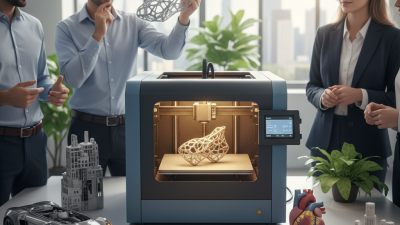
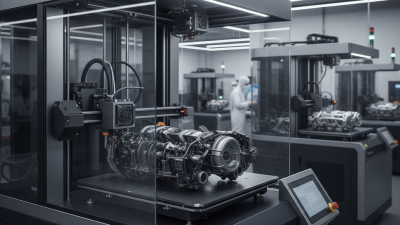
Global manufacturing is becoming more distributed, responsive, and data-driven. In this environment, sls 3d printers offer a practical alternative to conventional tooling for selected production needs. They build parts directly from digital files, using laser energy to fuse polymer powder layer by layer. This process can produce complex ducts, lattices, housings, and customized fixtures without expensive molds.
Carl Deckard, widely recognized as the inventor of selective laser sintering, captured its central value in one concise phrase: “The ability to make complex parts without tooling.” That capability matters when manufacturers must replace a component quickly or serve smaller regional markets. A factory in Germany can prepare a validated file, while another facility produces the same design in Mexico or Singapore. Fewer physical tools need to cross borders.
The advantages are practical. SLS 3D printers can nest many parts in one build, reducing material waste from support structures. They also support design changes without rebuilding hard tooling. However, the technology is not effortless. Powder refresh rates, thermal consistency, surface texture, and post-processing require disciplined control. Results may vary between machines, even with identical files. That is an uncomfortable truth.
Reliable global adoption requires documented parameters, trained operators, inspection routines, and traceable materials. Manufacturers should test fatigue, dimensional stability, and environmental performance before scaling production. SLS is not the best answer for every part. Yet, when geometry is complex and demand is variable, it can shorten supply chains and make regional manufacturing more resilient. The opportunity is substantial, but careful validation still decides whether the promise becomes dependable production.
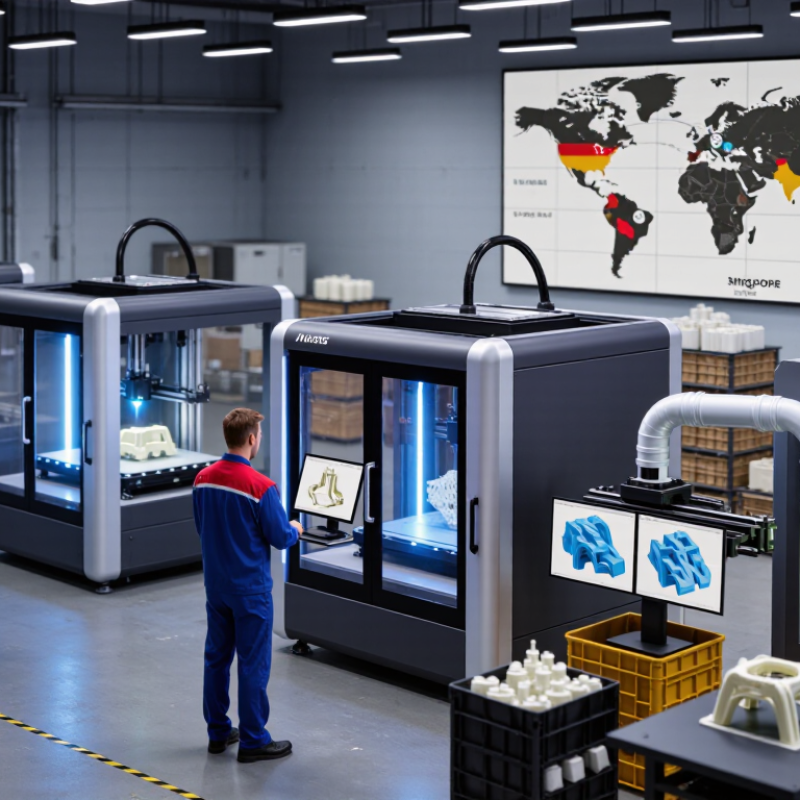
Table of Contents
[Hide]
SLS 3D Printing: Definition, Process, and Core Technologies
Selective laser sintering (SLS) is a powder bed fusion process for making three-dimensional parts. ISO/ASTM 52900:2021 places powder bed fusion within additive manufacturing terminology. In SLS, a thin layer of polymer powder is spread across a heated build chamber. A laser scans each cross-section, fusing selected areas; the platform then lowers, and another powder layer is applied. The surrounding loose powder supports overhangs, often reducing the need for separate support structures.
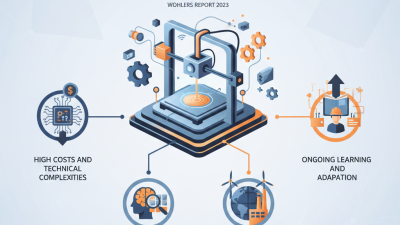
The hardware depends on precise coordination between the laser, scanning optics, powder recoater, and temperature controls. For example, a small temperature shift can affect how nylon-based powder fuses, so calibration and material handling matter. After printing, parts cool in the powder bed before operators remove and clean them. It takes time. Unsintered powder may sometimes be reused, but reuse depends on material condition and process controls; it is not automatically waste-free. Wohlers Report 2024 estimated that the global additive manufacturing industry generated US$20.035 billion in 2023, an 11.1% increase over 2022. That figure covers all additive manufacturing technologies, not SLS alone. SLS suits complex, nested parts, but production teams still need to assess cooling time, powder management, and repeatability before scaling output.
Why Choose SLS 3D Printing for Global Manufacturing?
Selective Laser Sintering (SLS) uses a laser to fuse polymer powder layer by layer. Its powder bed supports complex geometries during printing, reducing the need for separate support structures.
Material insight: PA12 is widely used in polymer SLS, while PA11 and PEEK offer alternative material properties. Values shown are approximate typical melting points; actual values vary by grade. Melting point is not the printer’s chamber or processing temperature.
How SLS Printers Convert Digital Designs into Durable Parts
SLS turns a CAD file into a part by spreading thin layers of polymer powder across a heated build chamber. A laser selectively fuses each layer, guided by the digital model. Unfused powder supports complex shapes, so designers can often produce internal channels and interlocking features without extra support structures.
After printing, the part cools in the powder bed before workers remove and clean it. Cooling matters. A rushed cycle can contribute to warping. In the Wohlers Report 2024, the additive manufacturing industry recorded an estimated $20.0 billion in revenue for 2023, up 11.1% from 2022. That figure covers the wider industry, not SLS alone, but it reflects expanding use of additive production.
For durable parts, process control is as important as geometry. Powder condition, laser settings, wall thickness, and build orientation can affect strength and surface finish. Nylon parts are often chosen for functional prototypes, housings, and fixtures, yet printed parts still need testing under their intended loads and temperatures. A clean surface can be misleading. Engineers should verify performance with representative samples, because a successful print does not automatically mean a qualified component.
Why Choose SLS 3D Printers for Global Manufacturing? - How SLS Printers Convert Digital Designs into Durable Parts
| Manufacturing Stage | Digital or Physical Input | Typical Process Data | Result and Manufacturing Value |
|---|---|---|---|
| 1. Design preparation | A 3D CAD model is exported in a format such as STL or 3MF and checked for errors. | The model is oriented and arranged with other parts in a virtual build volume. | Multiple parts can be nested in one build, helping use the available powder-bed space efficiently. |
| 2. Slicing | Build-preparation software converts the model into cross-sectional layers and machine instructions. | Polymer SLS systems commonly use layer thicknesses around 0.08–0.15 mm; settings vary by machine, material, and application. | The sliced file defines where the laser scans each layer and how the part is positioned in the build. |
| 3. Powder spreading | Fine thermoplastic powder is spread across the build area in a thin, even layer. | The powder bed is heated close to the material’s melting range before selective laser exposure. | Unfused powder surrounds the parts during printing and provides support, so separate support structures are generally unnecessary. |
| 4. Selective laser sintering | A laser scans the cross-sections specified by the sliced digital model. | Laser energy locally fuses powder particles; the build platform then lowers by one layer and fresh powder is spread. | Repeating this cycle forms the three-dimensional part directly from the digital design. |
| 5. Controlled cooling | The completed build remains in the powder bed while its temperature decreases. | Cooling is controlled to limit thermal gradients and reduce the risk of warping; the required time depends on the machine, build, and material. | Gradual cooling helps preserve dimensional stability before parts are removed. |
| 6. Depowdering | Parts are separated from the surrounding unfused powder. | Loose powder is removed using suitable manual or automated cleaning methods. | Complex shapes can be produced without support removal, although enclosed cavities and channels need suitable powder-removal access. |
| 7. Finishing and inspection | Parts may be bead blasted, dyed, machined, or otherwise finished to meet application requirements. | Inspection can include dimensional checks and, where required, mechanical or functional testing. | Finishing and inspection tailor the surface and verified performance to the intended use. |
| 8. Material performance | Common SLS materials include engineering thermoplastics such as polyamide grades. | For PA12, reported tensile strength is often approximately 45–50 MPa, but results vary with material formulation, build orientation, process settings, and test method. | SLS can produce functional parts with useful strength and geometric complexity; application-specific testing is important for safety-critical or highly loaded components. |
| 9. Distributed production | Validated digital build files and documented process settings can be shared between qualified production locations. | Consistent results depend on machine calibration, material control, process qualification, and inspection procedures. | Digital workflows can support production closer to demand, but local capability and quality controls must be verified before parts are interchangeable. |
Note: Values shown are indicative, not universal specifications. Actual build parameters and part properties depend on the printer, powder, geometry, orientation, post-processing, and applicable test method.
Key Advantages of SLS for High-Volume Global Manufacturing
Why Choose SLS 3D Printers for Global Manufacturing?
Key Advantages of SLS for High-Volume Global Manufacturing
Selective laser sintering (SLS) builds parts from polymer powder without support structures. That makes it easier to nest many components in one build, from compact clips to complex housings. A shared digital file can also help teams reproduce designs across regional production sites. Still, matching results takes careful control of machines, materials, and finishing steps.
The Wohlers Report 2024 estimated that the overall additive manufacturing industry reached $21.9 billion in 2023, growing 11.1% year over year. This reflects wider adoption, not SLS alone. For repeat orders, SLS can reduce tooling needs and make customized batches practical. Local production may also shorten shipping routes. But powder handling, build time, and post-processing affect the final cost. High volume is not automatically low cost.
Tips: Track part packing density, powder reuse, and cycle time for each build. Compare finished-part costs across sites, not just printer output. Small process differences matter. Sometimes more than expected. A pilot run can reveal issues that a clean CAD model will not.
Material Choices and Applications Across International Industries
SLS 3D printing supports global manufacturing because one powder-bed process can serve different materials and production needs. Nylon 12 suits durable housings, clips, and lightweight lattice parts; glass-filled nylon adds stiffness for fixtures and functional components. Flexible TPU can produce seals and wearable parts. These choices matter across automotive, healthcare, consumer goods, and aerospace supply chains, where part performance and local availability vary. Wohlers Report 2024 estimated that the global additive manufacturing industry reached $20.0 billion in 2023, growing 11.1% year over year. That figure covers the wider industry, not SLS alone, but it signals expanding investment in production-ready additive methods.
Material selection needs practical testing. Humidity, powder refresh rates, wall thickness, and post-processing can change strength and surface finish. A component that works in a dry laboratory may behave differently in a humid factory. Not every material is available everywhere. Teams should verify supplier specifications and test parts under real operating conditions before scaling production. The ISO/ASTM 52900 framework also helps teams use consistent terminology when comparing additive manufacturing processes.
Tips: Match material to the part’s actual load, temperature, and exposure. Request sample coupons, then check fit and strength after post-processing. Keep a small allowance for variation; published data cannot capture every factory condition.
Factors for Selecting and Deploying SLS Printers Worldwide
Selecting an SLS printer for global production begins with the parts, not the machine. Compare build volume, material options, and repeatability against actual job files. A large chamber can improve batch planning, but it may sit underused if regional demand is uneven. Small details matter. Check how powder handling, cooling time, and post-processing affect the full production cycle, not just print speed.
Deployment conditions vary between sites. Confirm available floor space, electrical supply, ventilation, and temperature control before shipping equipment. Powder and replacement parts should have reliable regional supply routes; delays can leave a capable printer idle. Plans look tidy. Reality isn't. Customs timing, local technicians, and service coverage may differ from one country to another, so build realistic lead times into the rollout.
Before scaling, run sample builds at each location and compare dimensions, surface finish, and part performance using shared inspection methods. Train operators on safe powder handling, machine checks, and routine maintenance, with clear procedures in their working language. Keep a modest stock of critical consumables where replenishment is slow. It is tempting to standardize every setting, yet local humidity or workflow differences may require adjustments. Record those changes and review them rather than assuming one setup fits every site.
Related Posts
-
Best 3D Plastic Printers for Global Buyers in 2026?
-
Top Benefits of Using a Powder 3D Printer for Your Projects
-
Best 3D Printers That Print Metal for Global Buyers?
-
How to Choose the Best Industrial 3D Printer for Your Business Needs?
-
Unlocking the Future of Creativity with 3D Printers for Every Home
-
2026 Best SLS 3D Printers for Global Buyers to Explore?