What Are the Top 3D Printers That Print Metal?
Choosing among 3d printers that print metal requires more than comparing build volume and marketing claims. A metal printer may produce a bright stainless-steel part, yet still struggle with distortion, support removal, or inconsistent density. The real test appears after printing, when engineers inspect surfaces, measure tolerances, and review the complete production workflow.
MIT professor John Hart captures this practical mindset: “3D printing is a tool, not a solution.” That warning matters. The best machine depends on the intended alloy, part size, geometry, production quantity, and required certification. Powder bed fusion systems can create detailed aerospace components, while binder jetting may offer faster batch production. Directed energy deposition suits repairs and large structures, but usually delivers rougher surfaces.
No machine wins every test. That is the uncomfortable part.
This guide compares leading 3D printers that print metal through practical criteria. We examine print quality, material compatibility, software, safety systems, maintenance demands, and total ownership cost. A printer’s purchase price tells only part of the story. Powder handling, inert gas use, post-processing, and operator training can change the final budget sharply.
Some claims remain difficult to verify because manufacturers publish limited long-term data. Therefore, readers should treat performance figures as starting points, not promises. Independent testing, service records, and application samples deserve equal attention. A compact workshop printer may be ideal for prototypes, while a larger industrial platform may justify its cost through repeatable production. The right choice is rarely the most expensive one. It is the machine that fits the complete manufacturing process.
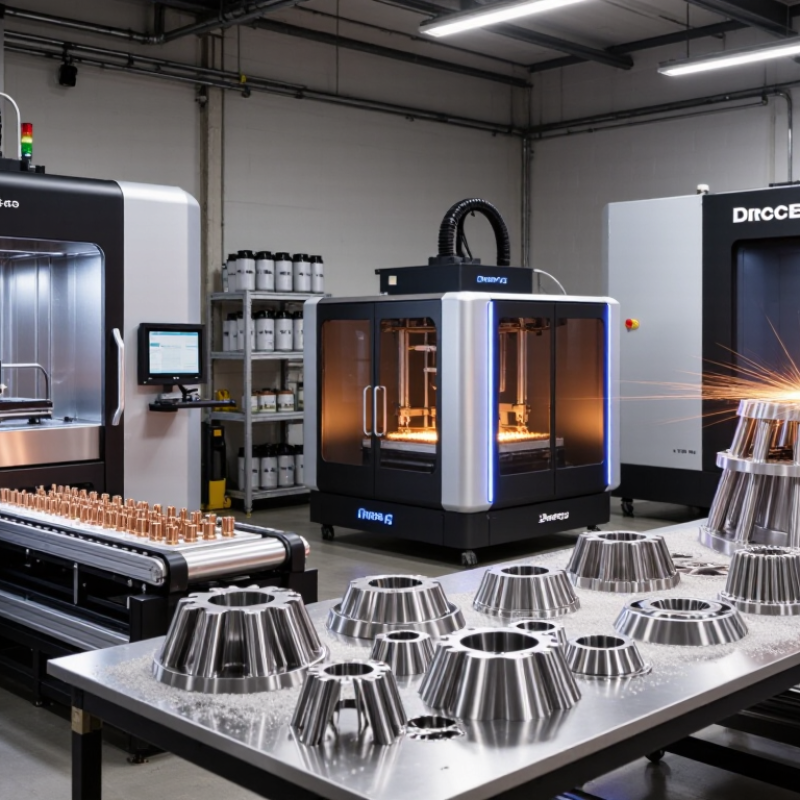
Metal 3D Printing Technologies and Their Working Principles
The top metal 3D printers are usually grouped by their printing technology, not appearance. Powder bed fusion uses a laser or electron beam to melt thin powder layers. The machine spreads powder, scans each cross-section, and lowers the build platform. Layer by layer, a dense metal part forms inside a controlled chamber. This method can produce fine channels and complex internal shapes. However, heat creates residual stress, so supports and stress-relief treatment often remain necessary.
Binder jetting works differently. A printhead deposits a liquid binder onto selected areas of a powder bed. The fragile “green” part then enters a furnace, where the binder burns away and metal particles sinter together. It can produce many parts efficiently, but shrinkage must be predicted carefully. Small holes may close slightly. That detail matters.
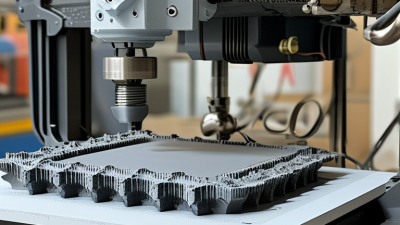
Directed energy deposition feeds metal wire or powder into a focused heat source. Material is added directly onto a surface, making this process useful for repairs, large components, and gradual geometry changes. Its layers are usually rougher than powder bed fusion layers. Finishing often requires milling or turning. I have found that calibration affects results more than expected. A tiny change in feed rate can create ripples, pores, or uneven bonding.
The best printer depends on the part, alloy, tolerance, production volume, and post-processing capacity. Operators should inspect powder condition, chamber oxygen, layer adhesion, and final density. No technology is effortless. A reliable workflow records each parameter and checks test coupons before production.
Leading Metal 3D Printer Types and Their Best Applications
What Are the Top 3D Printers That Print Metal?
Metal 3D printers generally fall into three leading process types. Powder bed fusion uses a laser or electron beam to melt thin powder layers. It produces complex channels, lightweight lattices, and precise aerospace or medical components. Parts often require heat treatment and support removal. A clean powder room matters greatly.
Directed energy deposition feeds metal wire or powder into a focused heat source. It repairs large parts, adds material to existing components, and creates oversized structures. This method is faster for heavy work, but surface finish can be rougher. Machining is usually necessary afterward.
Binder jetting deposits a liquid binder onto metal powder before sintering. It can produce many small parts efficiently, especially for industrial batches. However, shrinkage during sintering must be carefully measured. A part may look accurate before firing, then change noticeably. No process is perfect.
In practical evaluations, I would compare material waste, build volume, density, tolerances, and post-processing costs. Operator training also affects reliability. A high-resolution machine cannot fix poor powder handling or weak design rules. I have found that application needs should guide the purchase, not impressive sample parts. A shiny demonstration piece proves little. Independent testing, documented parameters, and inspection data offer stronger evidence. Even then, early prototypes deserve skepticism.
What Are the Top Metal 3D Printer Types?
Metal additive manufacturing processes are selected according to part complexity, production volume, component size, and whether the goal is to build, repair, or coat a component.
Ratings use a 1–5 scale and summarize established process capabilities: 5 means a strong fit for the application and 1 means the process is generally less suitable. Powder bed fusion is widely used for complex, high-value parts; directed energy deposition is especially suitable for large components and repair; binder jetting is designed for batch production after debinding and sintering.
Material Compatibility, Accuracy, Speed, and Production Requirements
The top metal 3D printers are not chosen by resolution alone. They are matched to material, accuracy, speed, and production volume. Powder bed fusion supports stainless steel, titanium, aluminum, and nickel alloys. It can produce fine channels and dense parts, but powder handling adds cost and training needs. Directed energy deposition suits repairs, large components, and mixed-material development. Binder jetting can process metals quickly, although sintering may cause dimensional changes.
Accuracy requires careful interpretation. A displayed layer height is not the same as final part tolerance. Thermal distortion, powder quality, build orientation, and post-processing all affect results. A 50-micrometer layer may still produce visible warping. ISO/ASTM 52900 provides common terminology, but each supplier should provide test coupons and measured data. Ask for repeatability results, not only marketing claims.
Speed depends on the whole workflow. Build rate, recoating, cooling, depowdering, sintering, and machining all matter. Wohlers Report 2024 valued the global additive manufacturing industry at 20.035 billion dollars in 2023, with 13.5% annual growth. That growth reflects broader adoption, not automatic production readiness. For short runs, flexible powder bed systems may offer better control. For larger batches, binder jetting may reduce build time, but shrinkage must be modeled. I would not trust a printer comparison without identical alloys, geometries, and inspection methods. Real factory data is often less impressive.




 Customer Support
 Request Sample
 Contact