contact-button

Top 10 SLS 3D Printers for Global Buyers

Choosing among the top 10 SLS 3D printers for global buyers requires more than comparing build volume and headline speed. Selective laser sintering can produce strong, complex parts without support structures. However, each machine reflects different priorities, including powder handling, thermal control, software, service coverage, and operating cost.

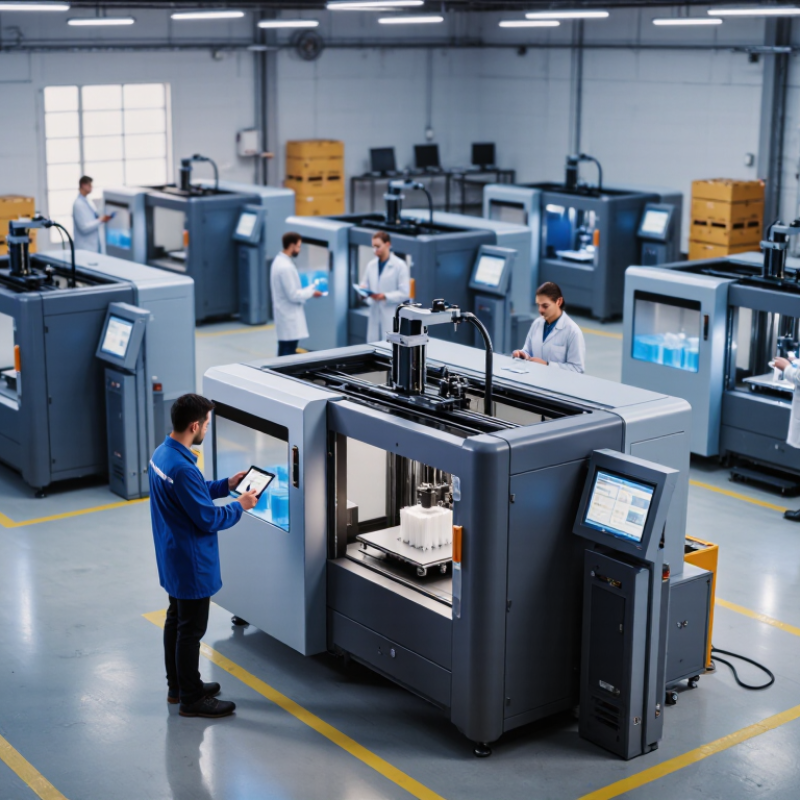
As EOS founder Dr. Hans J. Langer put it, “The future of manufacturing is digital.” That future already appears in factory details: nylon parts leaving a warm powder bed, sealed material stations beside the printer, and engineers checking layer data before production begins. These practical moments matter more than impressive brochures. A large chamber may suit automotive batches, while a compact system may better serve a medical design team or university laboratory. The right choice depends on production goals, operator skill, regional support, and material availability.

This guide examines 10 leading SLS 3D printers from a buyer’s perspective. It considers print quality, throughput, workflow integration, maintenance demands, safety features, and total ownership costs. It also looks at international realities, such as technician response times, voltage compatibility, training, shipping, and local powder supply. Those factors are easy to overlook.

No ranking can fit every factory. That is the uncomfortable part. A fast printer may create unnecessary costs when demand remains low. A lower-priced system may require more hands-on attention. Buyers should question published specifications, request sample parts, and calculate realistic production scenarios. The strongest option is not always the most powerful machine. It is the one that performs reliably in your actual environment.
Top 10 SLS 3D Printers for Global Buyers

What SLS 3D Printing Is and Why It Matters for Global Buyers

SLS 3D printing fuses polymer powder layer by layer using a laser. The surrounding powder supports the part, so separate support structures are usually unnecessary. This enables complex channels, hinges, lattices, and nested components. Nylon remains common, but reinforced and flexible powders expand the design range. Parts often leave the machine with a grainy, slightly textured surface.

The Wohlers Report 2024 valued the global additive manufacturing industry at 20.035 billion dollars in 2023, a 13.5% annual increase. That growth raises interest in SLS among international buyers. Yet market growth does not make every printer a sensible investment. Buyers should compare build volume, thermal control, powder refresh requirements, software workflows, and post-processing equipment. ISO/ASTM 52900 also helps buyers distinguish powder bed fusion from other additive manufacturing processes. In practice, reliable temperature stability may matter more than headline laser power. I have seen impressive specifications hide difficult maintenance routines. That deserves careful questioning.

Tips: Request sample parts made from your intended powder. Check surface finish, dimensional accuracy, and repeatability. Ask for service response times in your region. Confirm electrical standards, operator training, spare parts, and material availability before ordering. A lower purchase price can become expensive when powder handling, unpacking, and finishing are overlooked. Test the complete workflow, not just the printer.
How SLS 3D Printers Work: Materials, Processes, and Key Components

Top 10 SLS 3D Printers for Global Buyers

How SLS 3D Printers Work: Materials, Processes, and Key Components

Selective Laser Sintering, or SLS, builds parts inside a heated powder bed. A recoater spreads a thin layer of polymer powder. Then, a laser follows the digital cross-section and fuses selected areas. The build platform lowers slightly, and the cycle repeats. No support structures are usually required. This allows nested parts, internal channels, and complex hinges to share one build.

Common materials include PA12, PA11, glass-filled nylon, and flexible TPU. PA12 offers balanced strength and dimensional stability. PA11 handles impact better in many applications. Composite powders can improve stiffness, but they may increase surface roughness and machine wear. Material choice should match the part’s load, flexibility, heat exposure, and expected finish.

The main components are the laser, powder reservoirs, recoater, heated chamber, build piston, filters, and control software. Chamber temperature matters greatly. Uneven heating can cause curling, weak layers, or inconsistent dimensions. After printing, parts must cool gradually before depowdering. Compressed air or bead blasting can remove trapped powder from small cavities. Yet, powder recovery is not always simple. Refresh ratios, humidity, and repeated heating can change performance. A careful buyer should inspect calibration records, safety controls, service access, and material data. High speed sounds attractive, but unstable thermal control can erase that advantage. My own assessment would remain cautious: reliable results depend on the whole process, not laser power alone.

The Top 10 SLS 3D Printers Compared by Performance and Application

Top 10 SLS 3D Printers for Global Buyers

The top ten SLS printers should be compared by performance and application, not price alone. A compact system may suit engineering prototypes, while a larger platform supports ducting, housings, and low-volume production. Compare build volume, laser configuration, scanning speed, layer thickness, and cooling control. These details affect surface quality and production consistency.

The Wohlers Report 2024 valued the global additive manufacturing industry at approximately $20 billion in 2023. That growth increases demand for reliable polymer production systems. However, published speed figures can mislead. Real output also depends on packing density, powder refresh rates, nesting skills, and cooling time. ISO/ASTM 52900 terminology helps buyers compare processes more consistently. Even so, testing remains essential. A printer may perform well with nylon parts but struggle with delicate channels or thin walls. That distinction is often missed.

Tips: Request sample parts made from your geometry. Check tensile results, dimensional drift, powder reuse data, and service response times. Record the full cycle time, not only laser exposure time. Also inspect the software workflow. Small interface problems can quietly reduce factory productivity. A careful comparison may reveal that the fastest machine is not the most practical choice.

How to Evaluate SLS Printers for Cost, Quality, Speed, and Support

For global buyers, an SLS printer should be judged beyond its purchase price. I start with the full cost per usable part, not the machine invoice. Powder refresh rates, electricity, filters, labor, and post-processing can change the budget quickly. Ask for a five-year service estimate. Request sample parts made with your intended powder and wall thickness. A glossy demo piece proves very little. My first comparison was flawed. I ignored customs clearance and local technician travel. That mistake distorted the real quote.

Quality depends on more than resolution. Check dimensional repeatability across the build chamber, surface texture, edge definition, and hidden porosity. Measure several identical parts with calipers. Inspect critical areas under consistent lighting. Keep test records.

Speed claims also need context. A fast laser scan may still produce slow cycles during heating, cooling, depowdering, and powder recycling. Compare complete job time, not only print time. In one trial, a slower cycle delivered more stable dimensions. That result challenged my assumption.

Support is often the least visible cost. Confirm response hours, spare-part availability, remote diagnostics, training, and escalation procedures in your region. Ask whether manuals include maintenance intervals and error-code guidance. Speak with two existing users if possible. Their experience may reveal delays that brochures omit. Local language support helps, but technical competence matters more. Warranty terms should define exclusions clearly. I would also score software updates and operator training, because an excellent machine can underperform with weak process control. Leave room for doubt. Real factory conditions rarely match showroom tests.

Global Purchasing Factors: Certification, Shipping, Maintenance, and Training

For global buyers comparing the Top 10 SLS 3D Printers, certification should be checked before price.

Request current electrical safety, electromagnetic compatibility, and material documentation. Requirements differ by destination, so a certificate accepted in one market may not satisfy another. Ask for serial-number traceability, test reports, and an authorized service contact. Vague paperwork creates delays.

Shipping needs practical attention.

Confirm crate dimensions, gross weight, lifting points, and voltage before ordering. A moisture barrier and shock indicator can protect sensitive components during ocean transport. Customs paperwork should identify the machine, accessories, and materials accurately. Do not assume delivery includes unloading or installation.

At one facility, the printer arrived safely, but the doorway was too narrow. The purchase team had measured the room, not the route.

Maintenance affects production more than brochures suggest.

Check filter replacement intervals, calibration procedures, powder storage guidance, and spare-part availability near the installation site. A written service agreement should state response times and remote-support limits. Training should cover setup, build preparation, powder recycling, cleaning, software, and basic fault diagnosis.

Require hands-on sessions with a test build, not only online slides. Experienced operators still make mistakes when procedures remain undocumented.

A simple logbook recording temperatures, filter changes, and failed builds can reveal patterns.

It is not sophisticated, but it works.

Some suppliers provide excellent training yet underestimate language differences, shift schedules, or local technical skills. Ask for training materials that operators can actually use.