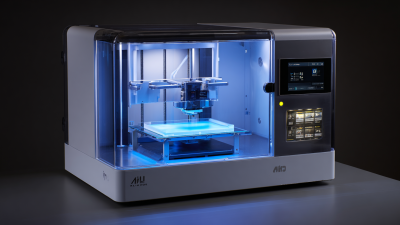
How to Choose the Right Industrial 3D Printer?
Choosing the right industrial 3d printer starts with the parts you need to make, not the machine’s headline specifications. A printer that performs well in a demonstration may struggle with your materials, production schedule, or shop-floor conditions. The best choice depends on how the equipment will be used every day.
Define your requirements before comparing models. Consider part size, dimensional tolerances, surface finish, material compatibility, and expected output. A bracket that must fit tightly into an assembly has different needs from a large visual prototype. Not just speed. Check how often the printer needs maintenance, whether operators require specialized training, and how readily replacement parts and technical support are available. These details affect uptime and the real cost of ownership.
Then compare technologies against your actual workload. Fused filament, resin-based, and powder-based systems each suit different applications, materials, and finishing demands. No single process is best for every manufacturer. Ask suppliers for sample parts made with your intended material, and examine them under realistic conditions. Measure critical features. Inspect the finish. Test repeatability across multiple builds, not just one impressive sample.
A careful checklist helps, but it cannot capture every production challenge. An unusual part geometry or a late design change may expose a weakness that looked minor during selection. That is worth admitting. A sound decision weighs proven performance, service support, safety features, and future needs alongside purchase price. With clear priorities, you can choose an industrial 3d printer that fits your process rather than forcing your process to fit the machine.
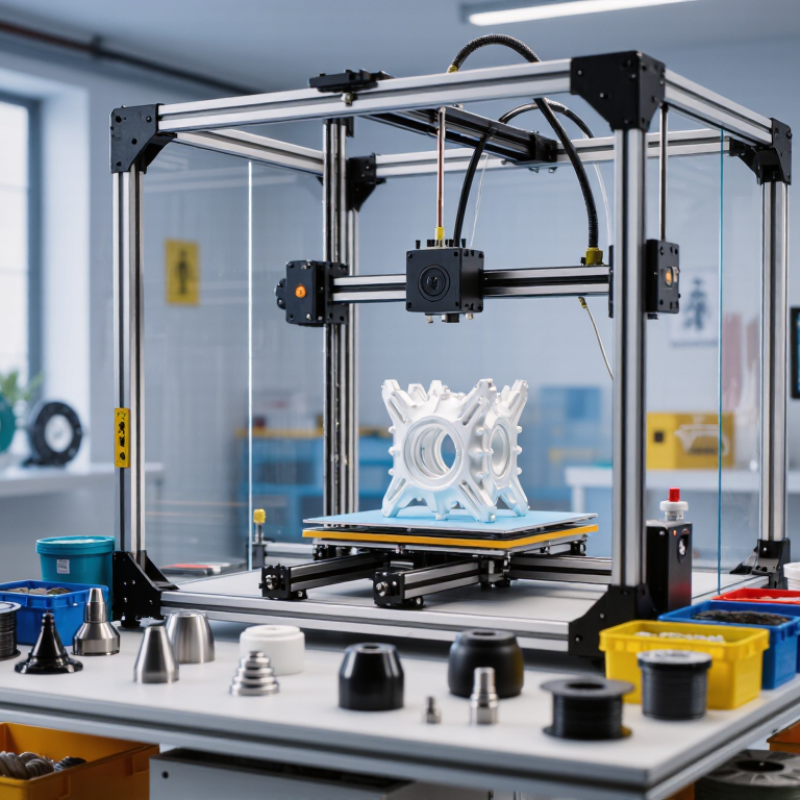
Table of Contents
[Hide]
Define the Application and Production Requirements
Before comparing industrial 3D printers, define the part and its job. A fixture used beside a warm production line has different needs from a lightweight housing or a fluid-handling component. Record the material, operating temperature, load, surface finish, dimensional tolerances, and expected service life. Include the largest part and the smallest repeated feature. Details matter.
Then quantify production. Estimate parts per week, batch size, available machine hours, and acceptable downtime. A printer’s advertised build volume does not tell you how many usable parts fit on its build plate. Nesting, supports, cooling, and post-processing all affect throughput. Map the full workflow, including cleaning, curing or heat treatment, inspection, and operator time. Leave room for uncertainty; early estimates are often too optimistic.
Wohlers Report 2024 puts the additive manufacturing industry’s 2023 revenue at about $20.0 billion, up 11.1% from 2022. That growth signals a broadening field, not a guarantee that any particular printer suits your process.
Run a representative build using your own geometry and material where possible. Measure first-pass yield, repeatability, total cycle time, and cost per acceptable part—not just print speed. A test can still mislead if it uses only one build. Record what failed, too.
Compare 3D Printing Technologies and Compatible Materials
Choosing an industrial 3D printer starts with the part, not the machine.
Powder bed fusion suits complex metal components and internal channels, but powder handling and post-processing add work.
Directed energy deposition can repair or build larger metal features, though its surface finish often needs machining.
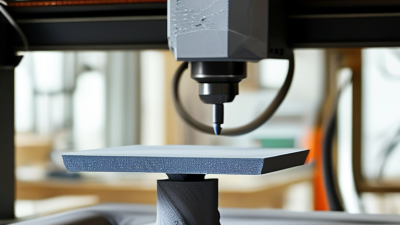
Material extrusion is practical for durable polymer fixtures and larger parts; it may leave visible layer lines.
Vat photopolymerization captures fine detail, but resin properties and part size can limit industrial use.
Materials narrow the choice further. Check temperature resistance, chemical exposure, fatigue needs, and whether the finished part must carry a load.
A nylon powder part, a reinforced thermoplastic fixture, and a photopolymer prototype will not perform alike.
Fit matters.
Wohlers Report 2024 estimated that the additive manufacturing industry reached $20.035 billion in 2023, growing 11.1 percent year over year.
That figure signals a broadening market, not proof that any one process fits your application. Ask vendors for test coupons made with your intended material, then inspect surface finish, dimensional variation, and strength across build orientations.
One overlooked detail: drying, storage, and handling can change polymer results.
Production data can be messier than a sample print.
Assess Build Volume, Precision, Speed, and Repeatability
How to Choose the Right Industrial 3D Printer?
Assess Build Volume, Precision, Speed, and Repeatability
An industrial 3D printer should fit the parts you actually make, not just your largest project. Measure typical components, support structures, and fixture needs. A large build volume can reduce part splitting, but unused space may increase machine cost and warm-up time. Check the usable build area against real production layouts. A 300-millimeter housing and its supports need more room than the housing alone.
Precision depends on more than the advertised layer height. Compare dimensional tolerances on representative parts, including holes, mating surfaces, and thin walls. Ask for measured results across multiple builds. NIST’s additive manufacturing measurement research emphasizes reliable measurement and process control; that matters when a part must fit the same fixture every time. Speed also needs context. A fast layer rate may not mean a fast finished part once setup, cooling, and post-processing are included. Wohlers Report 2024 estimated the additive manufacturing industry reached $21.8 billion in 2023, reflecting broader adoption—but growth alone does not prove a machine suits your workflow.
Tips: Request a sample build using your geometry and material. Record print time, rework, and dimensions across several runs. Repeatability can be easy to overlook. It is also where production plans often get messy. Compare results after routine maintenance, not only on a freshly calibrated machine.
Compare Total Costs, Reliability, and Service Support
Choosing an industrial 3D printer means comparing more than its purchase price. Include materials, software, installation, operator training, maintenance, and expected downtime. Wohlers Report 2024 estimated the global additive manufacturing industry reached $20.0 billion in 2023, growing 11.1% from 2022. That growth signals a broader market, not a guarantee of lower ownership costs. Ask suppliers for itemized service and consumables pricing, then model costs across several years.
Reliability needs evidence from real production conditions. Request documented uptime definitions, maintenance intervals, and examples using materials and part sizes like yours. A machine that prints a small sample reliably may behave differently during a long overnight build. Track failed builds, calibration time, and parts delayed while the printer is unavailable. Small disruptions add up.
Service support can protect production—or become a hidden expense. Confirm support hours, response targets, spare-parts availability, and whether repairs require on-site visits. Ask for a sample service-level agreement and clarify what “response” means: an email, a remote diagnosis, or a technician at your facility. A spreadsheet can still mislead. I would give more weight to verifiable service records than polished promises; even then, comparing vendors is imperfect, because their uptime figures may use different methods.
| How to Choose the Right Industrial 3D Printer? — Compare Total Costs, Reliability, and Service Support | |||||
|---|---|---|---|---|---|
| Printer Category | Typical Equipment Cost (USD) | Typical Material Cost (USD/kg) | Operating Considerations | Reliability Factors to Check | Service Support to Evaluate |
| Industrial FFF/FDM, polymer | $20,000–$150,000+ | $20–$300+ | Uses thermoplastic filament; relatively low material waste. Enclosed or heated build chambers can improve results with engineering polymers. | Check build-chamber temperature control, extrusion consistency, motion-system maintenance, and performance over long unattended jobs. | Compare response times, spare-part availability, installation, operator training, and remote diagnostics. |
| Industrial SLA, photopolymer resin | $50,000–$250,000+ | $100–$500+ | Produces fine detail and smooth surfaces. Washing and post-curing equipment, resin handling, and safe chemical storage add cost. | Assess optical-system calibration, resin-temperature control, release-film or vat replacement frequency, and post-processing consistency. | Check access to calibration, resin-process support, maintenance training, and replacement vats or optical components. |
| Industrial polymer powder-bed fusion | $150,000–$700,000+ | $50–$200+ | Builds many parts in one job and generally needs no support structures. Powder handling, sieving, and refresh ratios affect operating costs. | Review laser or energy-source uptime, powder-management procedures, chamber uniformity, and repeatability across builds. | Confirm support for powder safety, preventive maintenance, process qualification, and access to trained field engineers. |
| Industrial metal laser powder-bed fusion | $500,000–$2,000,000+ | $50–$300+ | Requires inert-gas management, metal-powder controls, and often heat treatment or machining. Facility and safety requirements can be substantial. | Evaluate laser availability, gas-flow monitoring, recoater performance, build-to-build consistency, and documented maintenance intervals. | Look for qualified installation, application engineering, powder-safety guidance, spare-part coverage, and guaranteed service-response terms. |
| Industrial binder jetting, metal | $300,000–$1,500,000+ | $20–$100+ for powder, plus binder and finishing costs | Can produce multiple parts per build; debinding and sintering add equipment, labor, process steps, and dimensional considerations. | Check printhead life, binder delivery, powder spread consistency, furnace process control, and finished-part yield. | Assess whether support covers the full workflow, including printing, debinding, sintering, process development, and operator training. |
| Industrial directed energy deposition, metal | $200,000–$1,000,000+ | $50–$300+ for wire or powder feedstock | Often used for repair, cladding, or larger features. Deposition rate can be high, but machining and geometry-specific setup may be needed. | Review feedstock delivery reliability, energy-source maintenance, motion-system accuracy, and deposition-process monitoring. | Compare integration support, safety training, process-development help, and service capability for the energy source and motion system. |
Cost and selection note: These broad, indicative ranges are not quotations. Actual purchase price and total cost of ownership vary with build volume, configuration, region, materials, facility preparation, labor, utilization, post-processing, maintenance, and service contracts. Request a workflow-based cost estimate and compare expected cost per accepted part over the same planning period.
Validate Printer Options with Parts and Workflow Tests
How to Choose the Right Industrial 3D Printer?
Validate Printer Options with Parts and Workflow Tests
A printer’s specifications can narrow your options, but real parts reveal more. Select test pieces that represent your production work: a thin-walled housing, a bracket with holes, or a component with long overhangs. Use the same material and design file for each machine. Record dimensions, surface condition, build time, and post-processing effort. Small details matter.
Test the workflow, too. Ask operators to prepare a job, change material, remove a finished part, and repeat the process. Note where instructions are unclear or tasks take longer than expected. Track failed builds, material waste, and time spent cleaning or correcting parts. A tidy sample is not enough.
Keep the conditions consistent. Document settings, ambient temperature, and any support structures; otherwise, comparisons can mislead. If a test fails, repeat it before drawing conclusions. I have seen teams focus on print speed, then overlook hours of finishing. That is an easy mistake. Include the people who will run the equipment, and leave room for their feedback. Their notes may be imperfect, but patterns across several trials can expose practical limits that a specification sheet cannot show.
Related Posts
-
Why Choose a Powder 3D Printer for Your Business Needs?
-
2026 Best DMLS 3D Printer Buying Guide for Global Buyers
-
Best 3D Printers That Print Metal for Global Buyers?
-
How to Choose the Best Industrial 3D Printer for Your Business Needs?
-
How to Optimize Your Workflow with a Professional 3D Printer: Insights from Industry Experts
-
Unlocking the Future Best 8K 3D Printer for Global Buyers