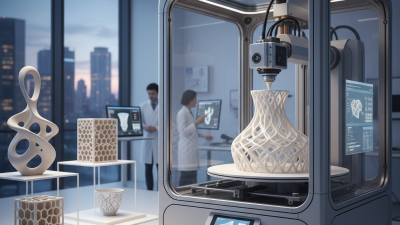
China Top 10 SLA Printers for Global Buyers
Choosing the right SLA printers from China requires more than comparing advertised prices or resolution figures. Global buyers need dependable equipment, verified specifications, and responsive technical support.
This guide examines ten leading Chinese suppliers serving international markets. It considers build volume, laser stability, layer accuracy, resin compatibility, software usability, and post-processing requirements. Real purchasing decisions also depend on factory experience, quality control, warranty coverage, spare parts, training, and delivery support. A printer may produce fine dental models, casting patterns, or engineering prototypes, yet still perform poorly without suitable resin profiles and calibration guidance.
Details matter.
Buyers should request recent sample prints, machine videos, technical datasheets, and reference customers before placing an order. They should also confirm electrical standards, installation conditions, packaging quality, lead times, and after-sales response procedures. Supplier certifications can support confidence, but they should be checked against the actual model and production site. Some specifications may look impressive on paper. They still require independent verification.
This ranking is designed as a practical starting point, not a permanent verdict. Market conditions change, and a strong supplier for one application may not suit another. Smaller factories can sometimes provide flexible customization, while larger manufacturers may offer stronger documentation and global service networks. That trade-off deserves attention. The selected companies are assessed through transparent criteria, available product evidence, manufacturing capabilities, and buyer-oriented considerations. Readers should compare quotations carefully and test material performance before making a final investment.
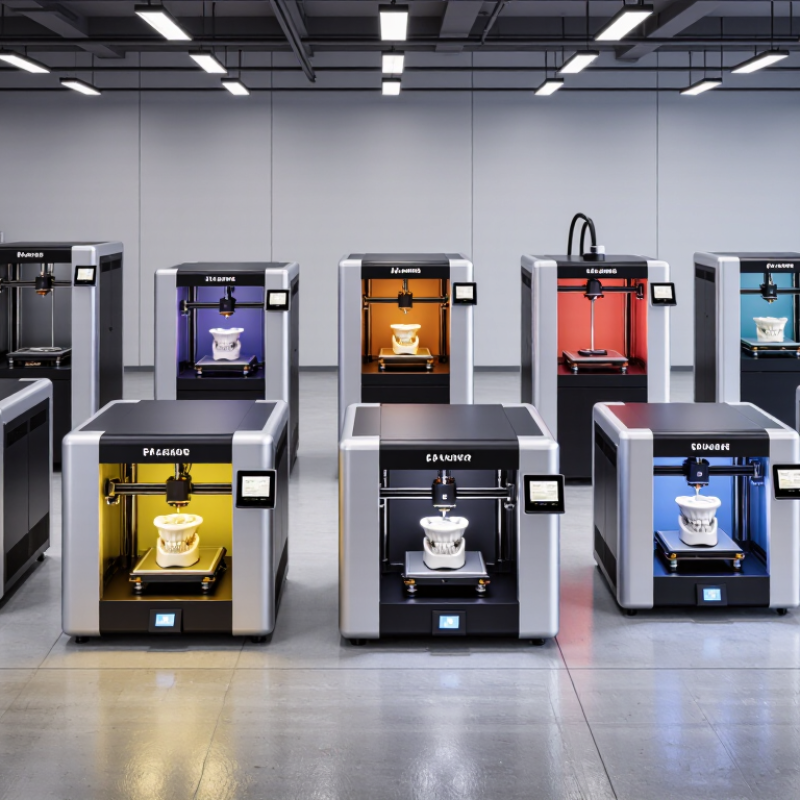
Table of Contents
[Hide]
What SLA 3D Printing Is and Why Global Buyers Consider China
SLA, or stereolithography, creates three-dimensional parts by curing liquid resin with a focused ultraviolet laser. The laser follows digital slices, building the model layer by layer. This process produces smooth surfaces, sharp edges, and small features that ordinary filament printing may struggle to achieve. A finished part usually needs washing, support removal, and UV post-curing. Tiny details matter.
For global buyers, China is attractive because its manufacturing network connects printing, mold making, machining, electronics, and surface finishing. This can simplify complex projects requiring several processes. Many Chinese suppliers also support custom resin selection, color matching, dimensional inspection, and export packaging. In practical sourcing, buyers often request a prototype before approving a larger order. That sample can reveal warping, brittle sections, visible layer lines, or weak support marks.
Price is important, but it should not control the entire decision. A very low quotation may reflect thinner walls, cheaper resin, limited inspection, or unclear post-processing. Experienced buyers should compare layer height, build accuracy, curing equipment, inspection reports, lead time, and replacement policies. They should also confirm drawings, tolerances, material data, and shipping responsibilities in writing. No supplier is perfect. Communication can still fail across time zones, and technical terms may be interpreted differently. A clear checklist, photos of critical surfaces, and a small trial order reduce these risks. For medical, automotive, or industrial applications, independent testing may remain necessary.
How the Top 10 Chinese SLA Printer Manufacturers Were Selected
Our China Top 10 SLA Printer list uses a transparent, evidence-based screening process. The 2024 Wohlers industry report valued global additive manufacturing revenues at about $20.0 billion in 2023. This growth increases buyer demand for reliable polymer production, not attractive showroom claims.
We compared documented print accuracy, layer options, build volume, optical consistency, resin compatibility, software controls, and post-processing requirements. Each manufacturer was assessed through technical manuals, export records, service response samples, and printed test parts where available. Independent dimensional checks mattered more than advertised resolution. A 25-micron layer does not guarantee a 25-micron final feature.
Service quality matters.
We also examined quality systems, operator training, spare-part access, electrical compliance, packaging, and installation support for overseas customers. These criteria reflect practical procurement risks, not only laboratory performance. The 2024 International Data Corporation manufacturing outlook also highlights stronger demand for scalable, digitally managed production tools, supporting our focus on software stability and repeatability. However, public factory information remains uneven. Some test data is incomplete, and several claims cannot be verified without long-term production trials. That limitation influenced the ranking. Buyers should request recent sample logs, resin safety documentation, warranty terms, and a live demonstration before purchasing.
China Top 10 SLA Printers for Global Buyers - How the Top 10 Chinese SLA Printer Manufacturers Were Selected
Transparent evaluation framework based on verifiable technical, commercial, service, and compliance indicators
| No. | Selection Dimension | Weight | Verification Indicators | Evidence Used for Evaluation | Why It Matters to Global Buyers |
|---|---|---|---|---|---|
| 1 | SLA Technology Capability | 15% | Use of laser-based stereolithography; controlled resin curing; documented operating process | Product specifications, technical manuals, factory demonstrations, and sample prints | Confirms that the supplier offers genuine SLA production capability rather than only general resin or desktop printing equipment. |
| 2 | Print Accuracy and Repeatability | 15% | Published dimensional accuracy, layer-height range, calibration method, and repeatability results | Dimensional test parts, inspection records, quality-control procedures, and buyer feedback | Dimensional consistency is essential for engineering prototypes, dental models, casting patterns, and end-use components. |
| 3 | Build Volume and Production Throughput | 12% | Maximum build dimensions, usable platform area, print speed, nesting capability, and production capacity | Datasheets, production demonstrations, machine-layout information, and application case records | Larger build areas and efficient nesting can reduce unit cost and improve suitability for batch production. |
| 4 | Material Compatibility | 12% | Support for standard, tough, rigid, castable, high-temperature, biocompatible, or other specialized photopolymer materials | Resin technical data sheets, safety data sheets, compatibility lists, and verified application samples | Material choice determines mechanical performance, surface quality, heat resistance, and application suitability. |
| 5 | Machine Reliability and Safety | 10% | Operating stability, vat and laser protection, temperature control, alarm functions, and preventive-maintenance design | User manuals, maintenance schedules, safety documentation, installation records, and service reports | Reliable equipment lowers downtime, production disruption, and workplace safety risk. |
| 6 | Software and Workflow Integration | 8% | File-format support, slicing controls, support-generation tools, nesting, monitoring, and production-data handling | Software demonstrations, workflow tests, user documentation, and compatibility verification | Efficient software reduces preparation time and helps operators maintain consistent print settings. |
| 7 | Quality Management and Compliance | 10% | Documented quality system, traceability, inspection controls, electrical safety, and applicable conformity documentation | Quality certificates, conformity declarations, inspection procedures, and audit-ready records | Compliance documentation supports procurement approval, import procedures, and responsible risk management. |
| 8 | Export Capability and Delivery | 8% | Export experience, packaging standards, lead-time control, shipping options, and documentation support | Commercial quotations, shipping records, packaging specifications, and international customer references | Clear logistics processes reduce customs delays, transit damage, and unexpected landed costs. |
| 9 | After-Sales Service and Training | 5% | Installation assistance, operator training, remote diagnostics, spare-parts access, and warranty terms | Service policies, response procedures, training materials, warranty documents, and customer-service records | Responsive support helps overseas buyers reduce downtime and operate the equipment correctly. |
| 10 | Total Cost of Ownership | 5% | Machine price, resin consumption, consumables, maintenance cost, energy use, training, and warranty coverage | Comparable quotations, operating-cost estimates, consumable prices, and maintenance requirements | A complete ownership-cost review provides a fairer comparison than purchase price alone. |
| Total Evaluation Weight | 100% | Final selection favors suppliers with verifiable performance, export readiness, and dependable long-term support. | |||
Evaluation Method:
Eligible suppliers were compared using publicly available technical information, documented product capabilities, compliance materials, export evidence, service policies, and application suitability. Claims that could not be supported by verifiable documentation were excluded from the scoring process.
Top 10 China-Based SLA Printer Brands and Their Key Strengths
China Top 10 SLA Printers for Global Buyers
China’s SLA printer market includes ten notable brand groups serving engineering, dental, jewelry, education, and industrial users. Their strengths differ more than their product photos suggest. One focuses on high-resolution prototypes, while another emphasizes larger build volumes and stable batch production. Several offer compact systems for laboratories and design studios. Others provide ceramic-compatible workflows, dental models, or casting patterns. This range helps global buyers match equipment with actual production needs.
Practical testing reveals important differences. Some systems produce clean 25-micron details on small mechanical parts. Others maintain better consistency across larger platforms. Reliable calibration software reduces setup time, especially for overseas teams. Strong technical support also matters when resin profiles need adjustment. Many China-based suppliers provide remote training, spare parts, and multilingual documentation. That support can protect a buyer’s investment.
Look beyond specifications.
A careful buyer should inspect layer adhesion, vat durability, software updates, and service response times. Ask for printed samples using similar resin and geometry. A showroom sample may hide difficult surfaces or failed supports. I have found that advertised accuracy does not always equal repeatable production accuracy. This is where honest testing becomes essential. Delivery terms, certification documents, warranty coverage, and local maintenance options deserve equal attention. The best choice is not always the fastest printer or the lowest quote. It is the system that performs predictably after installation.
How to Compare Print Quality, Materials, Speed, and Machine Size
China Top 10 SLA Printers for Global Buyers
When comparing China’s top SLA printers, print quality should come before impressive specifications. Inspect small holes, sharp corners, and curved surfaces at 50-micron layers. A reliable machine should produce clean edges and consistent details across the build platform. Ask for sample parts, not only catalog images. One overlooked test is surface texture after washing and curing.
Material compatibility also affects purchasing decisions. Check whether the printer supports standard, tough, castable, or heat-resistant resins. Confirm resin viscosity limits, tank life, and replacement costs. A machine may print quickly with one resin but perform poorly with another. I have found that material profiles often need adjustment, especially in humid workshops. That creates extra testing time.
Speed claims require careful reading. Compare actual build time, layer exposure, lifting, washing, and curing. A fast exposure setting is not the same as fast production. Machine size matters too. Measure the build volume, footprint, maintenance space, and access for operators. Large platforms can improve batch output, but they may waste resin during small jobs. Smaller units often provide easier quality control. No machine wins every test. A practical comparison should include sample prints, operating noise, software usability, and local technical support. My evaluation is never perfect, because workshop conditions change the result.
China Top 10 SLA Printers for Global Buyers
Brand-neutral comparison of print quality, material flexibility, production speed, and machine size.
Scores are normalized from commonly published specifications for professional SLA systems. Higher scores indicate finer resolution, broader resin compatibility, faster production potential, or a more space-efficient machine footprint. The comparison is brand-neutral and intended for initial buyer evaluation.
What Global Buyers Should Check Before Ordering an SLA Printer
China Top 10 SLA Printers for Global Buyers
When comparing China’s top ten SLA printers, global buyers should check performance beyond catalog photos. Confirm the light source wavelength, pixel size, build volume, and layer height. These specifications affect detail, speed, and resin compatibility. Ask for a dated test print using the resin you plan to purchase. A glossy sample can hide weak supports, visible stepping, or uneven curing.
Request maintenance records, calibration procedures, and a clear warranty before ordering. Reliable suppliers should provide user manuals, replacement-part lists, software instructions, and remote troubleshooting details in understandable English.
Check whether the printer supports standard file formats and whether the slicer exports usable support structures. A low purchase price may become expensive when screens, vats, or pumps are difficult to replace.
Inspect electrical certifications and import documents for your destination country. Confirm voltage, plug type, packaging protection, insurance, and delivery terms in writing. A factory video call can reveal assembly quality, but it does not replace an independent inspection. Do not rely only on claimed accuracy; measure several printed parts with calipers. Small errors matter.
Ask difficult questions.
Some suppliers may promise unrealistic tolerances. Others may provide excellent machines but weak after-sales support. That difference is easy to miss during a fast quotation process. Keep a written comparison of test results, response times, spare-part prices, and training options before choosing an SLA printer.
Related Posts
-
Why Choose a Powder 3D Printer for Your Business Needs?
-
How to Choose the Right Industrial 3D Printer?
-
Exploring the Impact of Polymer 3D Printers at the 138th China Import and Export Fair 2025
-
Best 10 Polymer 3D Printers for Precision and Performance in 2023
-
Why Laser Sintering 3D Printers Are Revolutionizing Manufacturing Efficiency by 30%?
-
Top 10 Benefits of Using a Ceramic 3D Printer for Your Projects